
Monday 10 March
After a good night’s sleep, and breakfast (of sorts) at Cafe Fiorenze (again) we drove to Ghemme to meet Alberto and Angela Arlunno of Cantalupo whose large cantina we had visited in May 2022.
Alberto greeted us warmly, though his vagueness has accelerated and within minutes he left us to fetch Angela who then conducted the rest of the visit. At no point was mention made of Alberto’s condition, nor did her manner ever show irritation or frustration. He reminded me of Bill…
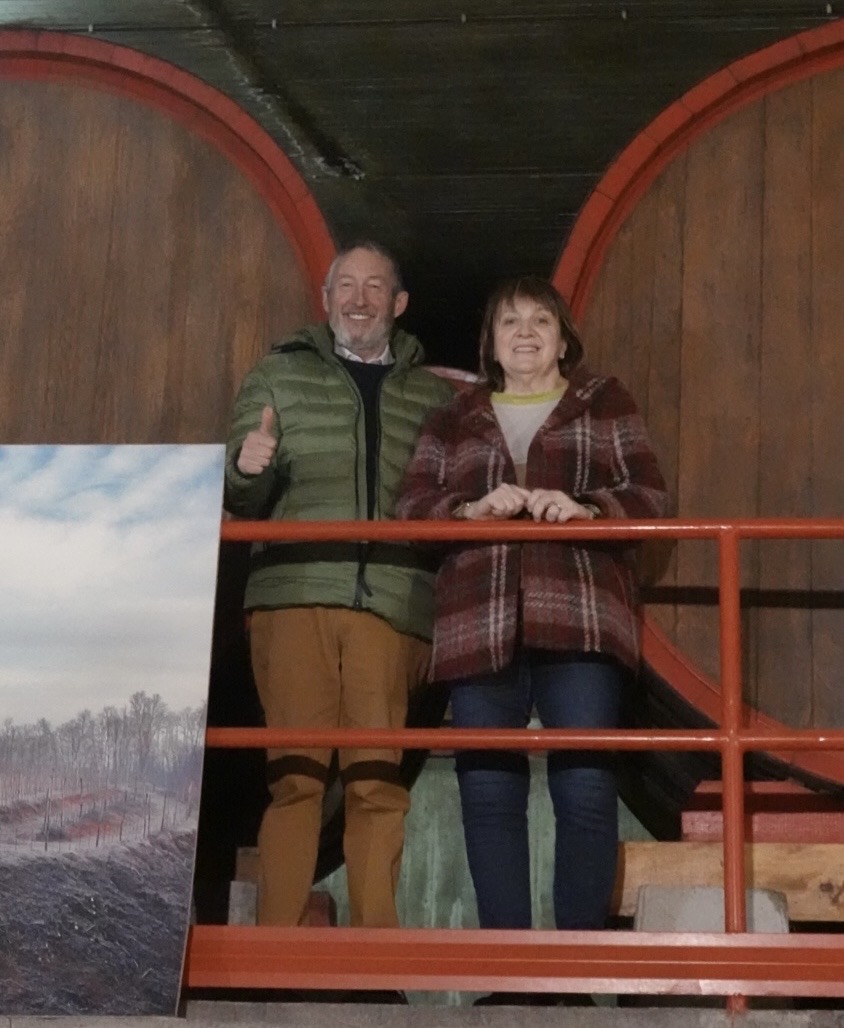
Angela showed us the functional cellar built into the hillside in 1982 by Alberto’s father, and the useful drawing of the territory. We sat in the unchanged reception room as before, for David to ask his questions, largely answered competently and patiently by Angela, with the odd tangential intervention by Alberto, sometimes in German, sometimes in Latin, and occasionally sung.


During an artisanal lunch in Trattoria Gufo Nero (black owl), two minutes away in Ghemme itself, I received the dramatic news that an old friend had died at the start of the year. For an hour we lamented the passing of a good man, and tried to process the terrible shock. A second text an hour later exposed a serious error by its sender – naming the wrong brother! A relief… but it still took an hour or so for the emotion to subside. The lunch – each course shared – was a triumph of restraint.
A brief break in our room before a 15.30 appointment with Elisa at Nervi, to taste the latest vintage and to interrogate (finally) a wine maker on the vineyards and Mr Conterno’s wine-making. The new stylish cantina is wearing well, and all the vineyards are now in production. The whereabouts of Roberto next week are still shrouded, though we now know he will be in Gattinara (when we are in the Langhe!) for most of the time, bottling the rosato.


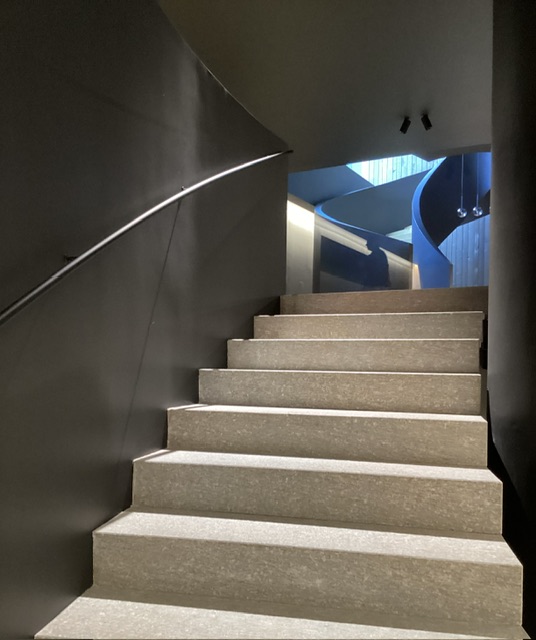
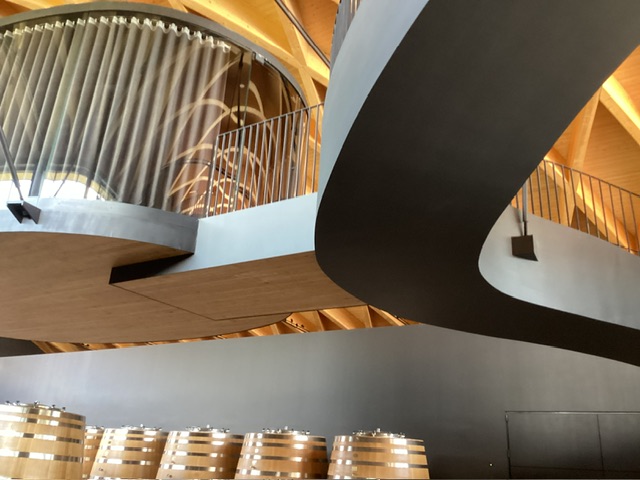
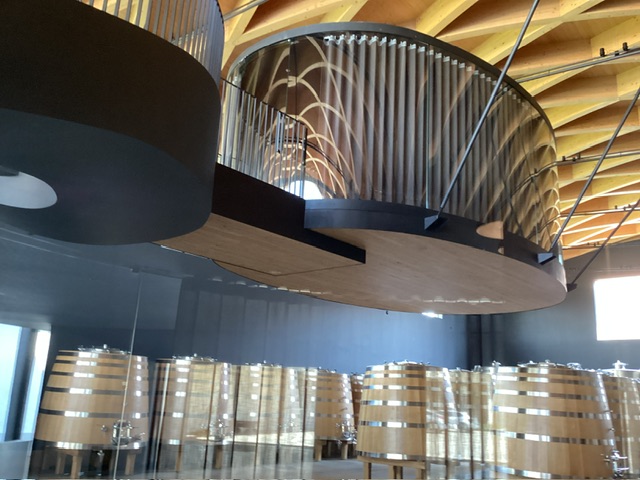
Another break, before supper at 20.00 in the Osteria Contemporanea, recommended by Michelin and Allesia Travaglini, and next door to our friendly Enoteca near the Farmacia. This turned out to be a very mixed experience.
The host was abrupt if business like, and rapidly explained the complex menu : a seven course tasting menu; a four course offal menu and a four course vegetarian menu. David opted for vegetarian, only to learn that it was for all the table, or not at all. As I had already ordered my two a la carte courses, (as was also permitted) David followed suit with two vegetarian courses. One other couple had joined us in the modest main room.
There were competent treats from the chef and a small freshly cooked and still warm sour dough loaf. When the food came David’s first course of celery and artichoke was disappointingly meagre; my chicken and scampi with funghi and rice turned out to be a sizeable risotto with minute slivers of raw prawn and rather more deep-fried chicken skin. The Fiano was enjoyable; the subsequent Sturgeon and Cauliflower dishes showed greater promise and we dodged the dessert, opting for coffee accompanied by amuse-bouche.
Tuesday 11 March
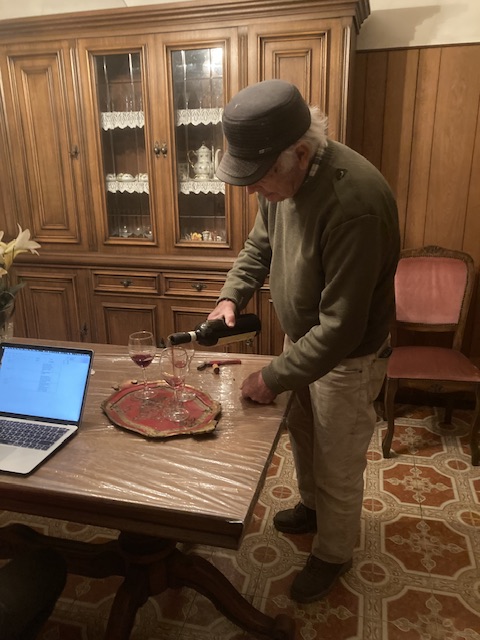
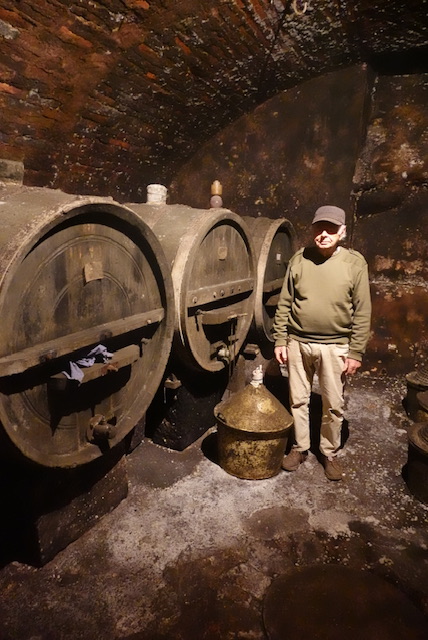
Today we visited Gian-Carlo Petterino, whose very modest long-standing cantina is part of his home on a small street in Gattinara, and who eschews email and responds only to the phone. He and his brother Marco have spent their whole lives working in the vineyards of their father and grandfather before them, and in the extraordinary unreconstructed cellar beneath the house and yard. He talked about his and his brother’s life making wine. It was a fascinating glimpse into how things used to be for almost everybody in Gattinara.

On the wall of the shuttered front room was an extraordinary piece of framed close-stitching, of whose origin he had no idea. It captured domestic life as it may have been (though no doubt romanticised to maintain the myth) – a sort of early version of the selfie, thought David. Certainly all the women were represented as cheerful at their sewing.


We headed back to Cafe Fiorenze for some delicious lunch – small gnocchi with courgettes and prawns, and cannellini soup and caponata and coffee – all for €20 – before driving to Bramaterra to meet Paolo at La Palazzina at 14.00.
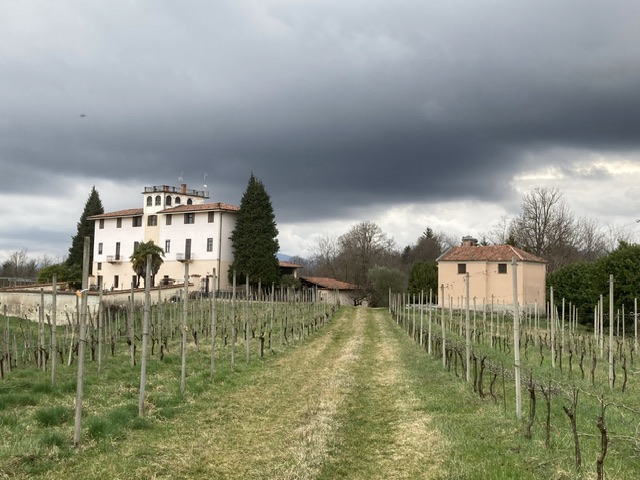
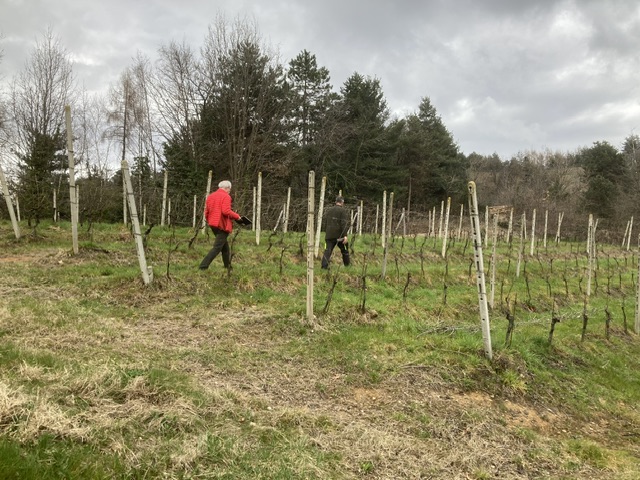
As we drove west, the sky blackened, and threatened the forecast heavy rain. In fact we enjoyed a dry afternoon, spending a couple of hours in the old vineyards to which Paolo is devoted. Several of these vines are very old (some pre-phylloxera – which arrived late in this area c 1920) and trained Maggiorina style, modified by his father to accommodate a small tractor between the rows.
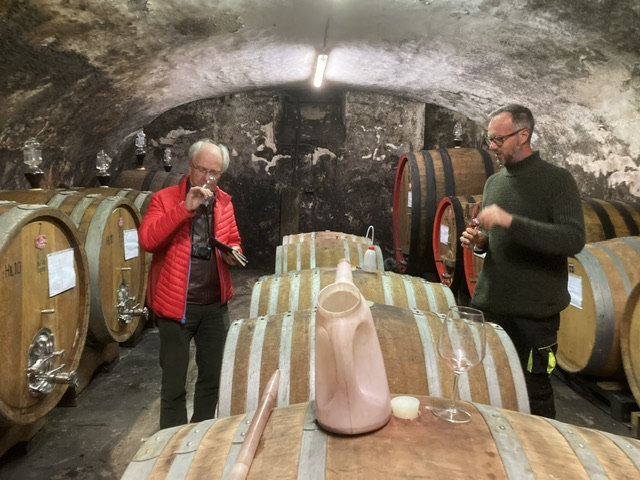
We spent another hour tasting from the barrels in his family’s cellar. He plans to move it elsewhere at the end of this year, as some of the family are not disposed to complete the necessary repairs to the existing cellar. (Parenti serpenti, as Chiara my first Italian teacher used to say!)


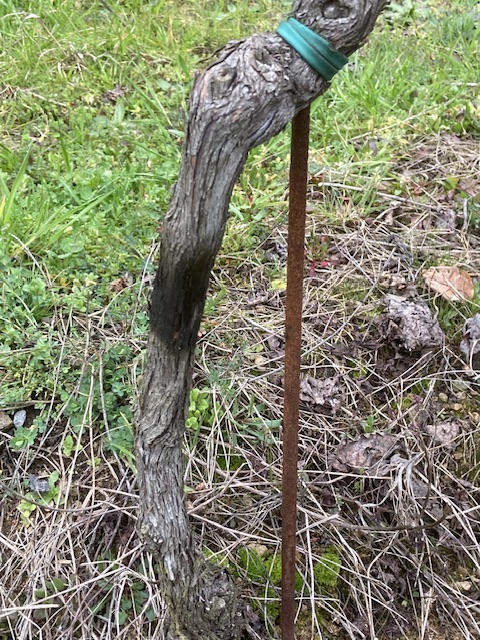
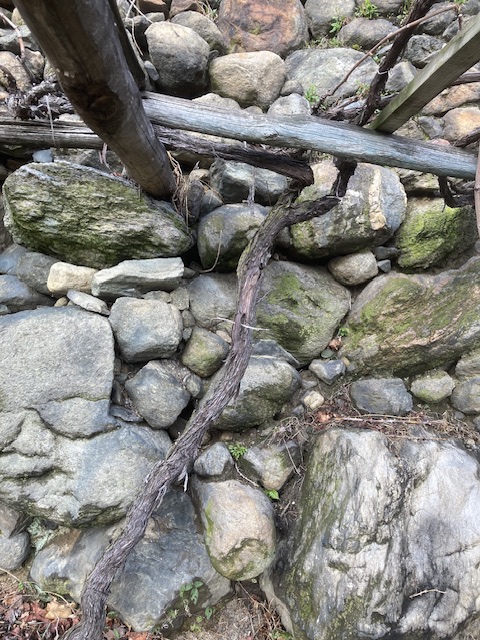
The photo of the vine shows a treatment for noctua – a rampant caterpillar that eats everything – but whose impact can be reduced by applying a glue-like substance that prevents their travelling from the ground along the woody part of the vine, towards the new foliage.
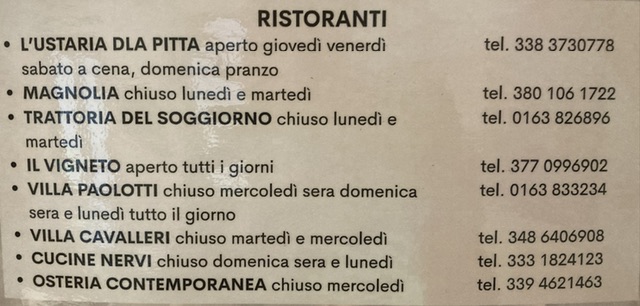
Supper was at Villa Paolotti where we have eaten well in the past. Goose was the star turn, and an older bottle of Ghemme. A very different experience from yesterday’s attempt at sophisticated dining. And for future reference, here are the other Gattinara eateries:
Wednesday 12 March
Our first appointment is with Muraje, at the top of those dreadfully narrow stone roads of Carema, where our hostess of three years ago from the Consorzio had executed a ten point turn in her large Alpha Romeo to retreat from the track.
We set off from La Pitta with our luggage on the dot of 10.00 to drive the 70 minutes to Carema, or rather to the Crabun Hotel in Pont St Martin a couple miles north.
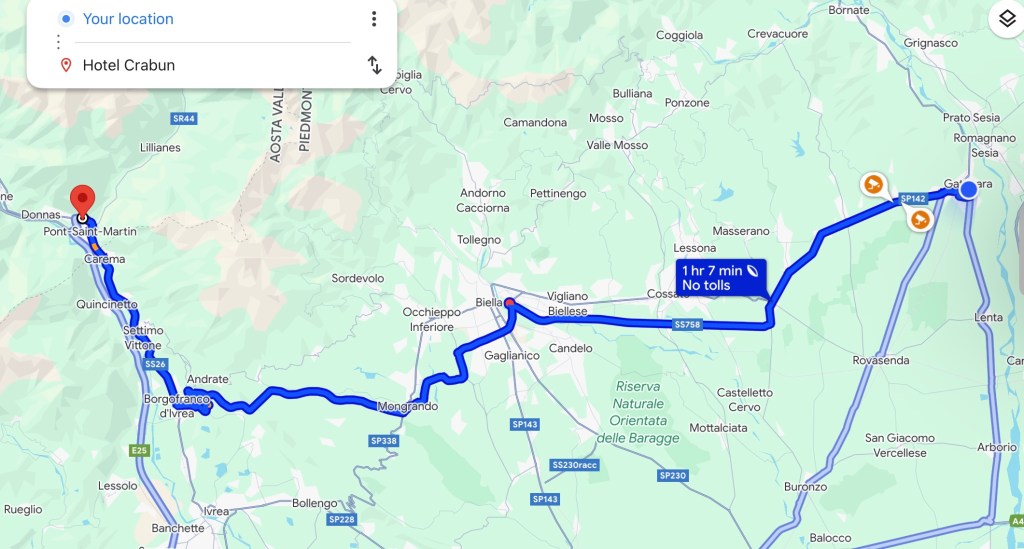

But first we went to find coffee and lunch, and to pass the time before the hotel opened at 14.00. Ponte St Martin hasn’t much to offer, or at least not during the week. In the end we found a very basic but hospitable offering at Da Massi of buffet antipasti (including anchovies and vegetables!) and plates of ravioli and finocchio cheese for less than €30, and then sauntered back to the hotel to unpack in our spacious room.
We parked in the lower carpark in Carema at 14.45, and arrived at Muraje at 20 Via Croce on the dot of 15.00 after a short walk to this higher level.
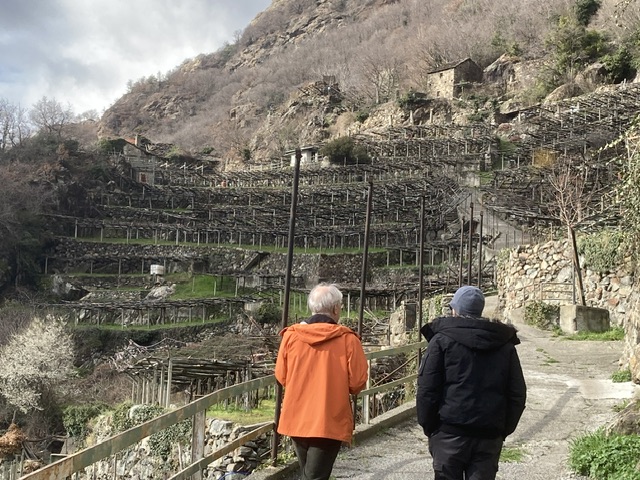

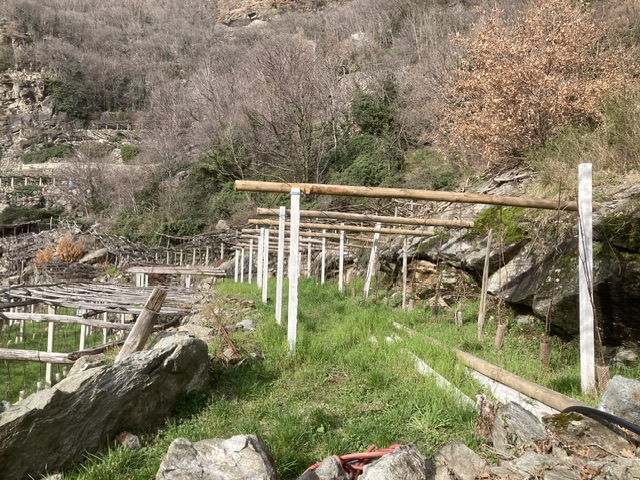


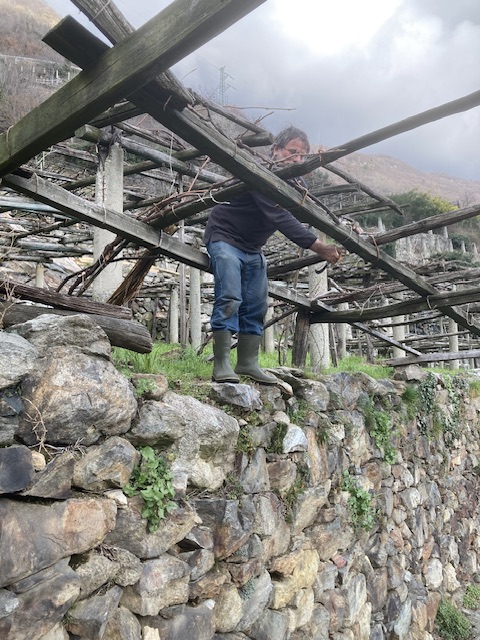

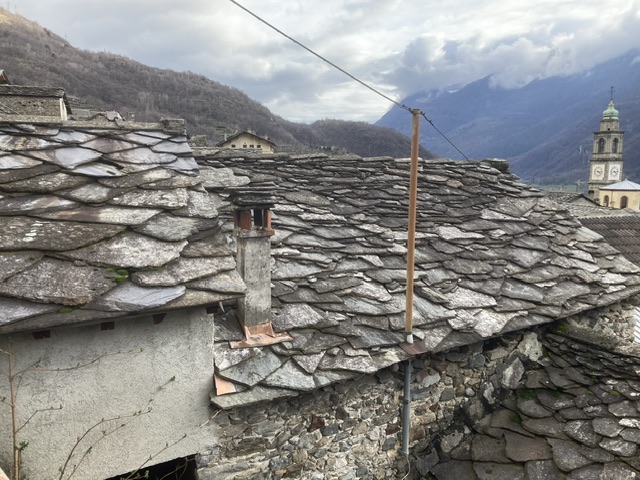
Federico and Debra have worked some of these terraces for more than ten years; Debra has an academic enological background and Federico describes himself as a wine lover whose passion drew him to wine-making. Both work for some of each week in their pied-de-terre in Carema and in Turin for the rest. Debra especially enjoys her colleagues: four local cats!
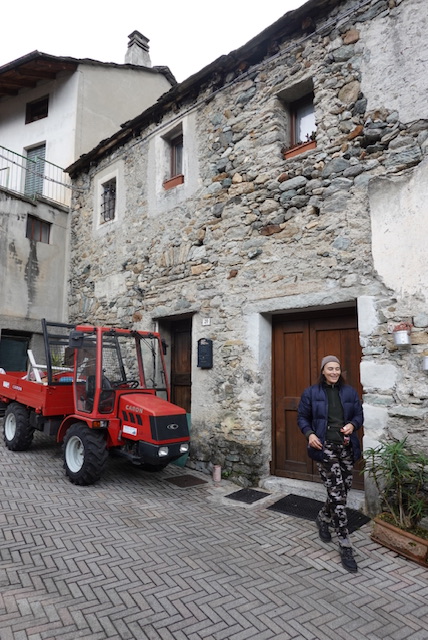

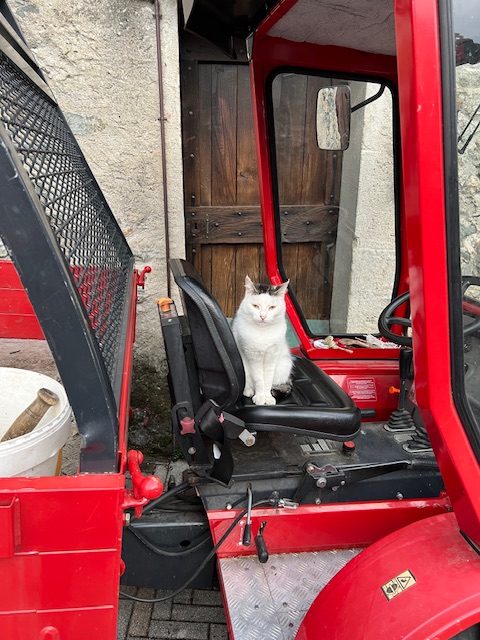
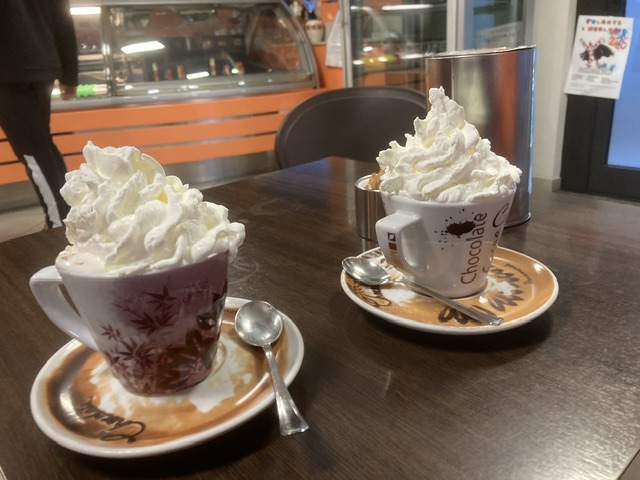
As the light went down and the temperature dropped we stopped off at the Gelateria con Cucina for a hot chocolate to warm us up, (David was channelling his inner Austrian genes) and returned to the hotel for a reasonable if not very exciting supper with one other set of guests in an otherwise empty hotel, redeemed by a bottle of the Cantina Sociale’s Carema Nebbiolo.
Thursday 13 March
We met Matteo of Sopravvento in a cafe just outside Carema at 09.30 and after coffee and introductions we drove behind him to the upper car park in Carema where we left our car and jumped in his more recent Fiat Panda to drive to the vineyards. His story is an interesting one.
As a successful sommelier in London for ten years (where he did both sommelier and WSET qualifications) he earned serious money on commission at the restaurant Hide, selling wines at astronomical prices to Russians. At the onset of covid restrictions he remained at home in Borgofranco, looking for a vineyard to buy, and to work with his older brother Michele first as negotiants, but later in the vineyard and in a small family cellar.
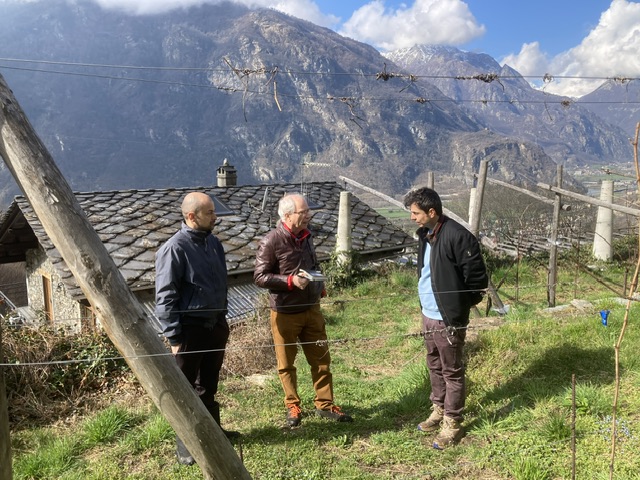
By his own account he is a dreamer, and never stops exploring the many possibilities that his creative mind conjures. Michele, who we met in the vineyard, is very grounded in the practical tasks themselves, and looks askance at some of his brother’s wilder ideas. Matteo showed us the terraces they are presently rescuing, and their many newly built concrete Pilun (pillars) which his father insisted they used (it is Carema!) and shared his ideas for a botanical garden, already underway with his new plantings of rosemary, mimosa, fig, plums and vegetables.
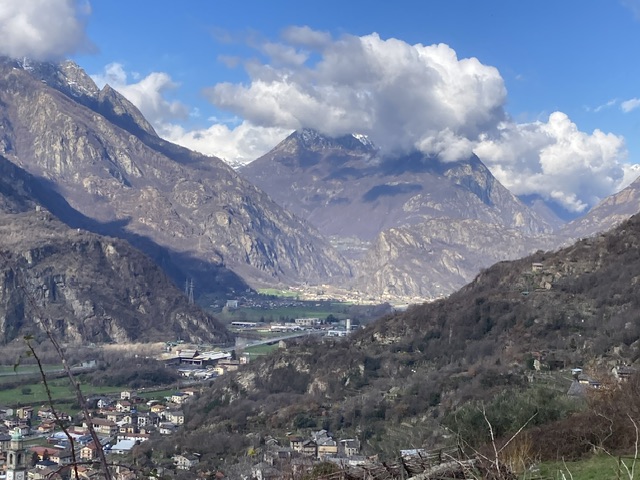


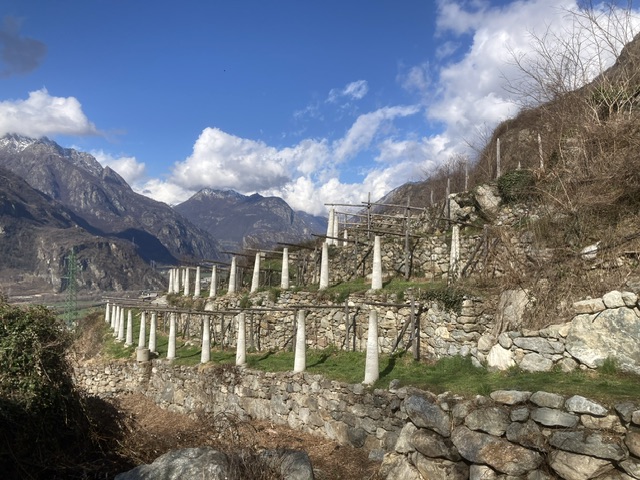

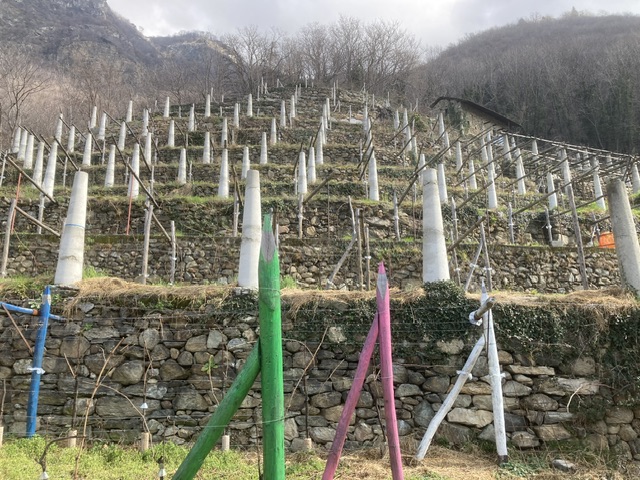
After showing us a very old building mid-restoration in the village of Carema in whose lower spaces they are now storing some wine in barrels, Matteo then drove us to the Balmetto outskirts of Borgofranco to a cellar he shares with his uncle and in which they began their wine-making. These highly sought-after dwellings benefit from a complex series of underground passages and natural tunnels out of which cold air continuously flows into their cellars; a natural air-conditioning system which we could feel. We tasted their wines in the little courtyard before driving back to Carema for Parmigiana in the popular cafe before our 15.00 appointment
Sorpasso is a real favourite of mine; we have visited Vittorio several times, including in Cantina della Sella where he works for three days each week. His English is excellent; his professional knowledge, both of wine-making and of the region is extensive, and which he readily shares with his fellow producers and with David.
Here are pictures from a visit in May 2022; little Umberto is now nearly five!
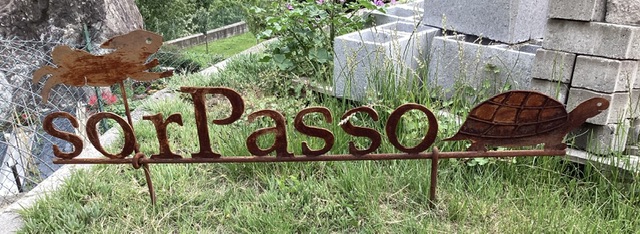
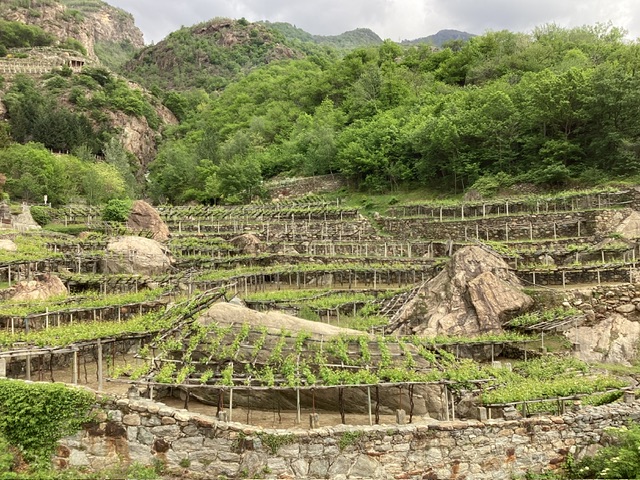
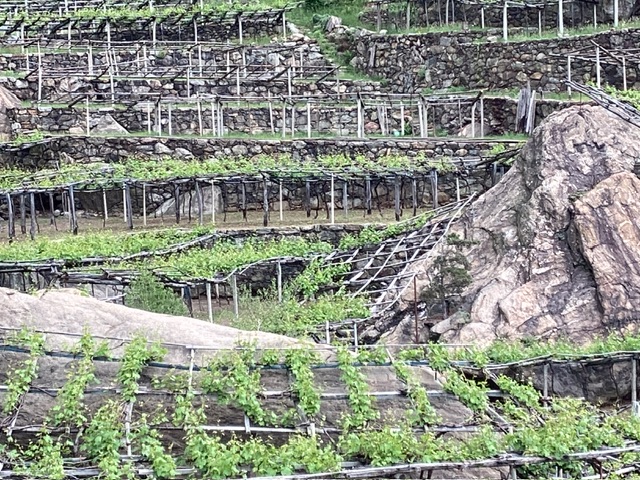


Today Vittorio took us up to his vineyards above where he lives. The climb was steep and the views magnificent. It is extraordinary how the old vines grow out of the steep mountain side, and how much work it takes to maintain the terraces, the tying in with willow whips and the pruning to create pergola canopies.
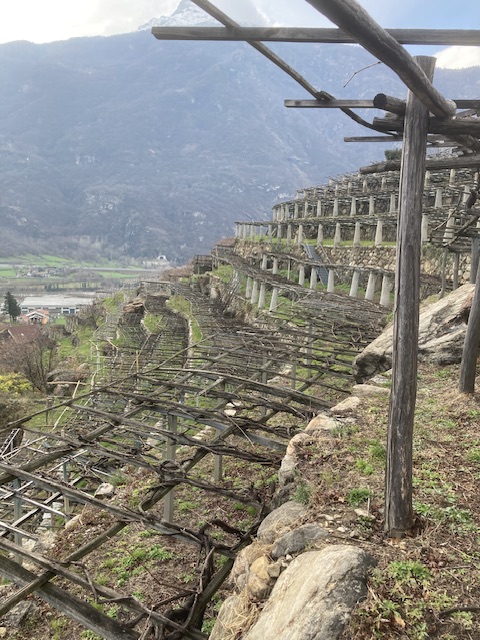
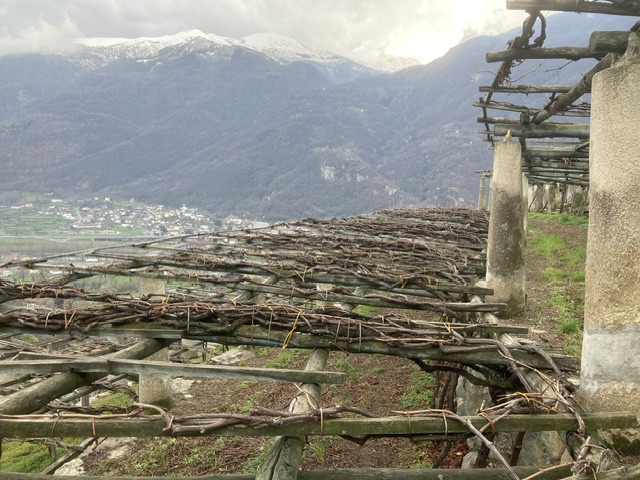

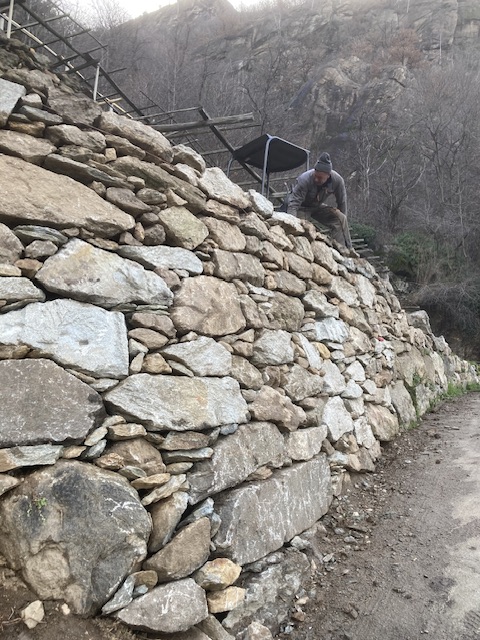

We enjoyed tasting his more recent wines as David pursued the topics required by Nebbia e Luce for their promotional material, and picked Vittorio’s brains on local eateries. We took up his suggestion of Da Marino for tomorrow, and he contacted CantaVin in Quincinetto for this evening where we had intended to go at six for aperitivi.
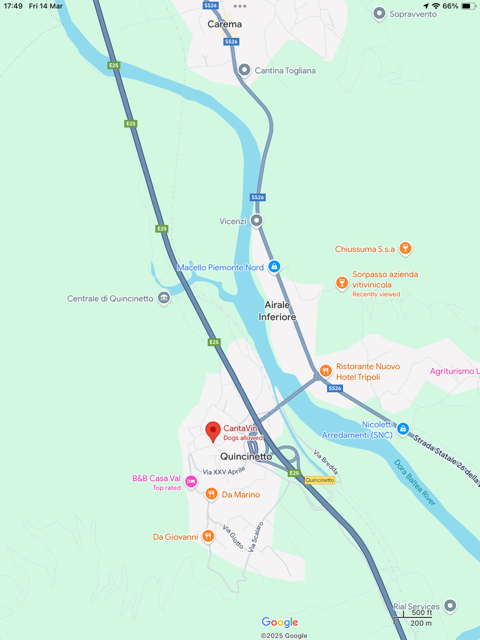
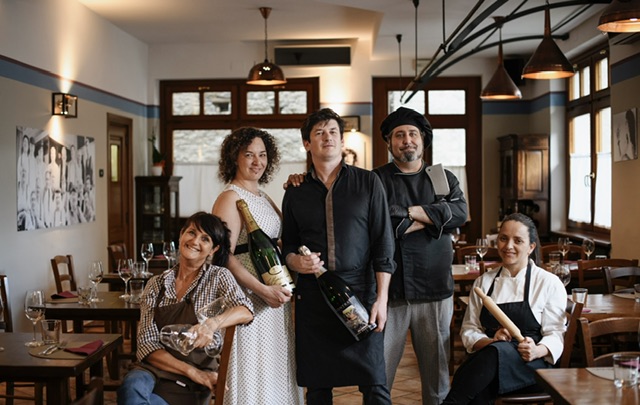
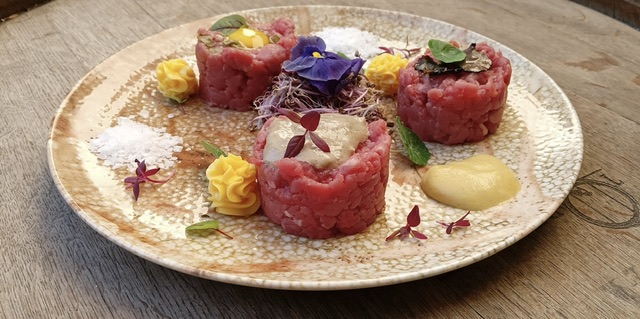
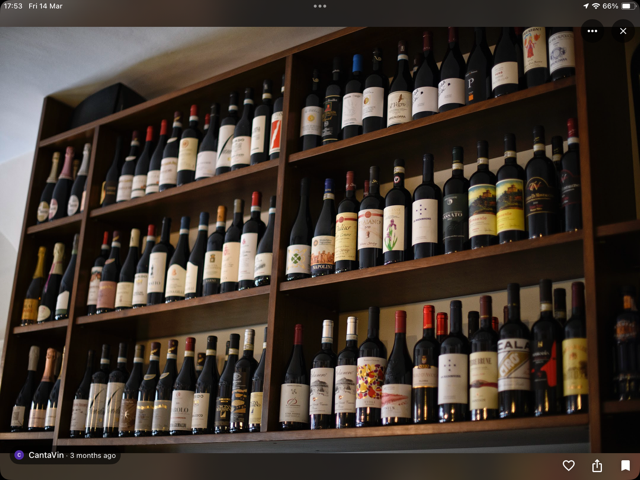
In fact we arrived nearer seven and were made welcome by his friend, the Enoteca’s owner, parking cautiously 100 metres from the very small and tight church square. This curious little town has three good ristoranti and a very large motorway toll gate as the fast road to Aosta and France races past, parallel to the Dora Baltea river. The food was good and he had plenty of wines by the glass for David to choose from though he had to be pressed to offer us something from Carema! The photos are taken from their website. We had the same raw Fassona (beef) starter with egg yolk, bagna cauda and truffle.

Friday 14 March
Our appointment this morning was for 09.00 to meet Gian Marco Viano from Monte Maletto in the heart of Carema. We had met in May 2022 over lunch with Vittorio, at Da Marino. He is another Sommelier turned grower and wine producer, whose family originally came from Ivrea.
He decided to buy or rent land in Carema ten years ago, and completed his first vintage in 2015, the year his first child was born, and in which sadly his father Gianni died. Then land and property were readily available but this has changed since investor interest has raised the prices.
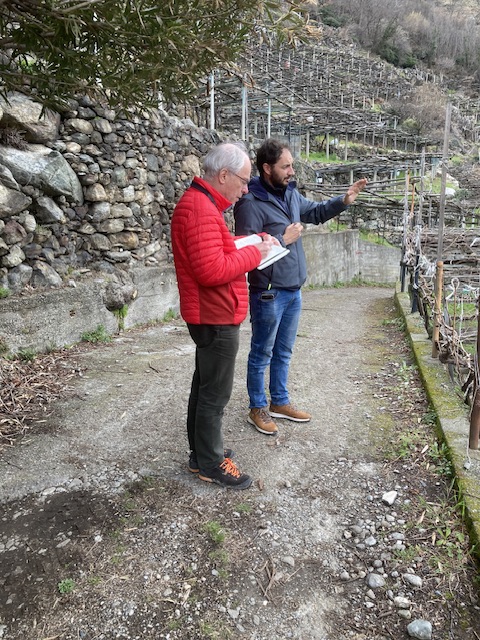
He has some vines high up in the most northerly vineyard of Carema – Ruere – and which can only be reached by a circuitous route from the north, but where he thinks expansion may be possible because its relative inconvenience makes it less sought-after. It was one of the first areas to be abandoned, for the same reason.
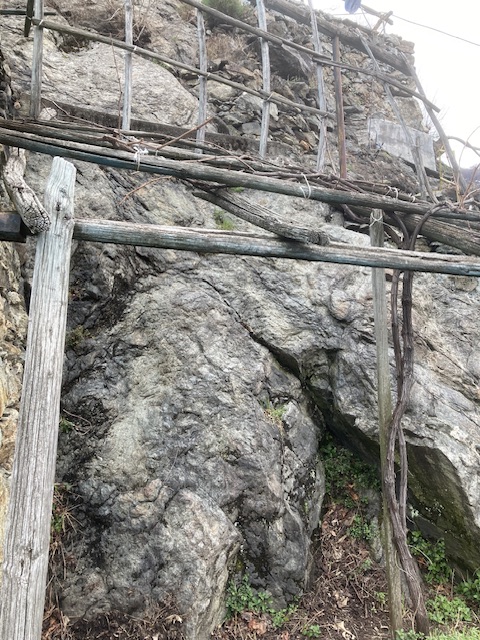
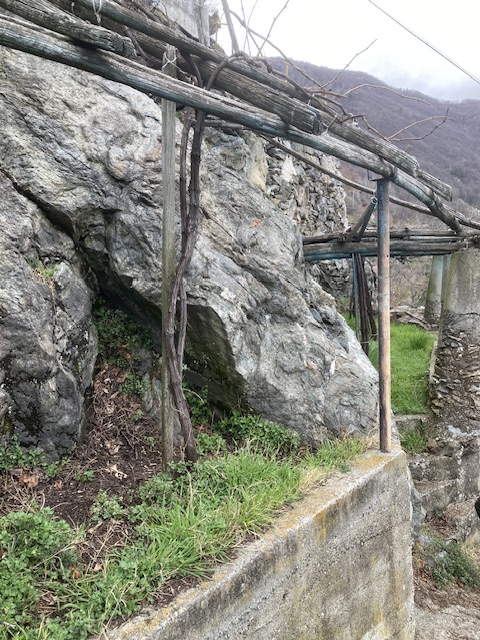
We walked with him passed the vineyards of Muraje, (greeted by Federico on his bright red mini tractor) to look at his modified pergola system (wood is expensive, and yields today are much lower than historically). Gian Marco had considered using guyot type training but has since discovered that acidity was one degree lower, and alcohol one degree higher from grapes grown by guyot, compared with the grapes alongside on traditional pergola systems. Also the cover provided by the foliage protects the grapes and reduces the temperature on the terraces.
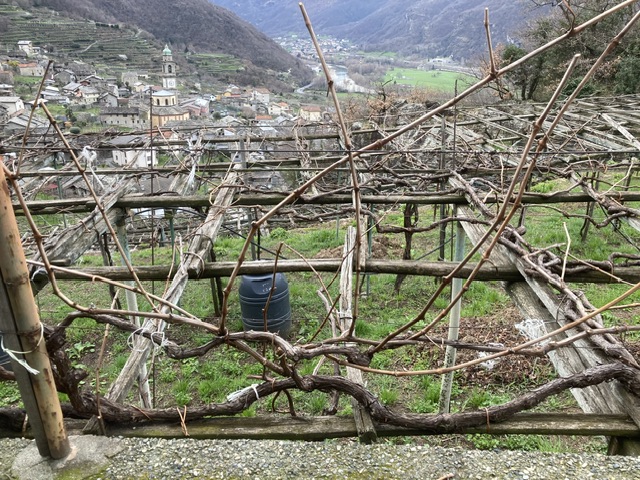

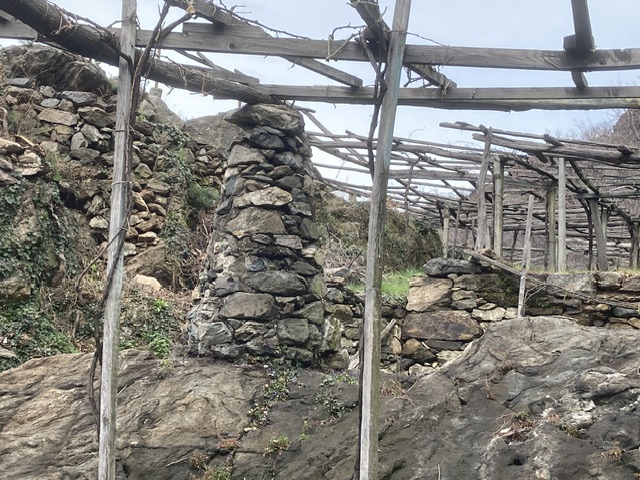
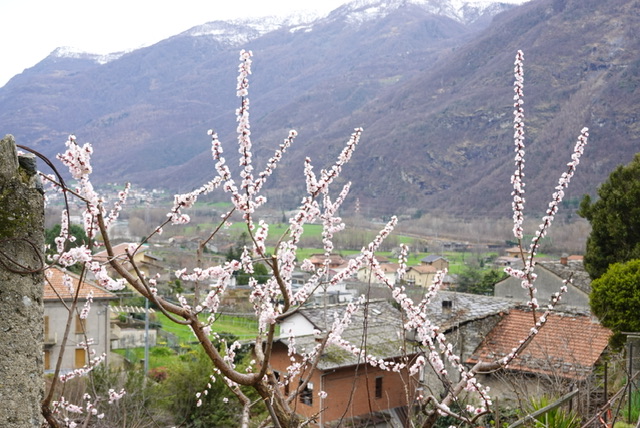
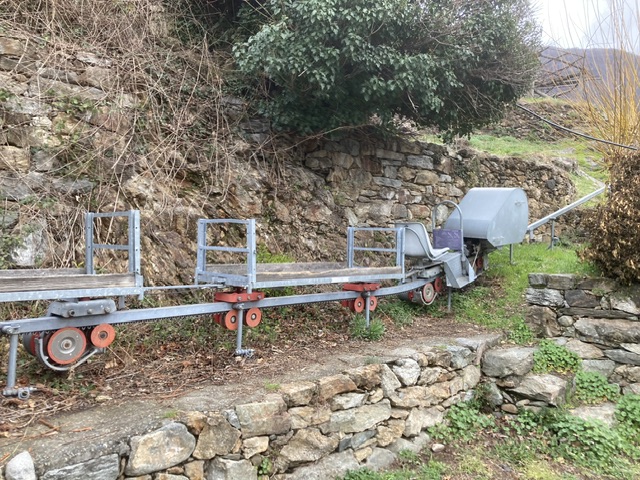
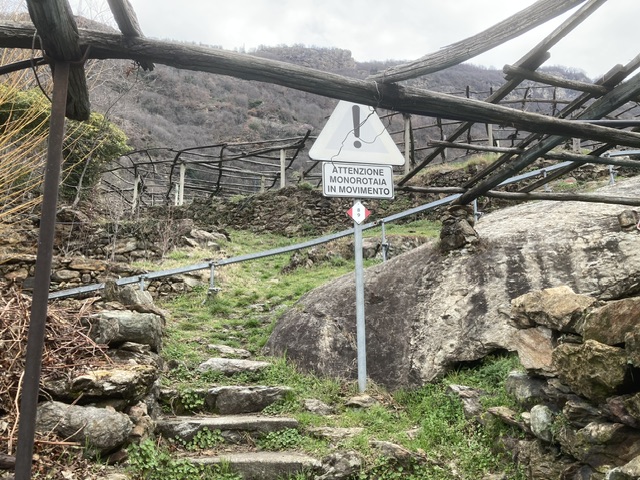
The vigorous vine in the foreground is Neretto and has already scaled two metres of wall to reach this level. The pergolas are unbelievably complex, supporting vines whose wood runs for metres in every direction, intended in former days to carry perhaps thirty bunches per vine, many of which never ripened fully. The monorail is maintained by those whose land it crosses, and remains useful for carrying wood etc to the vineyards.
Gian Marco described how in the past groups of women would to sit in a circle in the vineyards as the fruit was being picked to sort it into three types: bunches for Carema, for Vino Rosso, or for Grappa.
Teams of ‘large’ ie heavy people at harvest time would move from cantina to cantina to tread the grapes! When we were tasting in his cellar under his house we learned that he uses his two children (aged 10 and 6) to crush small amounts of grapes in small barrels; at the moment they are the right weight!
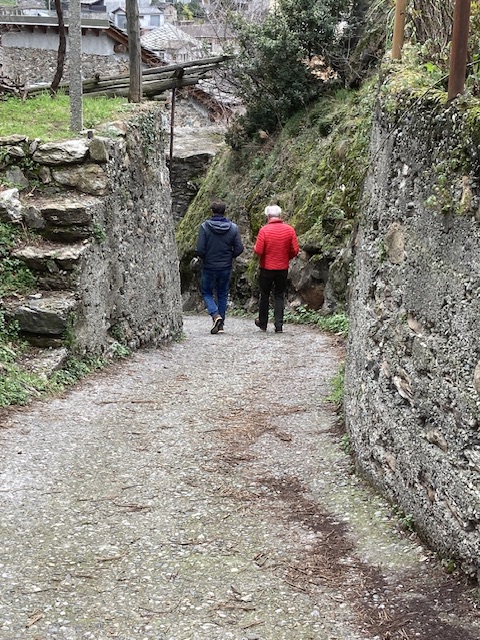
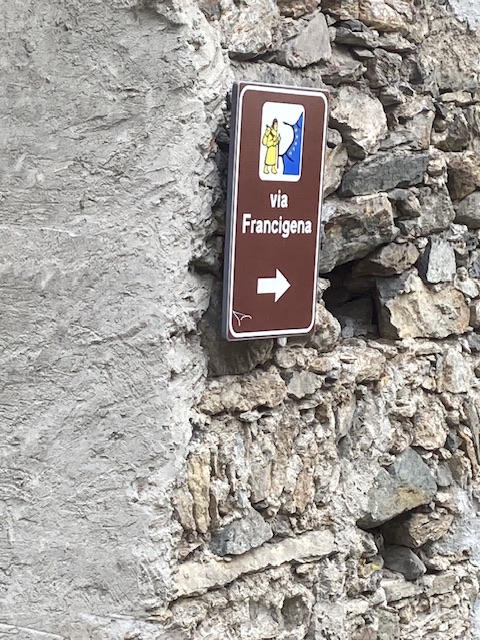
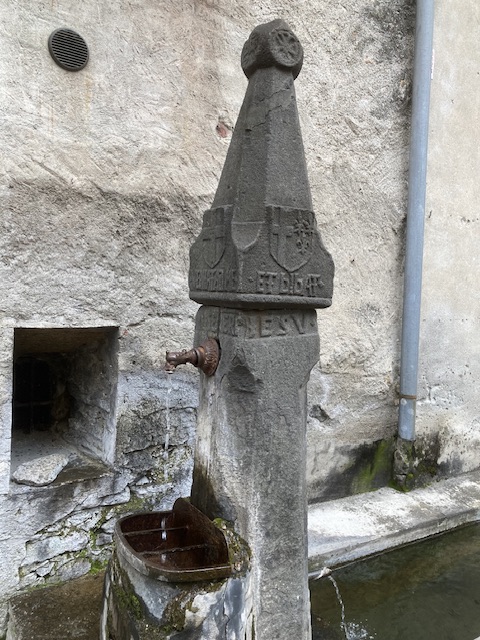

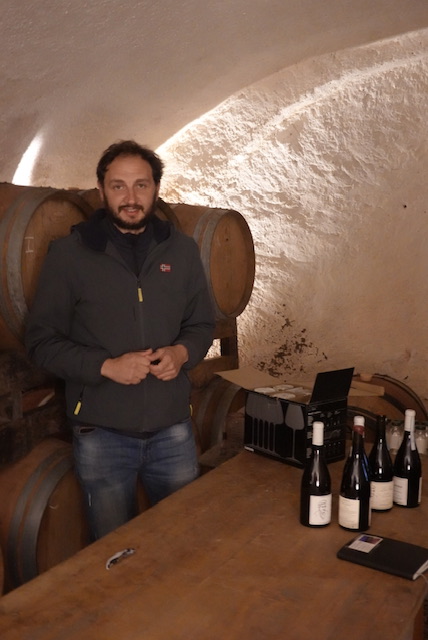
Like Matteo of Sopravvento, whose cellar is also being developed in the same building, Gian Marco has a huge task ahead of him, creating new working spaces and restoring the ancient stone building. They are friends, and can help each other. These long term projects are not for the faint-hearted. The fontana di via Basilia dates from 1571 in homage to the dukes of Savoy.
We went for lunch to Da Marino, set atop the hill above Quincinetto, where the elderly proprietress was organising parking in between pushing the antipasti trolley full of vegetables, after which we ate pasta and funghi. It was exactly as we remembered it from three years ago. A sort of ‘you get what you’re given’, formidable operation, and clearly very popular.
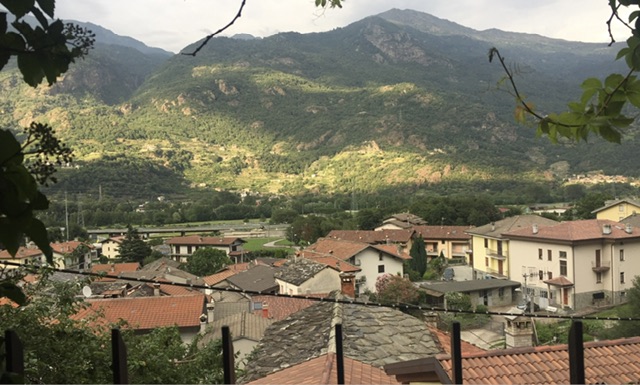

There followed an afternoon of writing up for me and tying up of loose ends for David on his fact-checked Decanter article as well as sorting out notes from the visits. We ate this evening in Rame Verde (Green Copper) – a traditional ristorante (which opens when he chooses, according to Gian Marco). It was very good, if traditional, and more importantly, close by.
Saturday 15 March
Today we travel to Alba, but not before calling in to Kalamass at Palazzo Canavese for a 09.30 appointment en route. We left the hotel at 09.00 after a rapid breakfast and packing.
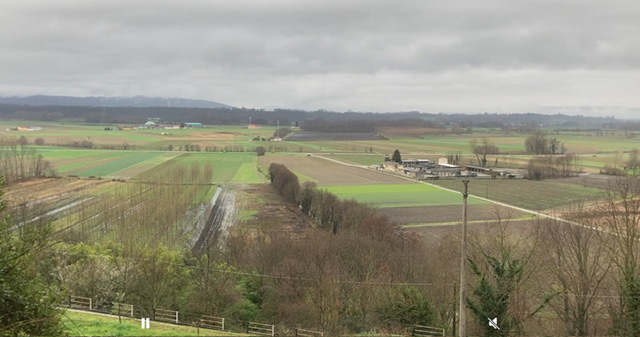
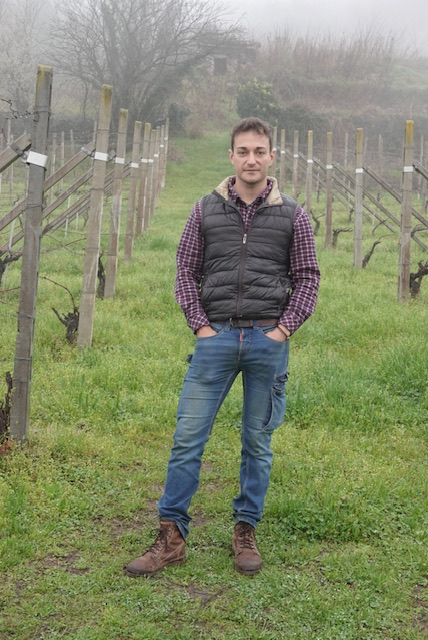
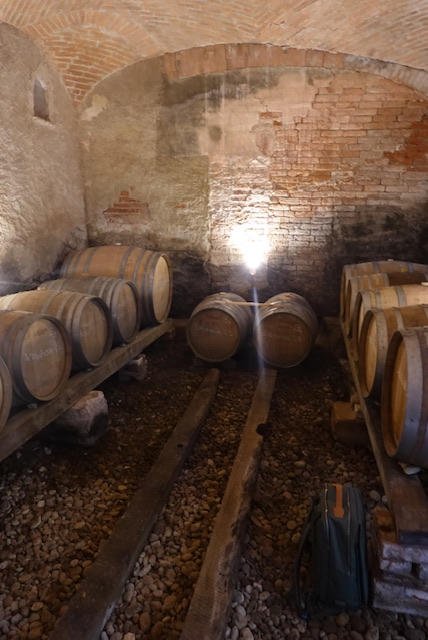
Riccardo Boggio met us in the drizzle – the first wet morning of these visits – and drove us up the west facing side of the Serra di Ivrea moraine to see the vineyards he is caring for, some rented, some which he owns. At 30, he has not only established himself as a successful vine grower but also bought a fine house with an existing cellar and outbuildings in which he can make his wines: Erbaluce, Nebbiolo and Barbera, with a little Neretto. He trained as an eneologist at Alba, having decided against his original plan to be a physiotherapist and met Vittorio there, with whom he has made his first wine at the tiny Sorpasso cantina.
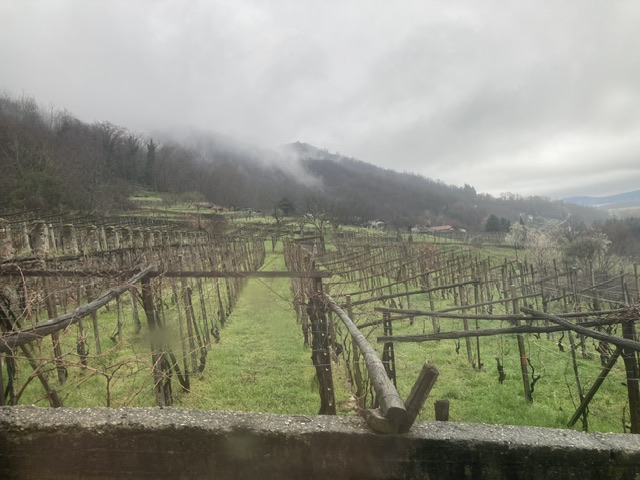
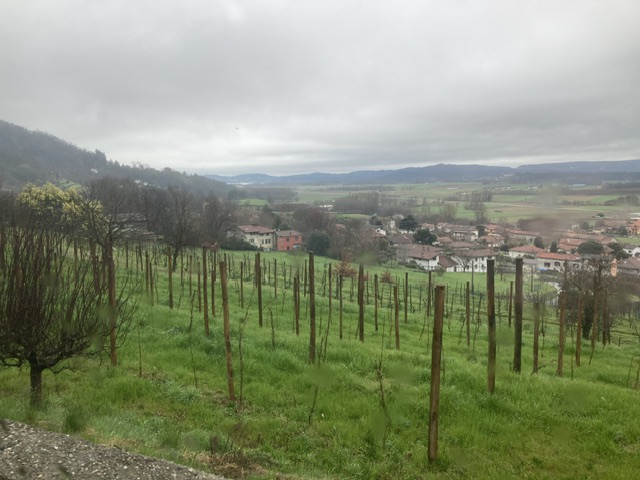
We moved on at 12.00 towards Albugnano where only yesterday Roggero had invited David to visit, and en route stopped at Cigliano to eat in Trattoria A Cà Mia, which was extraordinary!
The food was ambitious (lovely tjarin with anchovies, pasta and prawns followed by duck and tagliata) and beautifully presented though the interior was ‘normal’ and unpretentious. We were the only clients beyond a neighbour who stopped for one course, coffee and company.

I drove on towards Albugnano and we arrived as a large group of tasters were leaving. Marina quickly changed gear and treated David to a rapid introduction to her family’s wines, including Montanera, made by her enologist brother from the vineyards of his father and grand father. The old family house has been demolished to make way for a new tasting room and cantina. I drove the last hour of our very rural route
We reached Alba soon after six, plumbed the depths of the Hotel Calissaro’s unpleasant underground car park and unpacked our things in room 506 before beers in the bar and a simple supper in the hotel’s bistrot, accompanied by a disappointing bottle of Nascetta.
I was asleep by 22.00….
 countrymouse