
Wednesday 9 July 2025
We left the house by car around 11.00. David had booked lunch at Bowood county hotel en route to Bristol, and we arrived without incident to join a couple of other tables in an otherwise quiet dining room, serving strangely pub-like food; nor was it expensive, despite the exclusive surroundings.
We reached Thingwall Road in the northern suburbs of Bristol, where Tricia greeted us warmly and showed us round the house to which they moved a few years ago, after their simultaneous medical crises, and in order to be closer to their daughter.
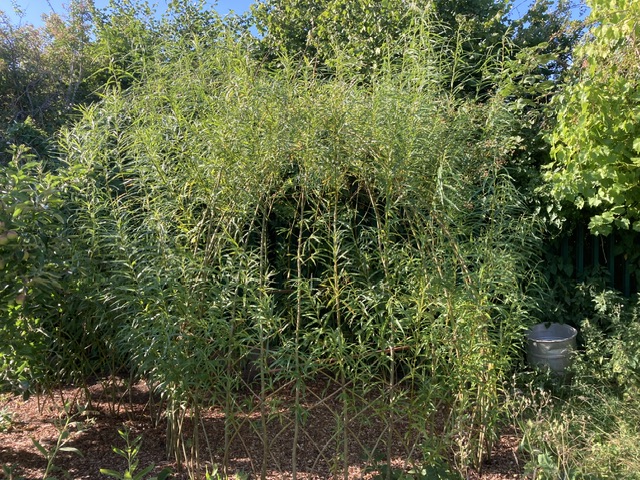
They succeeded in finding this elegant early C20 terrace house within the specified mile from both a dog walking area and the family. Directly opposite them is a large allotment site complete with a community apple orchard, and a newly made willow enclosure. Both David and Tricia seemed well and happy, though David (aged 88) complains of tiredness after dog walks – but as his doctor observed – after six or seven miles anyone might….
Thursday 10 July 25
We had a delightful evening with them, before setting off next morning for Wootton Courtenay, just south of Minehead, for lunch with Jackie and James in their home overlooking Exmoor. The journey was mixed; a busy but moving M5 round Bristol, and then a slow, crowded road towards Minehead.

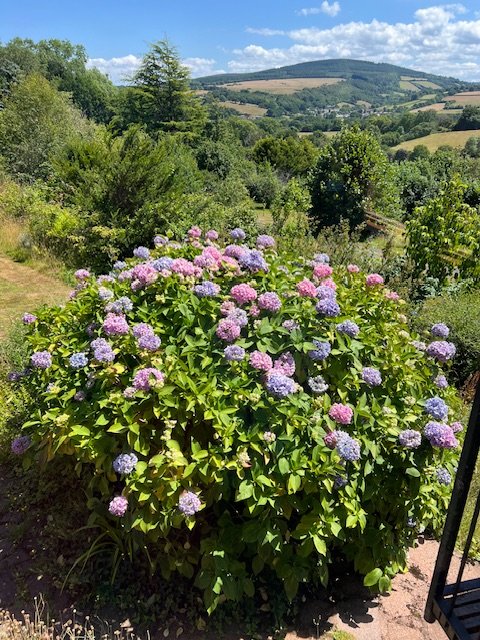
Ranscombe Lodge has a long history of being cared for by professional plants people. The original garden was created by a person in charge of trees at Kew (who weekly commuted from Minehead) and now Jackie and James (both trained and experienced agriculturalists) preside over its careful re-wilding, and its increasingly varied community of wildlife – including polecats! Jackie has also successfully established her musical credentials in the area, and is much sought after as a teacher, performer and accompanist; and both are heavily involved with the local naturalist groups’ monitoring networks.

After a delicious lunch and tour of the garden, we moved on towards Ilfracombe, choosing the coast road rather than the route over the moor. Big mistake! It is a slow, busy road (but what road in Somerset and Devon isn’t?) and one which falls foul of one of Google’s more dangerous errors.
At Lynton, after a sustained 1 in 4 downhill from the moors’ heights to sea level, google maps highlights the steepest, narrowest (largely single track) and most windy road out of the village. Yes – it’s considerably shorter than the A39 road’s route, but nightmarish – even when it isn’t the route of choice for coaches…
We were stuck behind one for the whole incline as it stopped again and again to negotiate on-coming traffic, including an equally enormous coach (plus trailer!) Our car has a dodgy handbrake, and very little acceleration, and began to stall in first gear; the clutch slipped repeatedly. As we waited for the road to clear enough for us to edge forward, a local came alongside, and quite literally gave us a push while shouting ‘keep your foot down and don’t change gear!’ Thank goodness for his help. It was a ghastly experience.
I have written to Google maps… most likely in vain. I arrived in Ilfracombe still shaking.
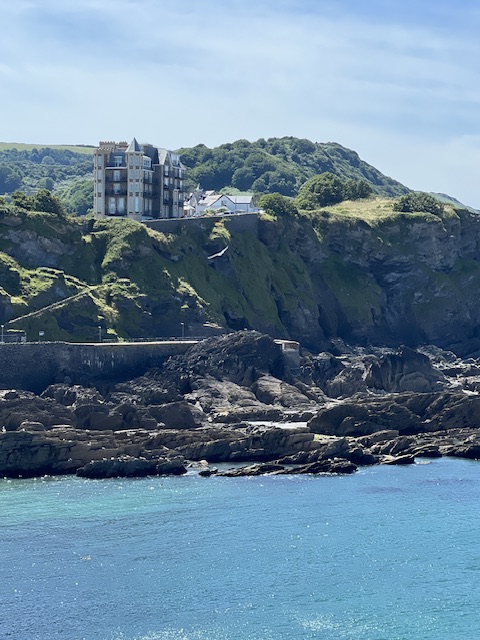
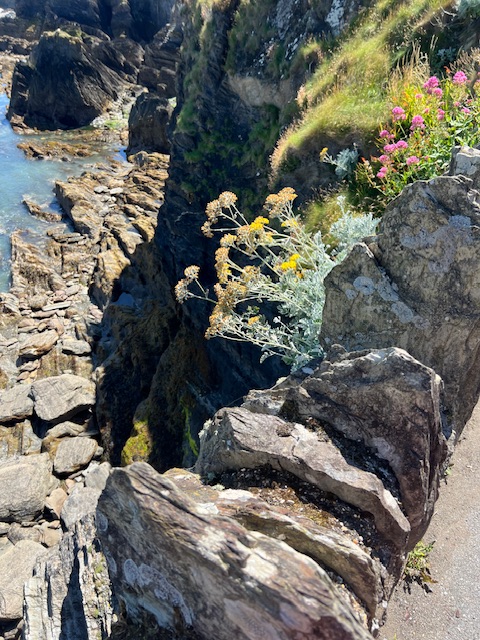
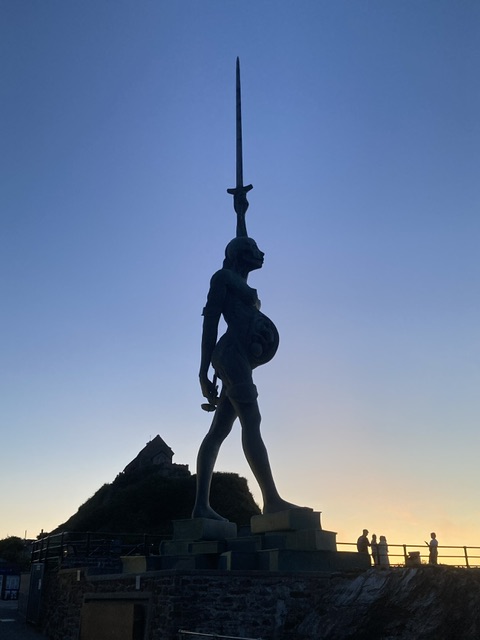
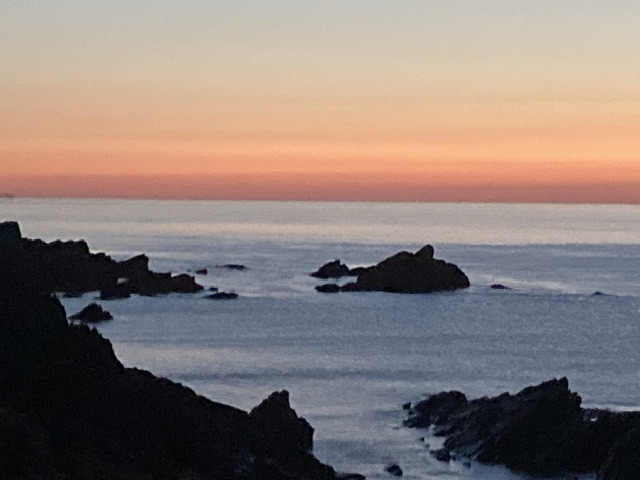
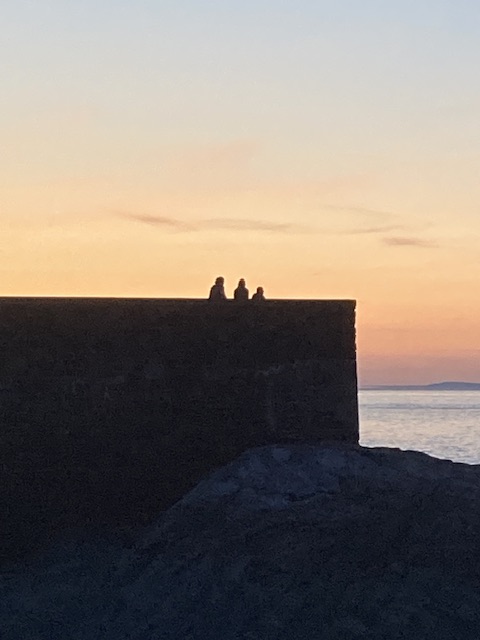
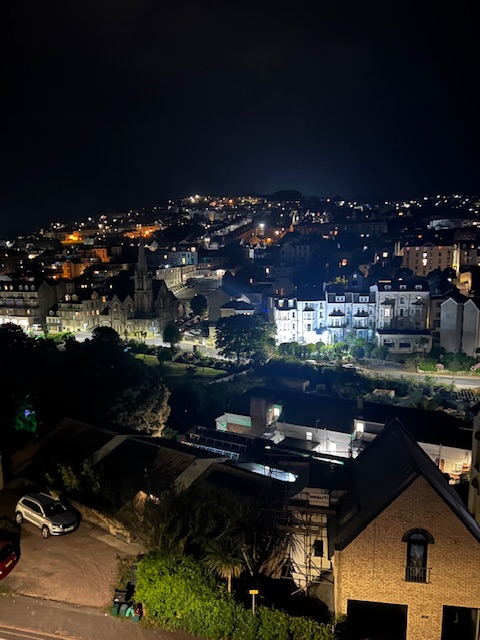
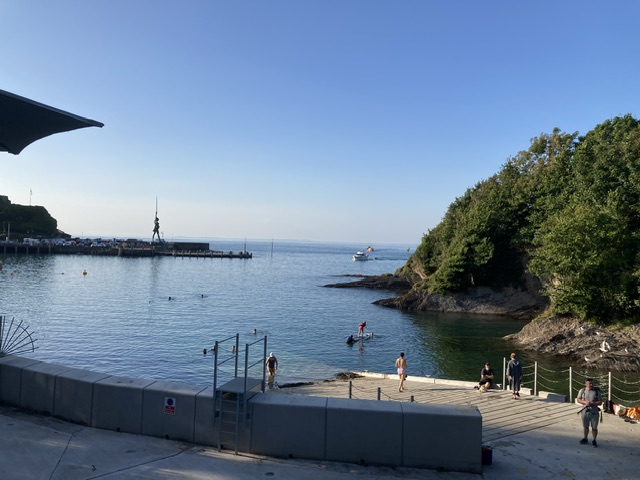
We settled into our friends’ delightful flat in Granville Point, formerly a hotel with a fine position overlooking the small coves and outcrops which surround Ilfracombe harbour, and set off in the still hot sun for a walk around the harbour and then on to the Antidote, a very small highly recommended restaurant close by the harbour. We ate very well, and learned from our hostess of the struggle shop and restaurant owners are having to keep afloat in this very depressed town; a vivid example of the seaside decline lately reported upon, and evident everywhere. As the sun set, we paid our respects to Damian Hirst’s Verity, 20m of bronze, gracing the harbour.

Friday 11 July 2025
We drove south (slowly) towards Braunton just north of Barnstable, to the village of Georgeham, to join Hilary and David, whose hospitality we have enjoyed many times before when they were based in London for a decade. Now retired, they are developing a very different life style – with fewer visitors, lots of fresh air and the Devon coast and Putsborough and Woolacombe beaches only a short drive away. Only half the village’s inhabitants live there all year round; the large number of holiday homes have a depressing effect on local communities.


After a lovely lunch it was still very hot – 32 deg in London, with the whole of the S and E in the grip of the third heatwave of this summer. The west country fared slightly better, at around 30 deg, but the afternoon was too hot and humid for expeditions. Instead we spent an hour or so before supper walking on the local beach and footpaths with Phoebe, their very timid Labrador, whose traumatic early years in busy, noisy, scary London have left their mark. There followed alot of information exchange – catching up on former projects and colleagues as well as hearing about one another’s current occupations.
Saturday 12 July
We hoped to visit a former colleague now living in Cornwall well south of Launceston, but she had rightly pointed out that we would be spending the whole day in the car, covering as little as twenty miles in an hour, so she nominated the Rectory Farmhouse Tea rooms at Morwenstow, on the coastal path just north of Bude for our rendezvous at 11.00, while the rest of her family (three boys and their father) were performing in Launceston brass band. It was a delight to see her and to catch up on all their lives; their school had just finished for the summer, and after a birthday party tomorrow, they were heading to Derbyshire for a camping holiday. Such a treat for me to see her!

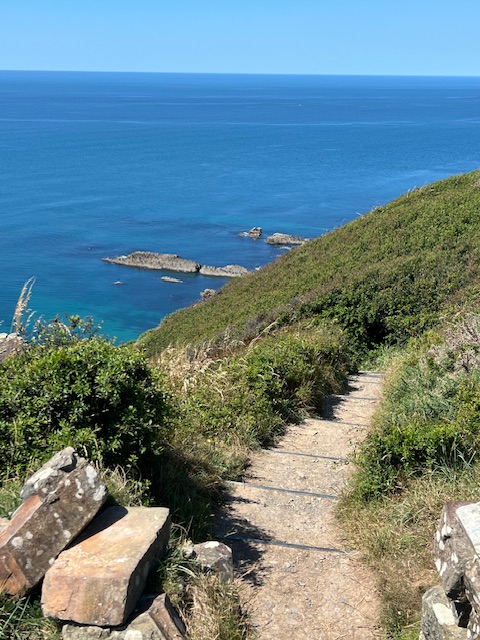

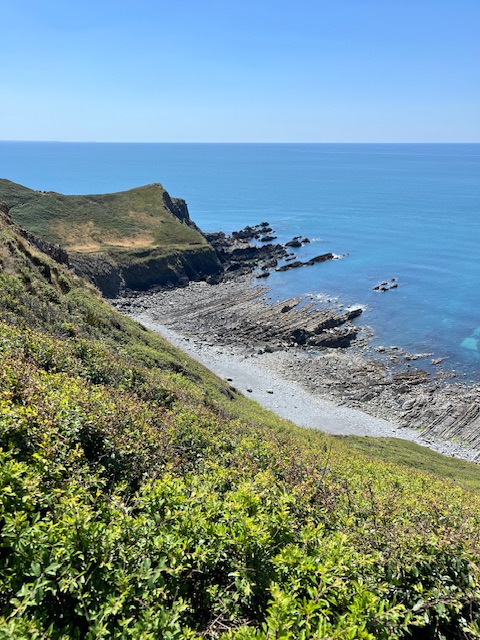

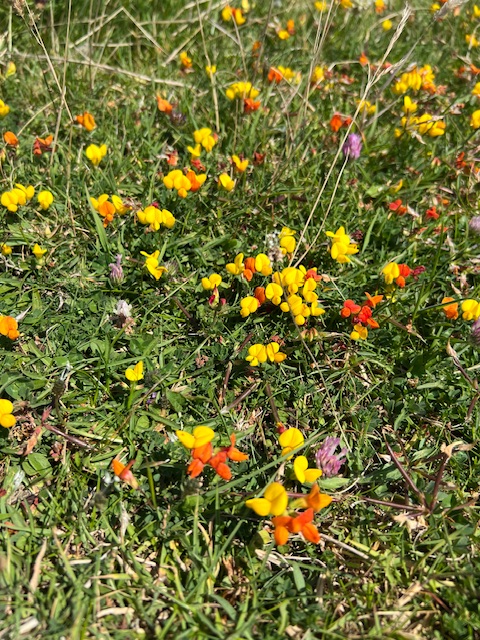
Morwenstow is a fascinating place. Its church was hugely enhanced by an eccentric victorian clergyman – Stephen Hawker – who it is said, composed the earliest Harvest hymns while smoking opium and sitting in a wooden hut he had built on the edge of the nearby cliff. Now in the care of the National Trust, it repaid a visit; fine if vertiginous views; huge empty spaces on the cliff top; wonderful flowers. And still very very hot…
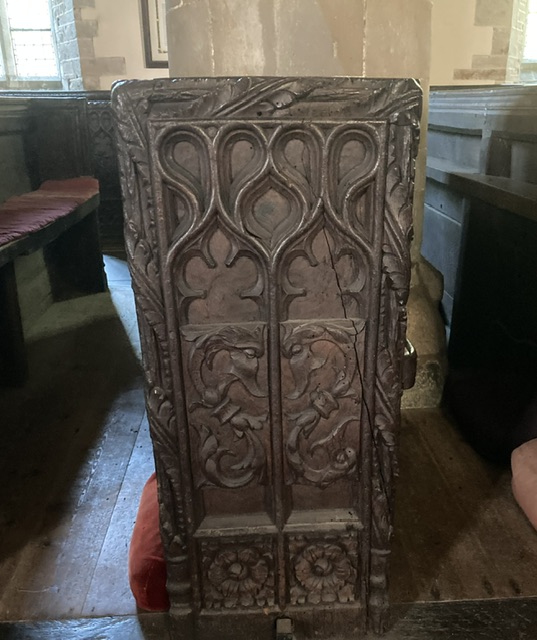
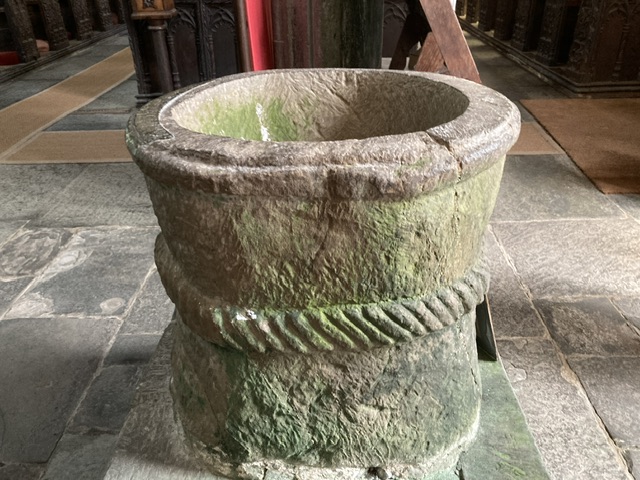
The church has very fine examples of Norman and Romanesque arches in the North aisle arcade; three of which are almost complete semicircles, around eight feet wide, supported by plain circular columns dating from around 1130, made from calcareous dun-stone quarried from the local cliffs. The central arch has unusual beak-head ornamentation with no less than 26 faces carved on it, at three to four inch intervals, in this manner unique to Cornwall, and other styles very occasionally seen in England, south of Yorkshire; rarely in Europe. Reading Abbey, founded in 1121, used this style on a pillar capital; it was not used anywhere later than the end of the twelfth century
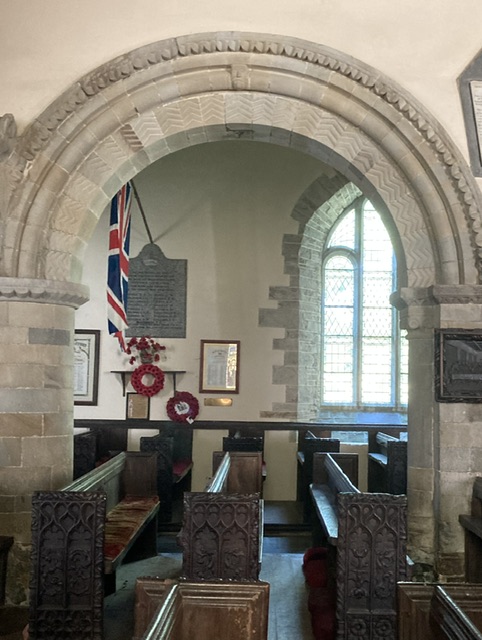




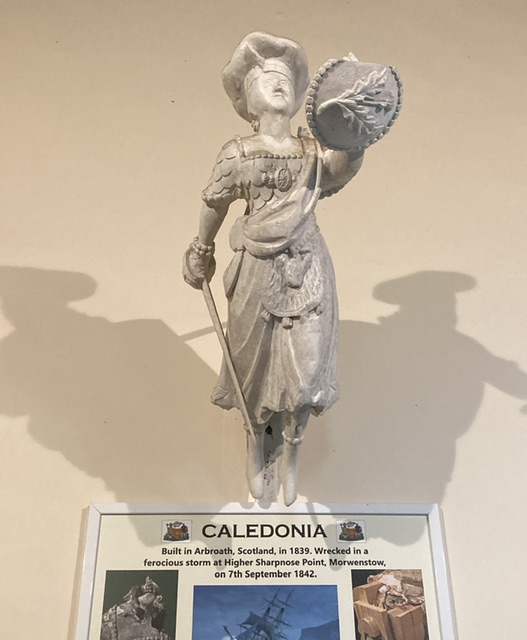
As vicar, Hawker all too often had the sad job of burying the washed-up bodies of seafarers whose vessels had foundered nearby. The figurehead of one vessel was rescued and placed above the graves of its captain and crew. The original now stands inside the church, with a replica marking their graves in the churchyard.
Hawker rebuilt the Rectory to mirror the architecture of the church itself, and both buildings now stand as a tourist destination, with homemade flans and cakes also available in the Farmhouse Tea Rooms. Jo had a pot of tea in a medley of china designs; we stayed on for a lunch of salad, before returning to Ilfracombe for the rest of the weekend.

David had found reasonable coffee in a café (Annie and the Flint) on the High Street, but interesting places to eat were in short supply. After struggling through the depressing crowds by the harbour where children nattered for ice creams and parents tried to eke out modest finances with expensive if enormous bags of chips, we headed for the Limekiln on the other side of the harbour, now a bar and popular restaurant. From its balcony over the jetty we watched paddle-boarders enjoy the evening sun and an incoming tide while we drank our beers.
Supper was in the recently opened Olive Branch restaurant on Fore Street, part of a newish venture running a B & B on the floors above. It was quiet, civilised and friendly.
Sunday 13 July
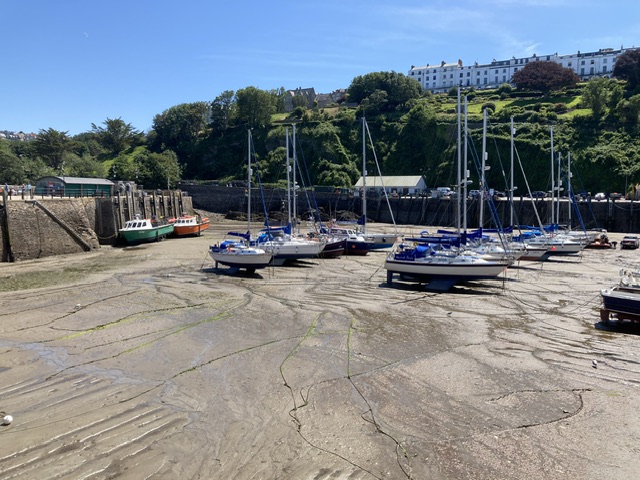
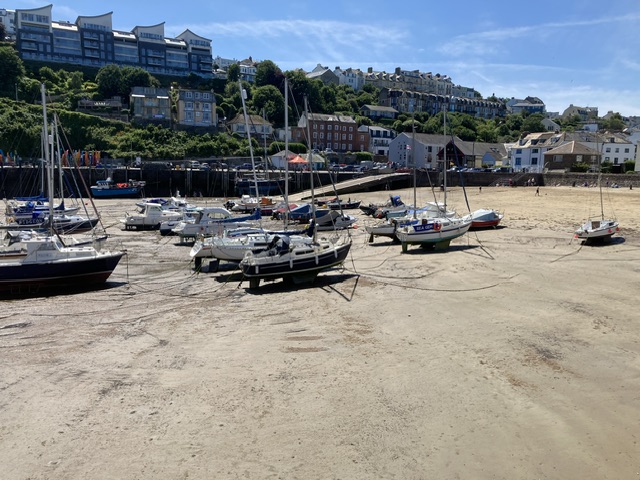
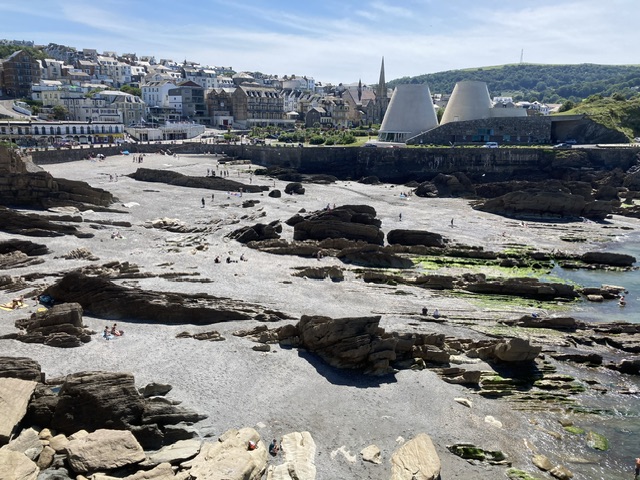
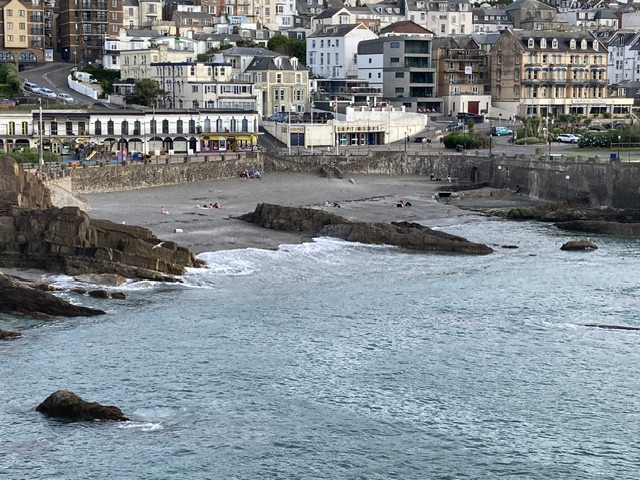
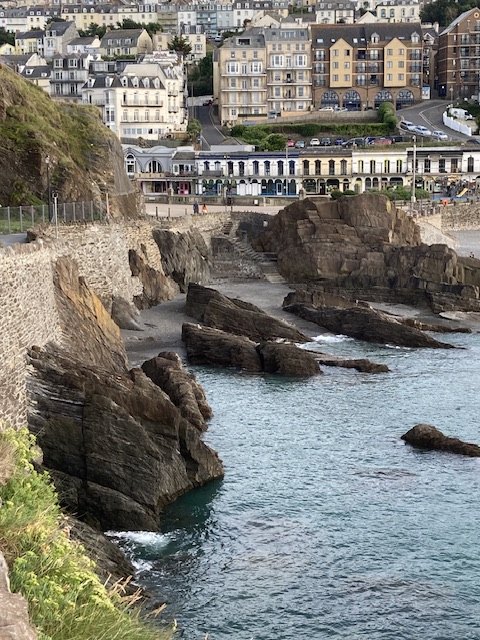
This was the weekend of the third UK heatwave though we were fortunate in having the fresh on-shore wind to keep temperatures bearable. We enjoyed a morning cliff walk when the tide was fully out, revealing large areas of beach and rock of which we had not been aware, as we rounded the hummocks that separate the small bays, beaches and harbour.
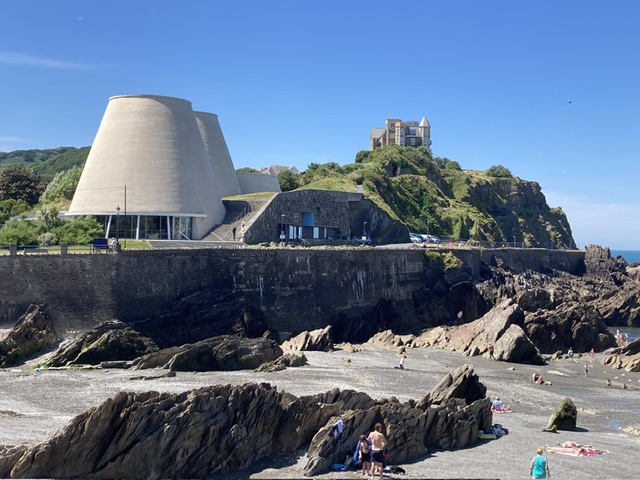



We ate hummus and pittas for lunch in the wine bar formerly a restaurant founded by Damien Hirst, whose 20m bronze statue Verity overlooks both it and the harbour.
Sadly the Tunnels beaches are temporarily closed. A serious rock fall at the start of this season has rendered all but one route unsafe, and the owners are unsure whether they will ever re-open, given the huge cost of repair and restructure.
These were built in 1852 when Cornish miners were employed to dig four tunnels through9 the cliff from Runnacleave Road to access beaches which otherwise were unachievable. Pools were cut in the sedimentary strata which filled with each tide, and which retained safe water to swim in; Ladies’ and Gentlemen’s pools, at a safe distance from each other.
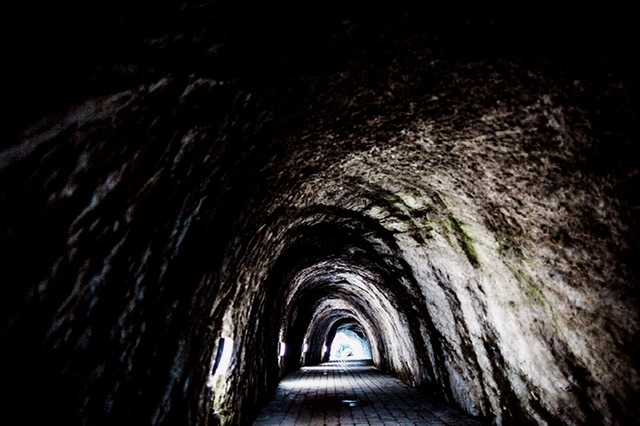
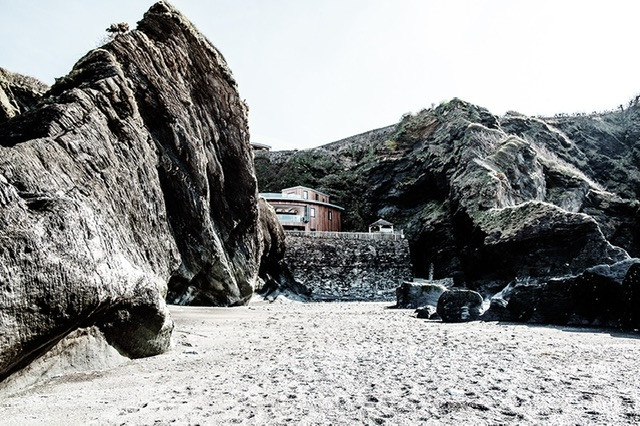

The owners still oversee a successful wedding venue business which manages to function using the one remaining safe tunnel, and elaborate accommodation but its long term future is uncertain. Such a shame!
It was very hot, so we headed indoors, to lay low until early evening when we retraced the morning’s walk, to experience the massive variation of sea level at low and now high tide. Notice how the harbour has filled, and the huge rocky beach expanses have disappeared. The Bristol Channel has the greatest contrast between high and low tide heights in the whole of Europe. Ilfracombe’s coast line certainly demonstrates this !

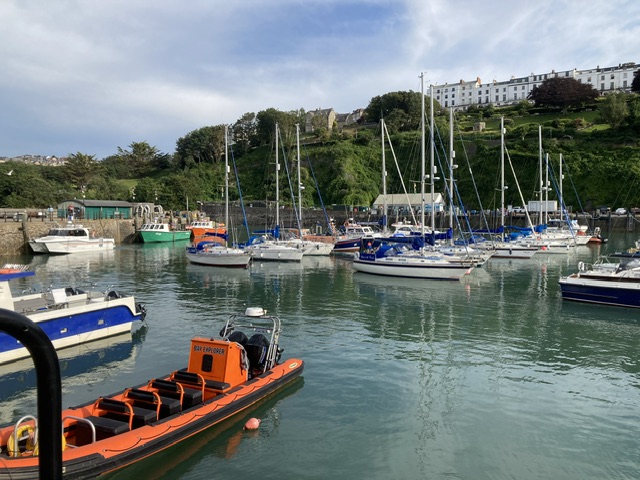
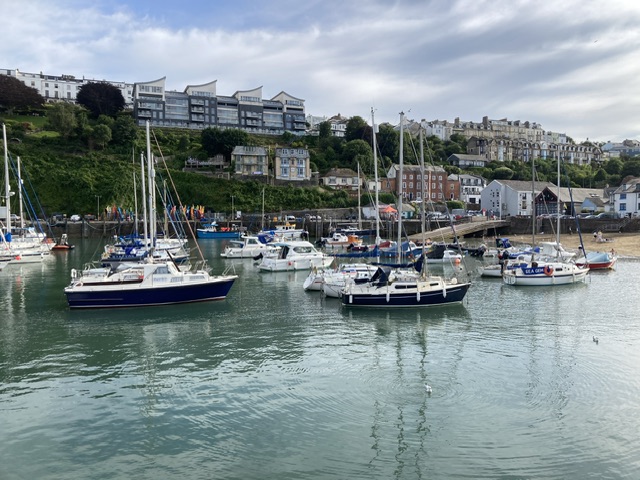
The main focus of the day was the remarkable World Club Championship final between Chelsea and Paris St Germain, held in the even hotter USA. Chelsea, to everyone’s surprise, won 3-0. Remarkable. It was just as well David had brought a very fine bottle of Champagne (in a moment of acute prescience) to accompany the salad and poke bowl we had purchased from the local Aldi. It was quite an evening.
Monday 14 July
I had searched Devon for somewhere special to eat, and turned up Gidleigh Park almost exactly half way between Ilfracombe and our next destination – Stoke Gabriel, and the new home of another former colleague, Di, and her partner Julian. Oddly, they were serving lunch (though using their on-line booking system made it seem doubtful, offering afternoon tea instead!) but in their drawing room, not the restaurant.
The journey there was tortuous. I already had had my fill of narrow Devon roads and passing places, but their interminable impossibly narrow drive nearly finished me off.
On arriving, we selected the only table in the drawing room, and suggested they set it up for our lunch. I had no desire to sit in an armchair balancing plates on my lap, like a TV dinner.
We moved on towards Torquay, and arrived in lovely evening sunshine, to find our hostess nursing a broken collar bone after a cycling accident only two days earlier, in France. She made light of it, but it was undoubtedly painful.
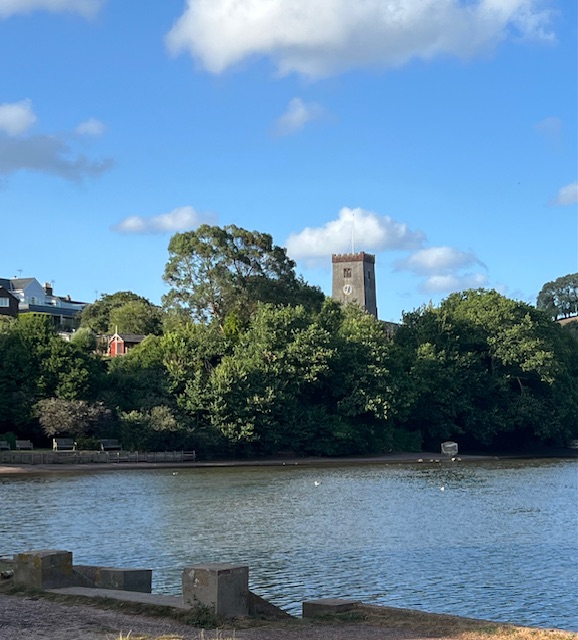
We walked down to the nearby creek, savoured a bottle of Rosé while sitting on the picnic tables alongside this beautiful stretch of the river Dart, and caught up with each others’ lives. Returning to their house, we greeted some of their neighbours and friends of long standing. Di has lived in this village since 1969. There’s even a local card game, unique to the village!
Tuesday 15 July – St Swithun’s Day – and no, it didn’t rain unfortunately!
After a fine breakfast, we set off for home. It was slow-going after Exeter on the A35, and breaking the journey to find a decent cup of coffee was almost impossible, especially in Bridport (but so was the car park charging machine!)
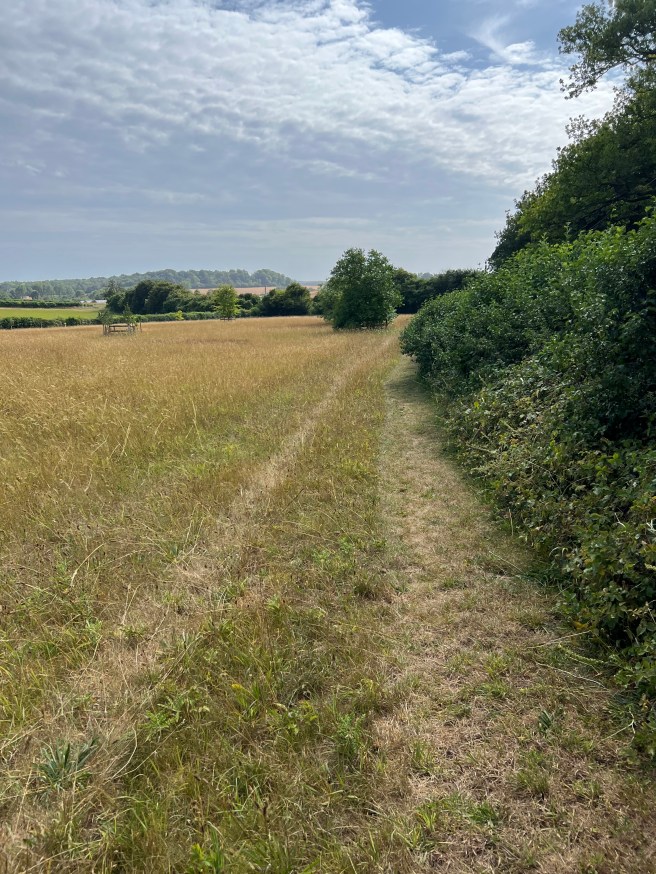
Our final stop en route was for lunch with Adam and Deidre-Ann whose small holding is close by Cranborne Chase. They have spent thirty years creating an oasis of native species of wild flowers and trees, and have this year struggled especially with the lack of rain and too much heat. Watering a garden takes an hour; trying to keep seven acres of chalk grassland going must have been a full time job this summer. It was lovely to see them. They had prepared a delicious lunch, accompanied by their signature Elderflower cordial.


We arrived home with just enough time for me to make the final rehearsal for the Andover Chamber Choir’s summer concert, to be held in Over Wallop.
 countrymouse