
Friday 29 August – my birthday
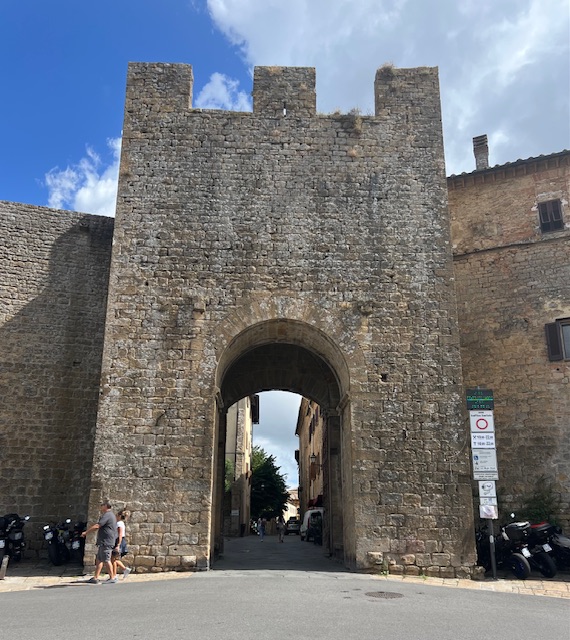
We travelled to Gatwick on the 09.38, arriving in plenty of time for a 14.20 flight – which annoyingly was delayed by an hour. Nonetheless we reached Pisa car hire (Locauto) around 18.30 and headed for Volterra, in a clumsy Jeep, bigger than we would like, and parked in the last white space in the small car park just outside the thirteenth century Porta San Francesco, (or Pisano) through which lay our hotel, inside the limited access area.


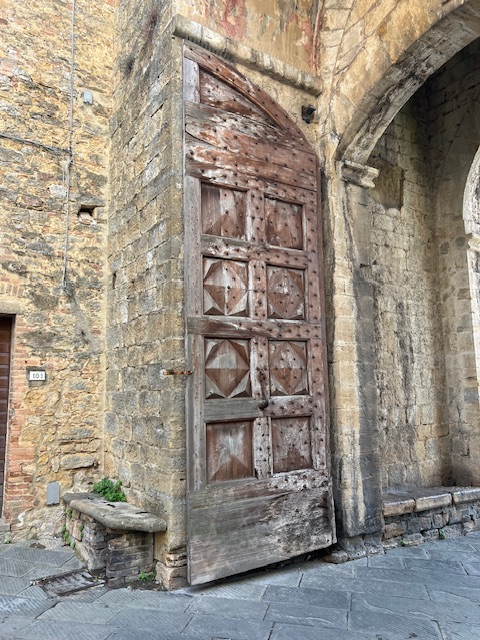
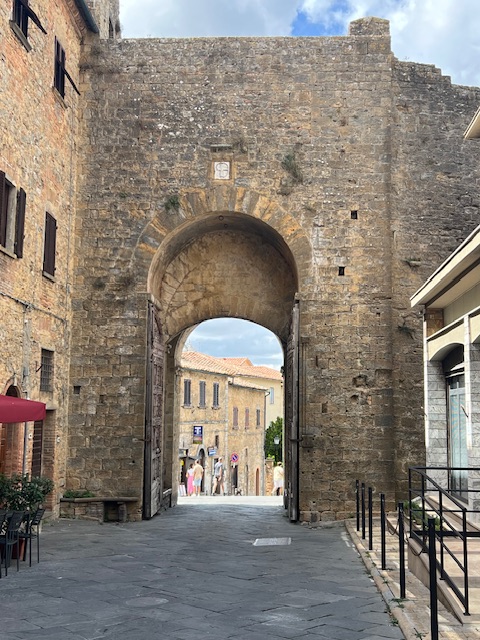
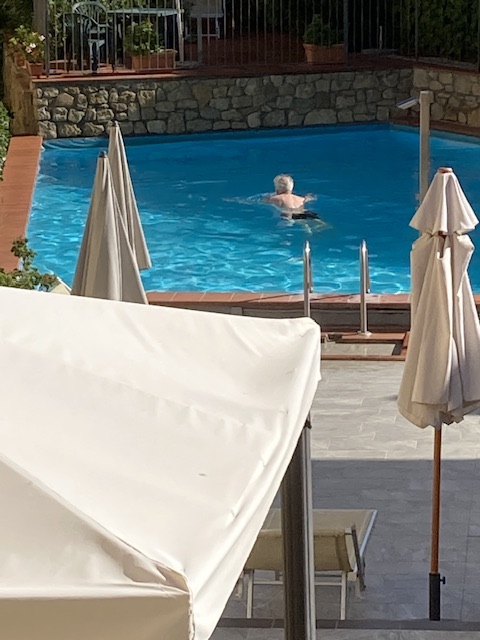
We stayed in the modest San Lino hotel, on the via Roma, at the western end of this formerly Etruscan then Roman, heavily fortified town, at a height of 531m. The Hotel San Lino had been the convent of the third order of St Francis – the Poor Clares, and was converted by three local families in the 1980s, having become derelict some years earlier. A swimming pool now occupies the site of their cloisters, hidden from public view. (Intrepid David braved the rain on Sunday)

We set off in search of some birthday bubbles, and eventually found the ristorante Don Beta, willing to sell us drinks without food. The photo is timed at 22.38…. Better late than never!

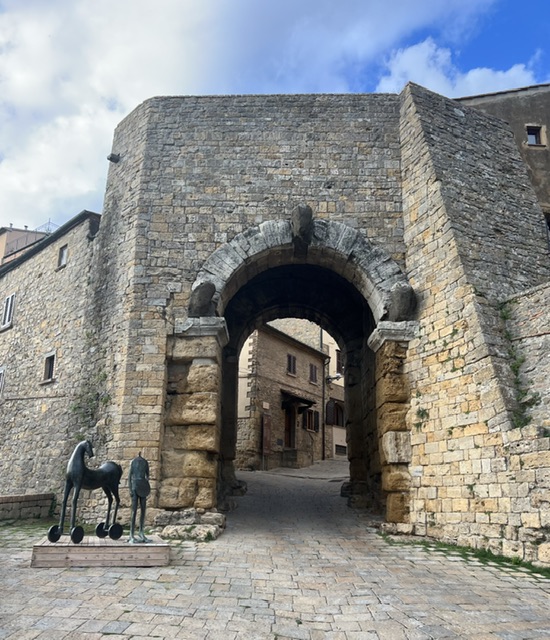
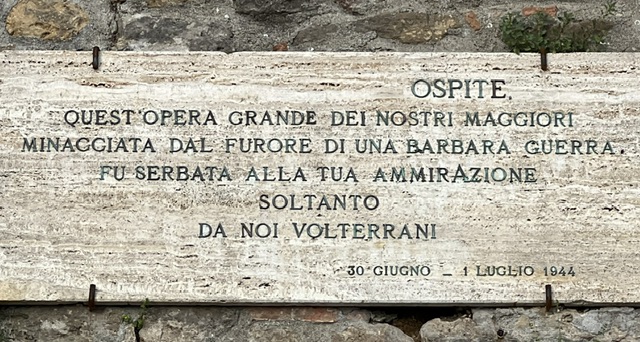
At their most extensive, there were 7.2 Km of etruscan walls, encircling farmland, grazing and water sources. There are seven gates in all; etruscan, roman and medieval; some clearly building on already centuries’ old structures, most clearly seen at Porta all’Arco, which was heroically made safe during the 2WW in 24 hours by the people Volterra tearing up paving stones to seal the gate completely; successfully persuading the retreating Germans not to blow up an already impassible gate in their attempt to slow down the Allies’ advance.


This huge arch has survived since the C4 BCE, with some C1 BCE roman additions, including three basalt heads, well worn by 2000 years of wind and rain, and thought to represent the etruscan gods Tina (Jupiter), Uni (Juno) and Menrva (Minerva) – see below.

Saturday 30 August
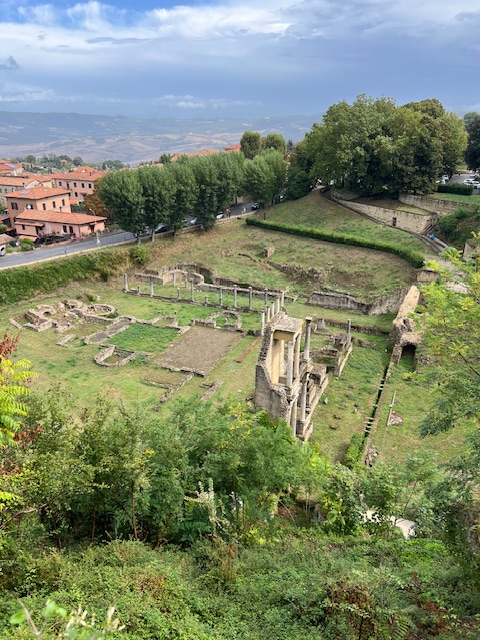
The forecast was for rain, but we managed several explorations on foot, around the existing walls, overlooking the small roman theatre, with spectacular views

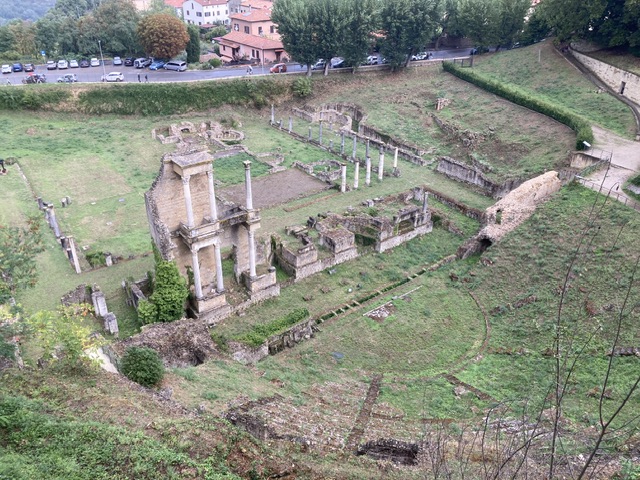
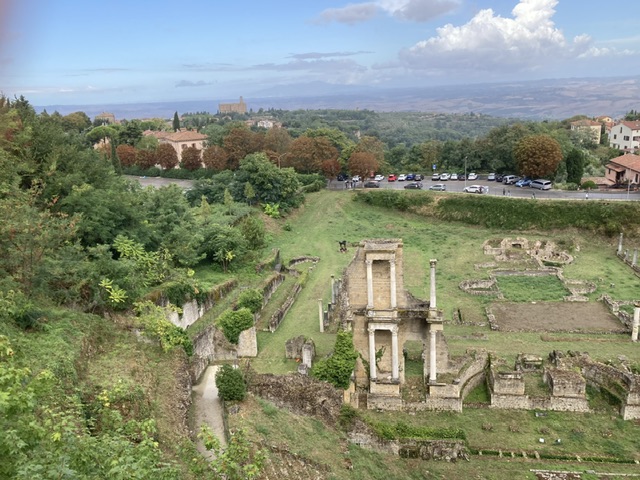
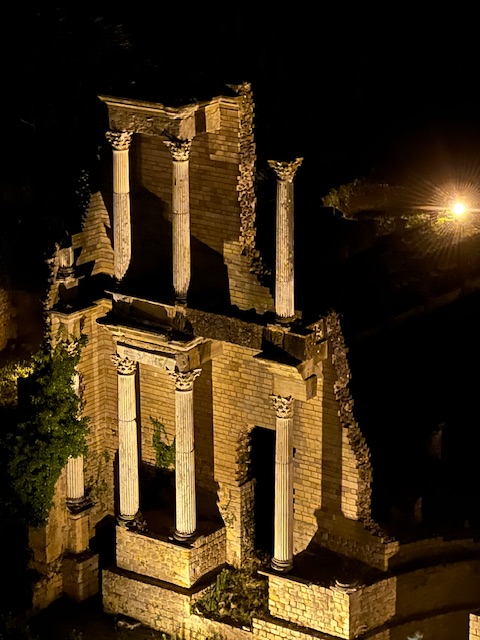
We learned that in 2015, quite by accident, a local discovered the buried remains of a much larger amphitheatre, half a kilometre outside the present walls which is now undergoing excavation. It would have seated 20,000 people, which suggests that roman Volterra was much bigger and more important than had been previously thought. It is extraordinary that its existence was neither known nor suspected!
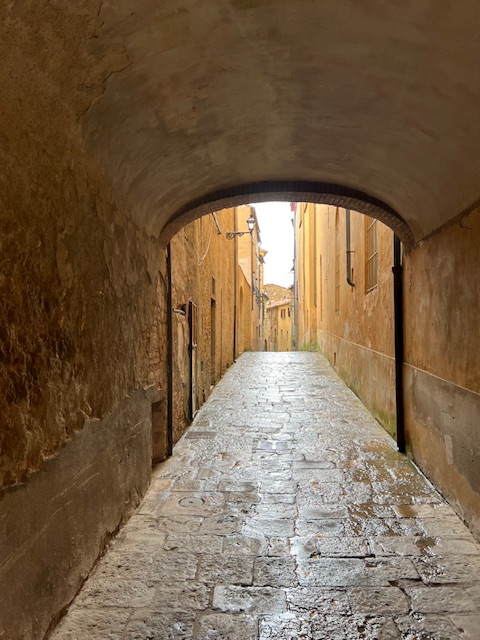
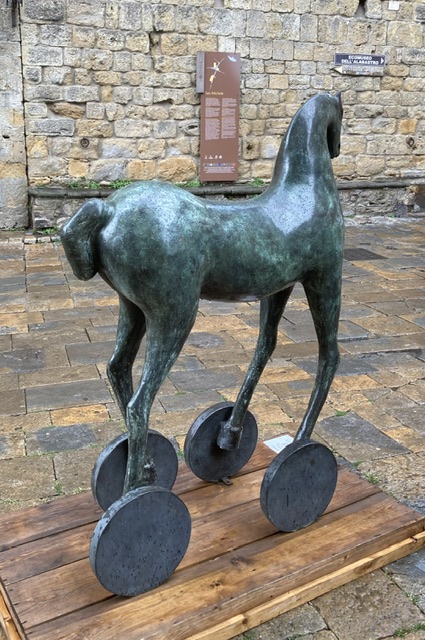
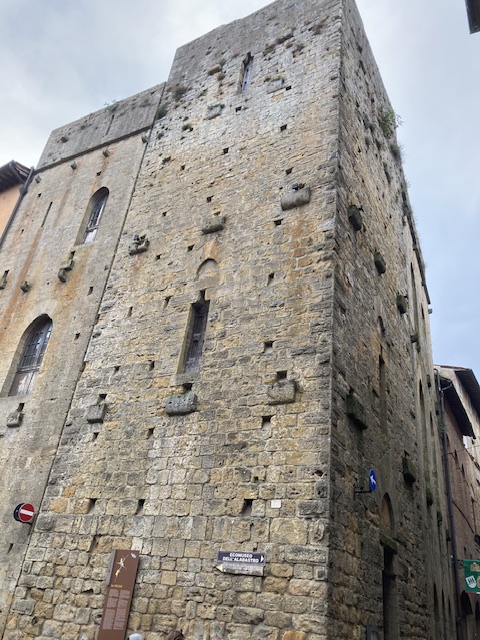
We walked through the town, quite busy with tourists and graced by contemporary sculpture; and caught a glimpse of the more modest Porta Fiorentina and some local street side carvings


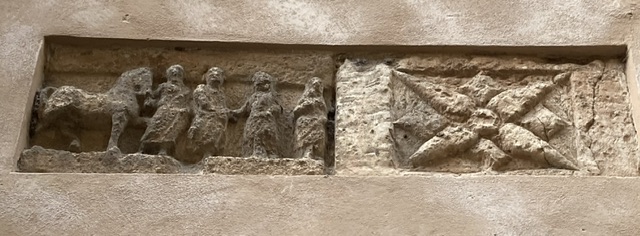
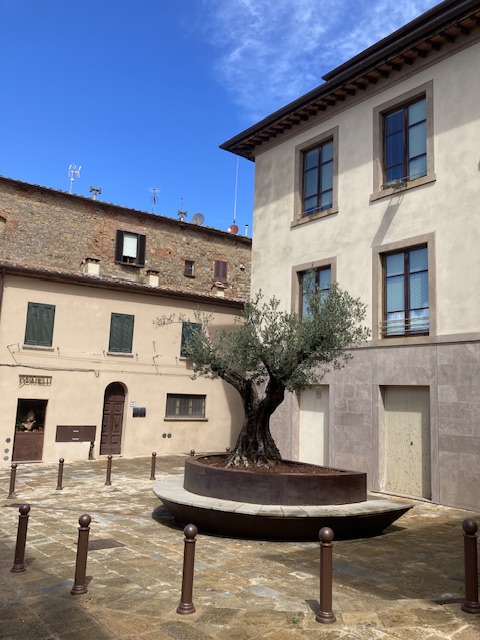

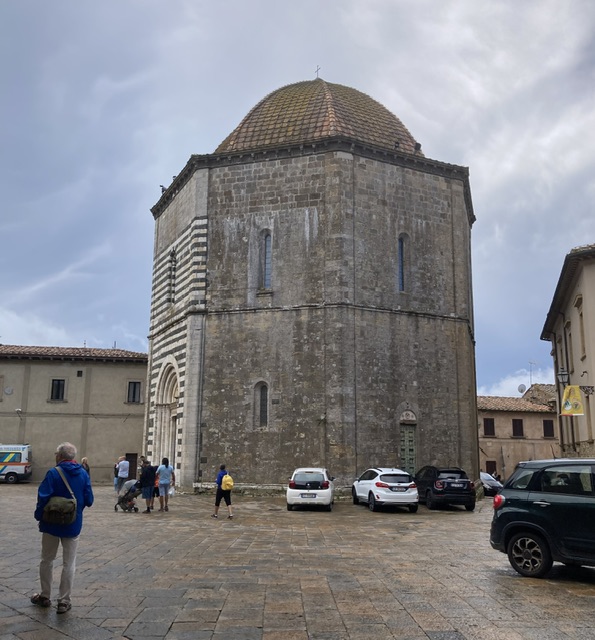

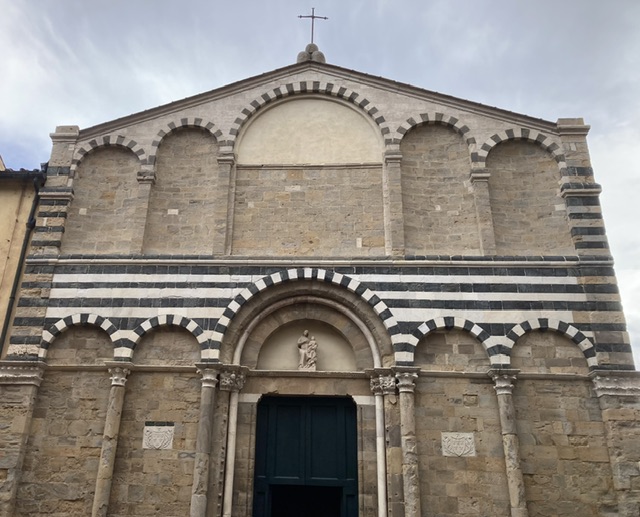
The Church of San Franscesco was built soon after the death of San Francesco in 1226, and has little of its original interior, which would have been frescoed in the style of Assisi’s basilica.
A curious additional chapel was added in 1315, highly decorated by Cenni di Francesco from Florence, a student of Agnolo Gaddi. Its frescoes remain in excellent condition, and illustrate the legends surrounding the Holy Cross, relying on the text of the Golden Legend by Jacopo di Varagine (1228 – 1298).

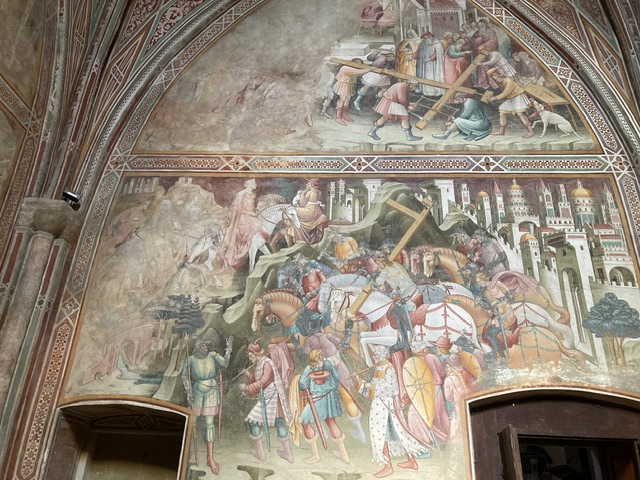
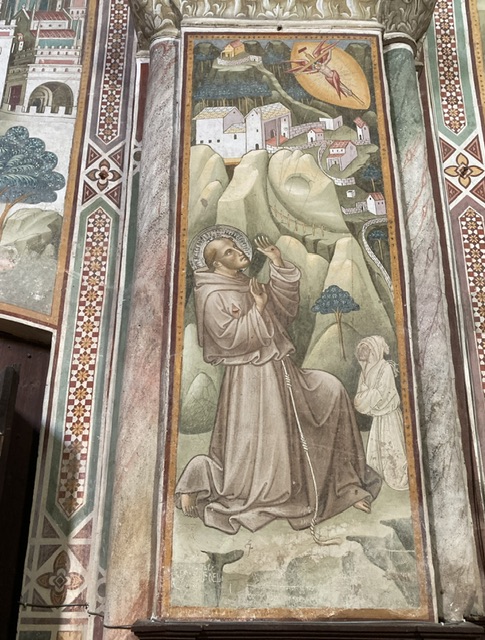

We ate at the very local, unpretentious Il Peschereccio which served as a wet fish shop and ristorante, and later in the afternoon spent time in the Guarnacci Museum, which we had visited first in 2007, with its unique Etruscan C 3 BCE bronze Shadow of the Evening (inspiration for Giocometti’s iconic ground-breaking style). The ducks were from the 7th century BCE. The many hundreds of funerary urns were overwhelming!
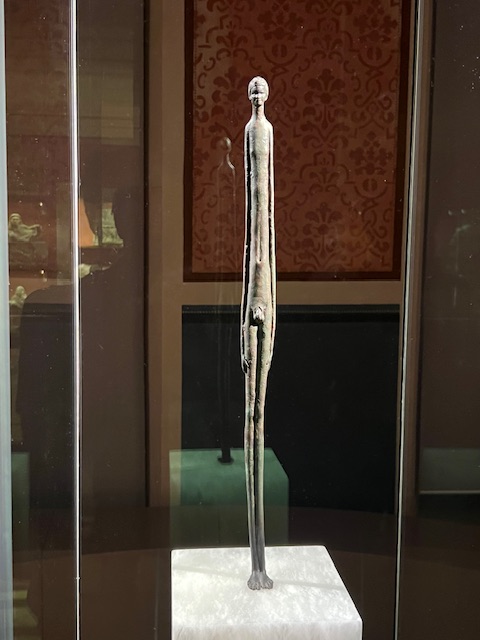
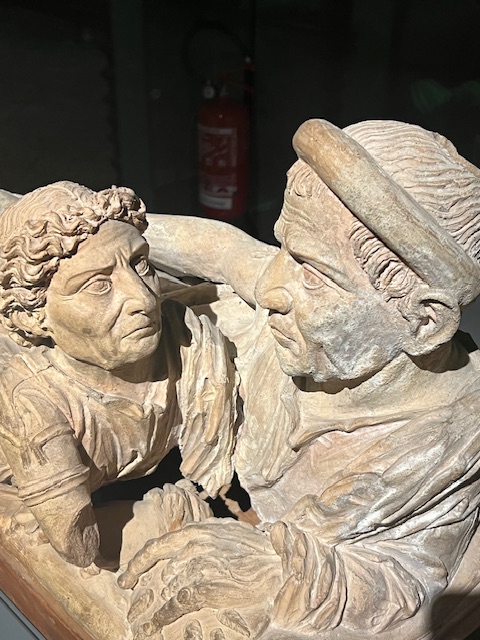


Supper was in the ristorante Del Duca, on the via G. Matteotti busy with the evening passegiata, next to the previous night’s venue.
Sunday 31 August
We had walked through the main Piazza dei Priori several times, and ducked into the cathedral and local churches, notably San Lino, and San Francesco both close by the hotel. The views from the walls over the small Roman theatre and baths, north towards the Pisan Hills, west to Pisa and the coast beyond, and east towards Florence made it clear why this ridge has been key to political control, from Etruria in C 10 BCE right through to the twentieth century.
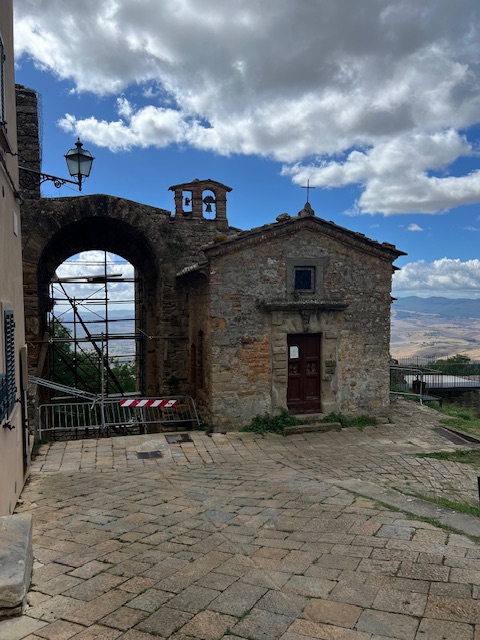
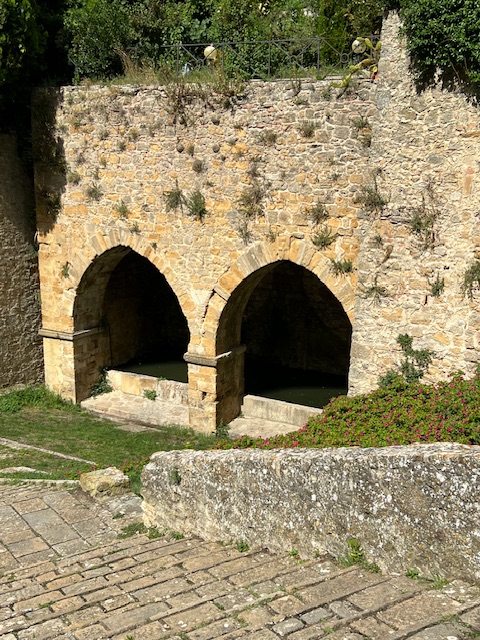
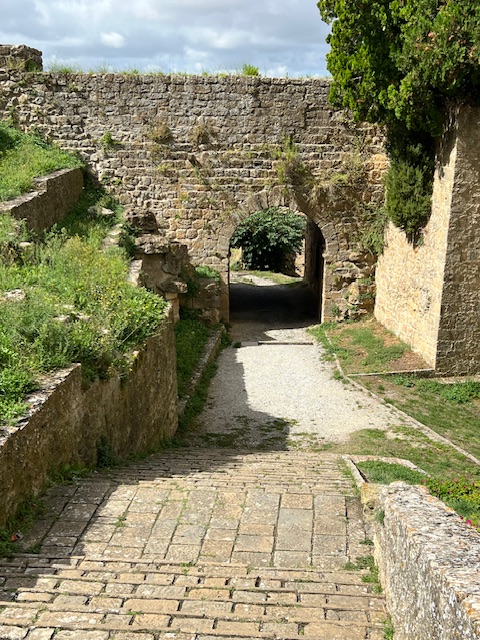
The dilapidated Porta San Felice to the southwest badly needs some TLC but the pedestrian can still make their way past the little church, and the springs of San Felice (1319) with its large stone tanks, (used by people and their animals for centuries as they made the steep climb into the city) and through the Porta Romana to drop down to the roman baths. Enchanting!

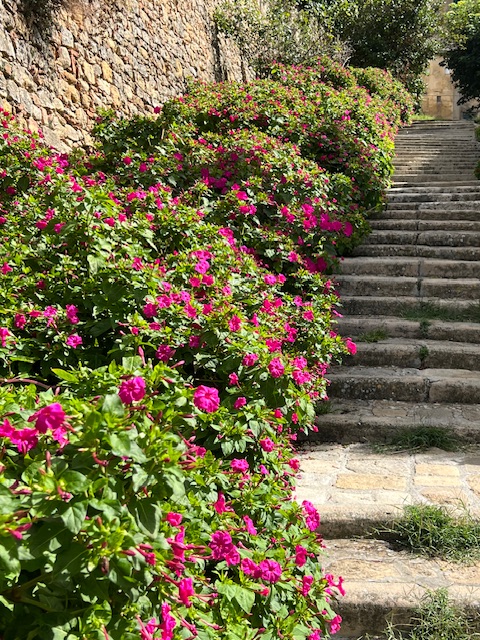
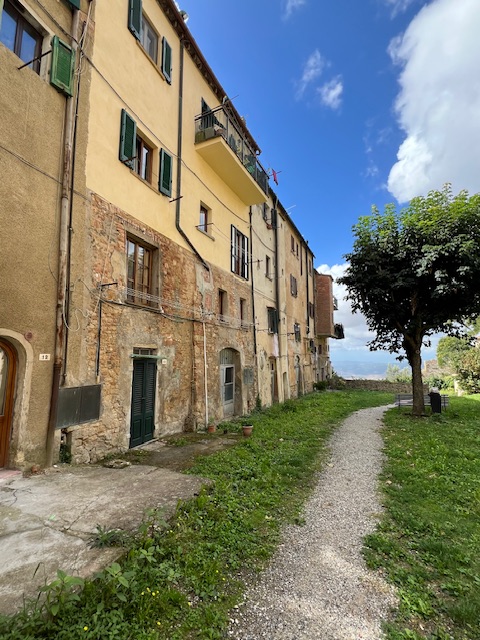
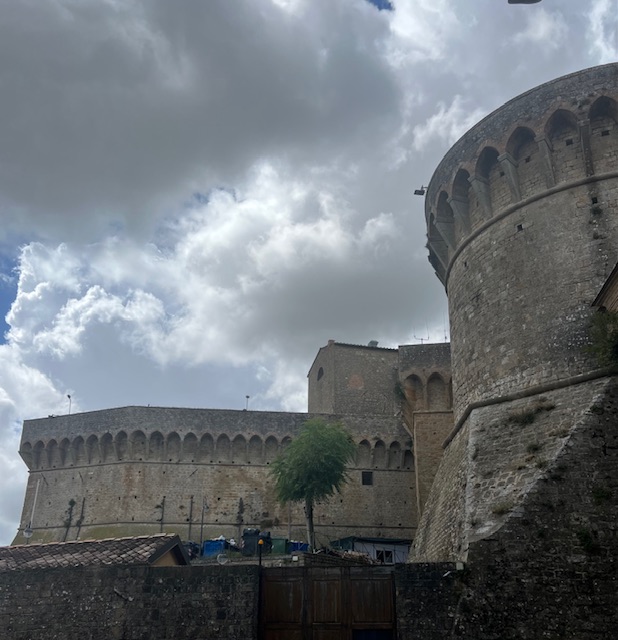
By contrast, the massive Fortezza dominates the eastern end of Volterra’s ridge. The Rocca antica within the fortress was built in 1343, and reinforced by the Rocca nuova in 1472 – 75, built by the Medicis to control – not defend – Volterra once the city had fallen into florentine hands. It has been used as a prison since the 1400s, served as an internment camp during the 2WW, and still holds prisoners today.
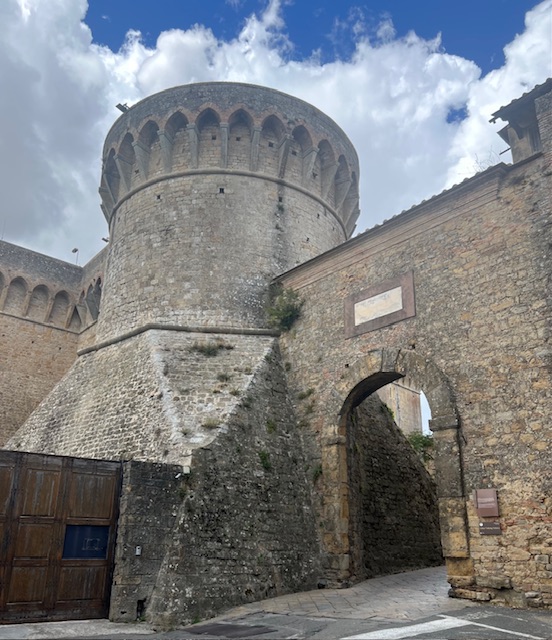
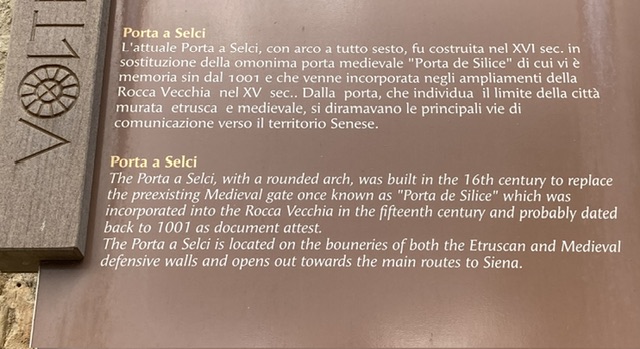
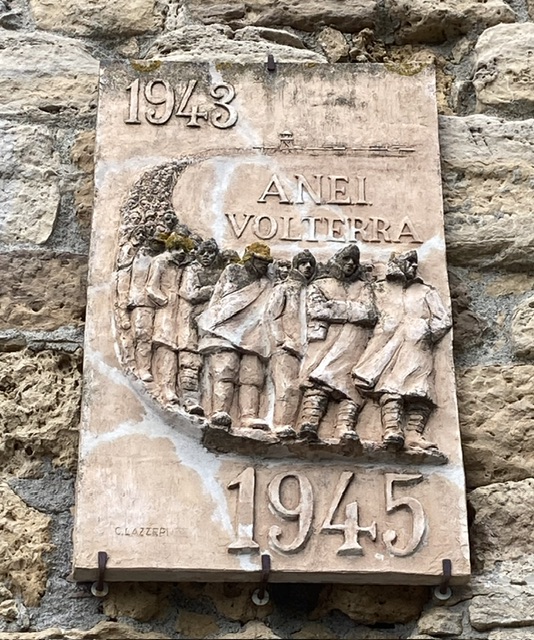
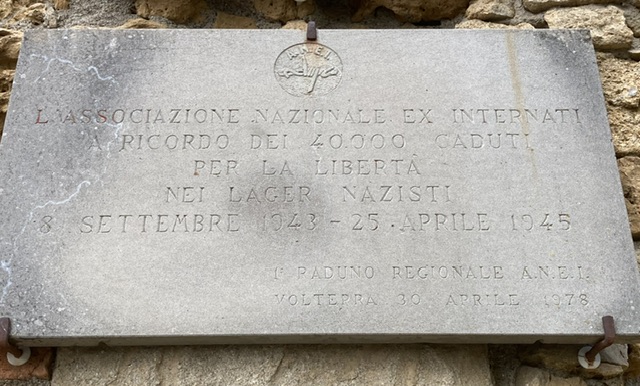
In 1944 the allies entered the city through the Porta a Selci, (not through the Porta All’Arco after all) an etruscan gate rebuilt by the Medicis in the C 16 C just below the Fortezza. This gate is huge, and carries a moving memorial to the 40,000 people who died during internment across Italy, and an acknowledgement of the city’s liberation on 9th July 1944.

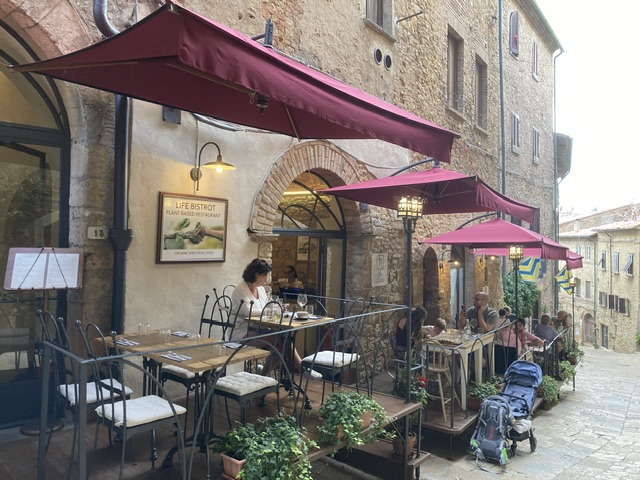
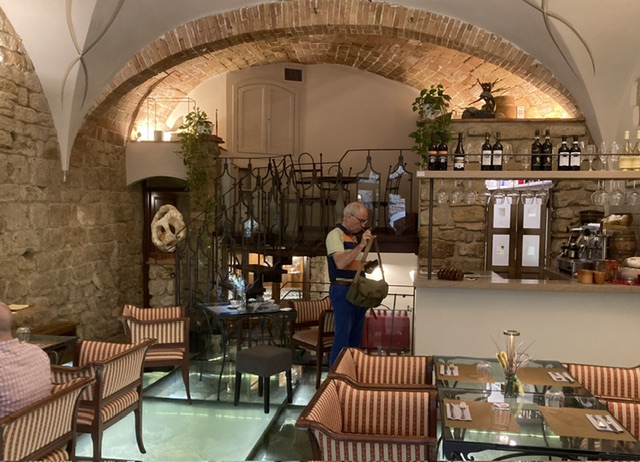
We had a delightful lunch in the excellent Lifebistrot, built over still visible Roman walls and roads, and an Etruscan well, on the steep via Porta All’Arco, before collecting our luggage and heading off to Radda in Chianti, on a sunny, quiet Sunday afternoon.
 countrymouse