
On Monday afternoon we rescued our big ugly jeep from the tiny carpark outside the gates of Volterra, and drove to Radda to stay in the Palazzo San Niccolò, one of the four star hotels on the tiny via Roma. I had remembered the parking issues from an earlier trip; like so many medieval settlements traffic is not permitted through the day except for loading and deliveries. The hotel has a parking area wedged just below the town between two public car parks. This weekend was the Festa del Perdono and Radda was heaving, cars on every verge; and even locating the parking lot was problematic.
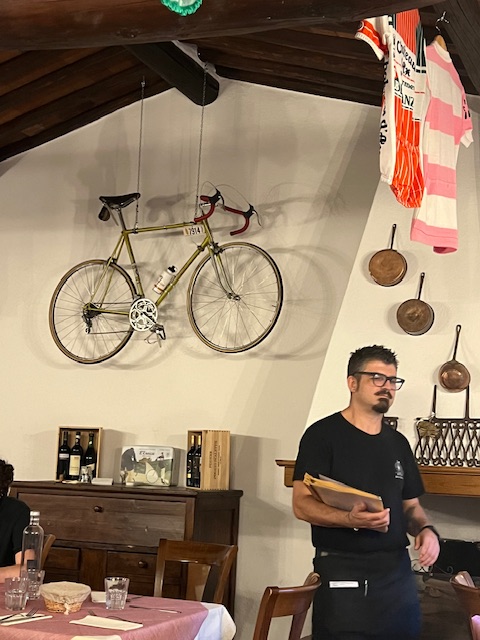

After unpacking, we took advice on eateries and chose the cyclists’ destination close by the Vespa hire shop : Bettola dell’Eroico which was at least open and well away from the hoi-poloi and bustle of the Festa. But the single most important moment in the late afternoon was finding an open Enoteca nearby, having searched everywhere.
Here we met Carolyn Chambers, who moved here 40 years ago and married a local character – Fabrizio Pertucci – whose Bar Dante was John Mortimer’s local through the 90s. Carolyn’s book about her very full and demanding life in Radda is a wonderful read, with its illustrations by her daughter Francesca. (Carolyn has just completed a second volume of reminiscences)

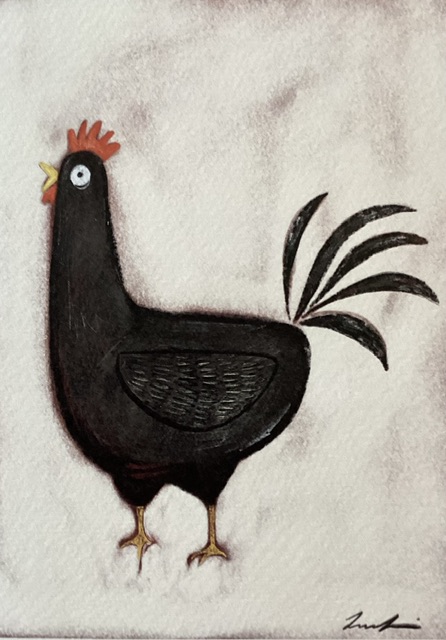
It was Carolyn who kindly arranged for us to join them at a delightful evening organised by Radda’s consorzio for all the vendors of the local Chianti Classicos, on the following day (more to follow)
Monday 1 September
After an unsettled night we overslept -waking at 09.30, and annoyingly had to rush breakfast (for once with plenty of things we would like to have eaten) in order to set off for an appointment at Poggio Scalette, half an hour away. We had forgotten how dreadful some of Tuscany’s white roads can be, and the drive up the final few kilometres seriously challenged our car, – better in higher gears on tarmac, than in first on steep, winding and eroded tracks. And yet it calls itself a jeep!!

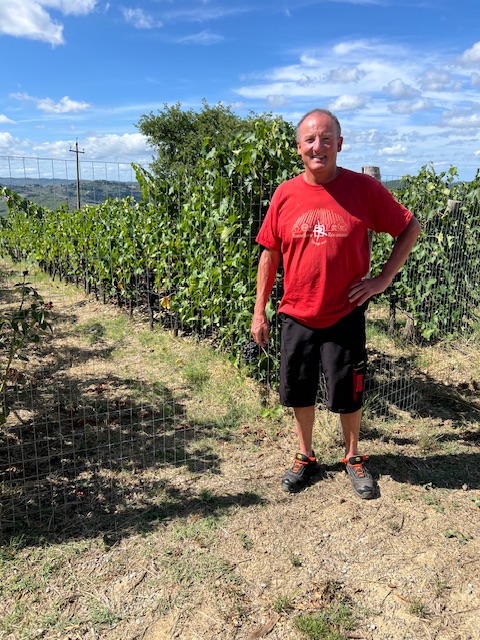
Our generous host spent several hours with us, opening many bottles and explaining the territory, which overlooked the equally small but more famous Lamole which we were to visit the next day. We drove into Greve for lunch, and ate (in my case another parmigiana) in the main square before returning to the hotel in Radda fora rest.
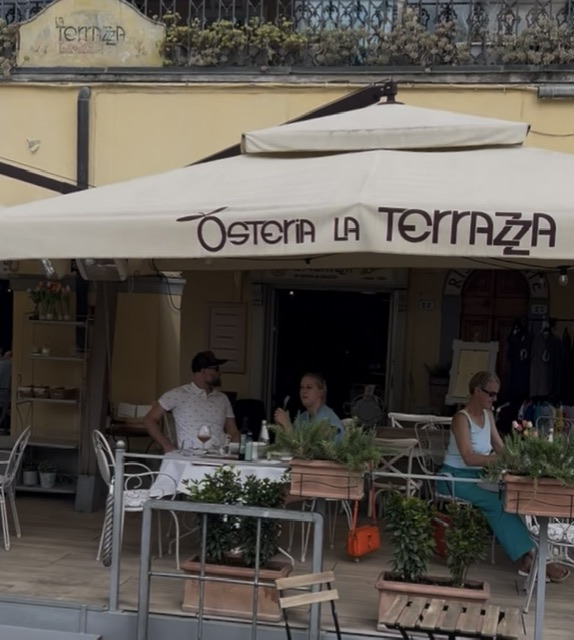
At 18.30 we walked down the hill with Carolyn, passing the crowds of cars to the consorzio do in what had once been a religious house, and entered a very warm and friendly atmosphere. The winemakers were enjoying one another’s company and made us feel welcome in the former cloister as we ate from a generous buffet as well as tasting their wines – albeit in a very small and crowded room.
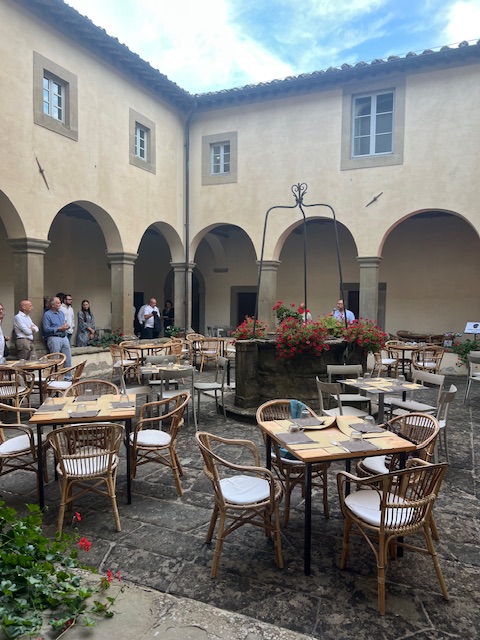
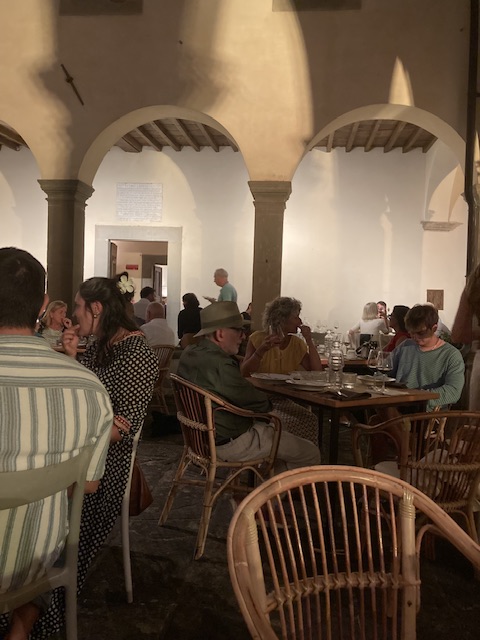


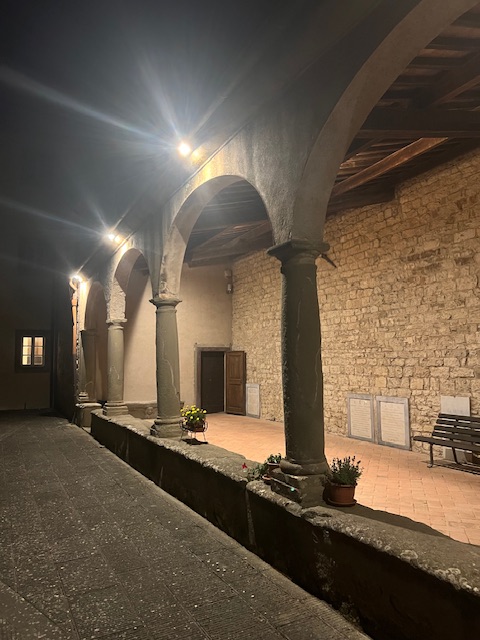

We left Carolyn and Fabrizio surrounded by friends and walked up the winding hill to the main town where the Festa was due to finish with climactic fireworks. We had a nightcap in Enoteca Beretto within earshot of the Festa, where David located an english couple (with restless baby James, his doctor mother, and father a loyal conservative with local council) trying to enjoy a low-key 11 day holiday in Chianti.

Tuesday 2 September
David is leading a tour next April which plans to visit Castello dei Rampolla, so a reconnoitre was in order. Another dreadful white road will prove a challenge to their bus driver, but we reached the slightly odd premises on time, to be greeted by a member of the office staff who did her best to field David’s questions. In time she was relieved by the impatient, slightly eccentric owner. The Castle is a misnomer though the modest estate house has recently acquired a tower, and the views are impressive.


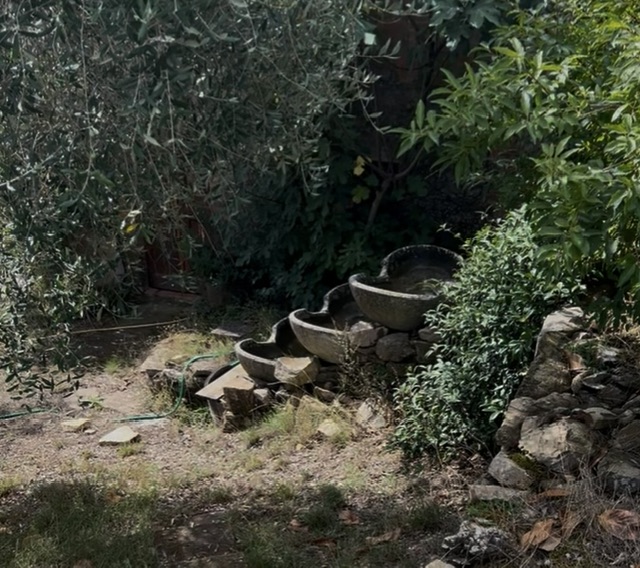
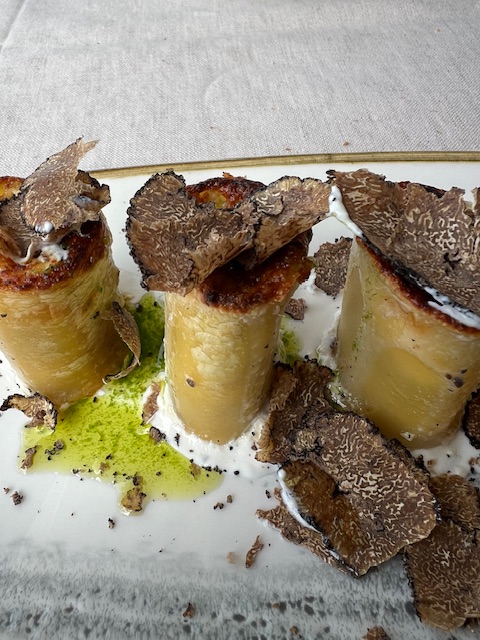
We moved on from here to the Ristoro di Lamole where David had booked lunch. The views were magnificent, and the food, service and the wine were excellent

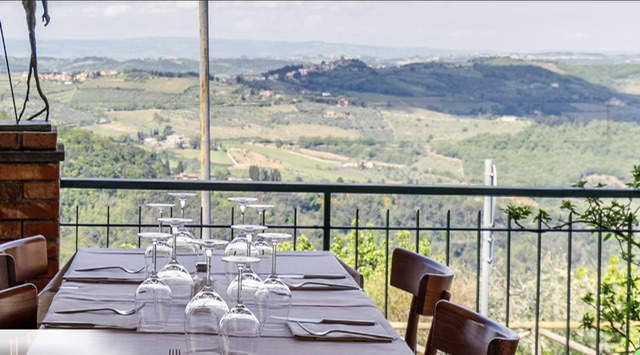

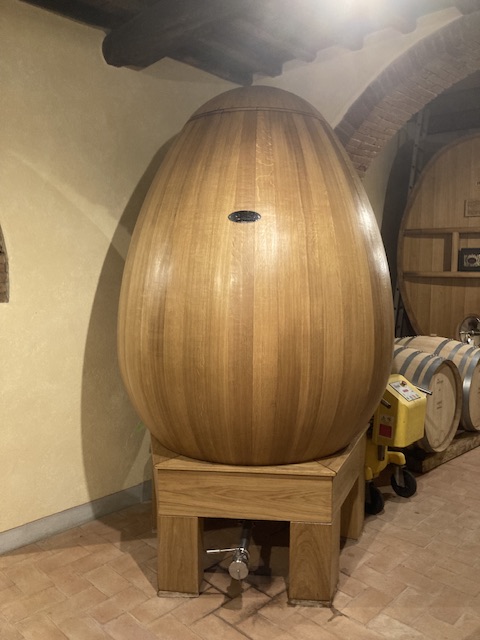
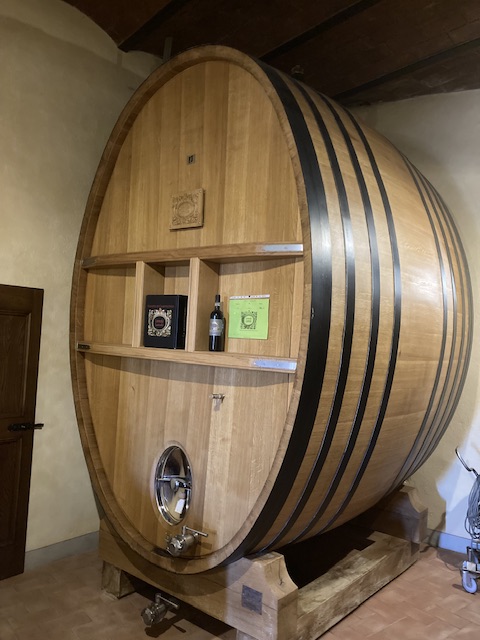
This was all in preparation for our next visit, very close by, to Lamole di Lamole where we were shown around the very beautiful amphora shaped casks and immaculate vineyards by a very competent and engaging woman

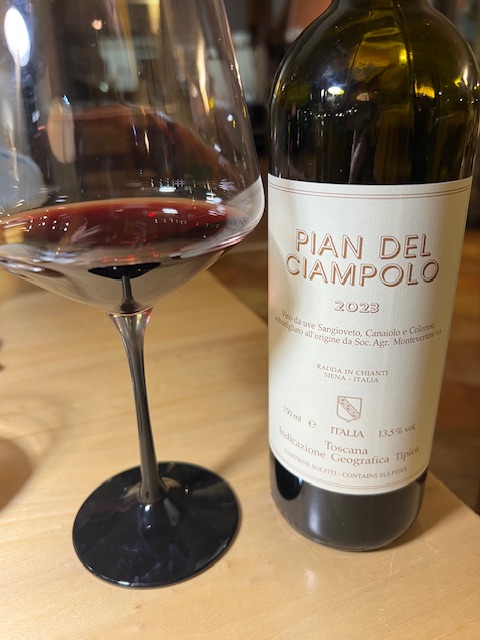
We had supper in La Loggia di Chianti in Radda, overlooking the now empty carpark, the Festa having finished the night before. We enjoyed a wine from an old friend, Pian del Ciampolo of Montevertine, and once again spotted baby James and parents, still pursuing good food and wine despite an infant in tow.
Wednesday 3 September
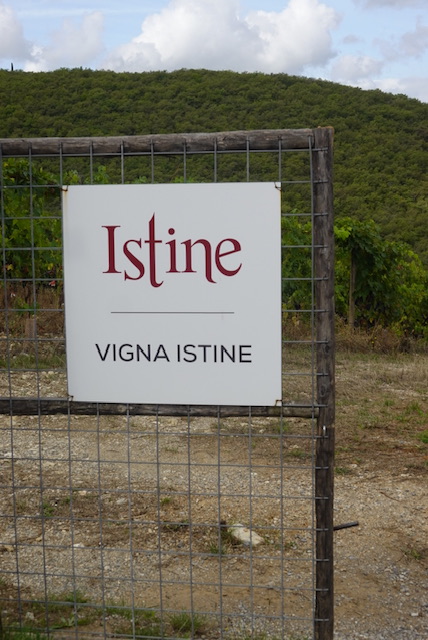
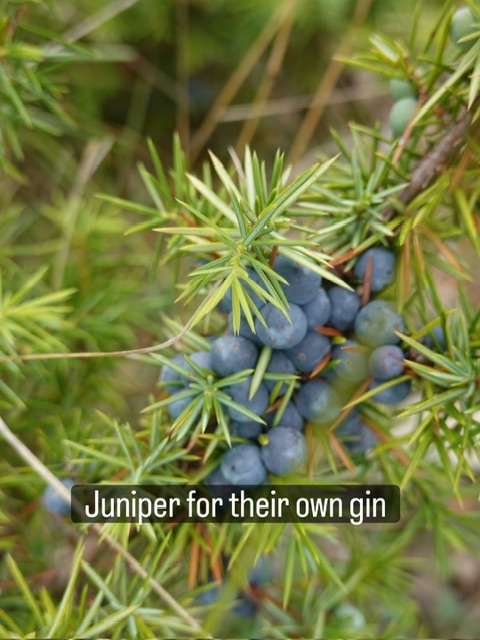
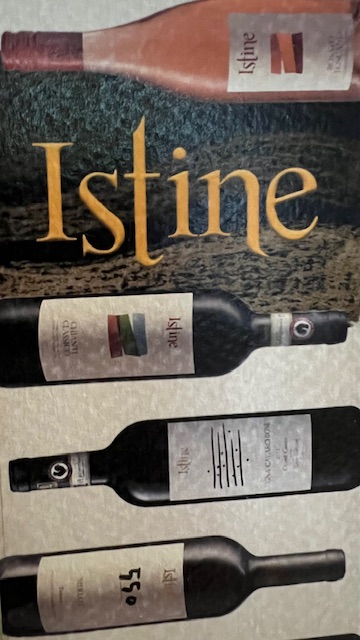
We had met Angela of Istine at the consorzio party, and arranged to visit before our next journey to Montalcino. Her colleague greeted us and showed us round the vineyard (before the flies got any worse!) and supplied background to this newish project, before Angela joined us for the tasting. She is producing not one but three UGAs and one Riserva and invests huge energy to drive this forward; very clear in her aim and how to achieve it. Impressive!

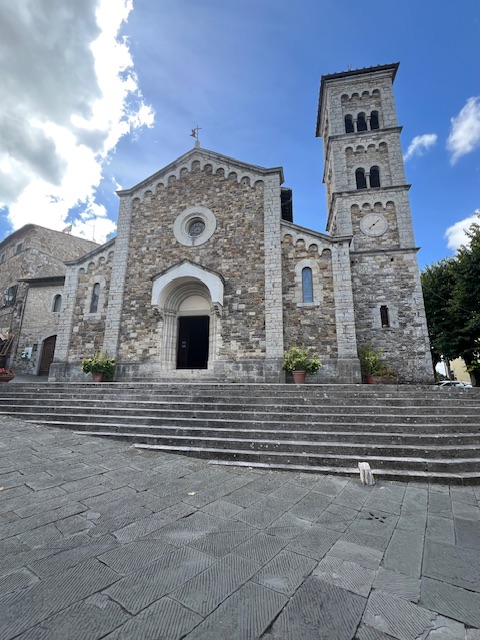
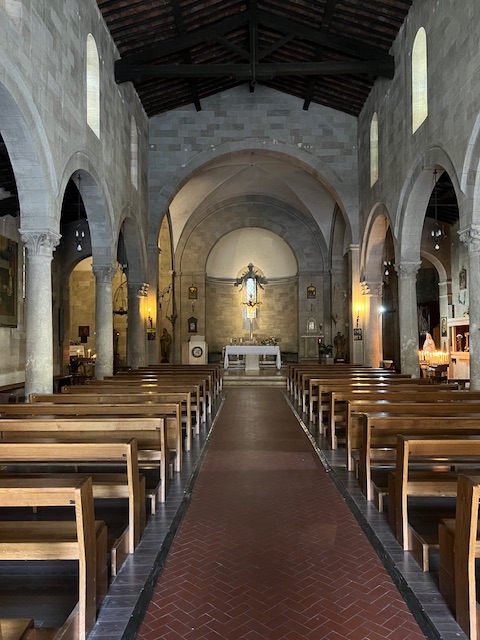
We drove to Castellina in Chianti for lunch, passing the impressively uncluttered Chiesa del Santissimo Salvatore rebuilt in 1945 having been bombed during the war, and ate in Il Re Gallo on the via Toscana.

The drive south around Siena was curious – involving a very odd diversion which took us through a very rural section only to deliver us onto a slip road only metres from the motorway itself. We arrived as planned in Parcheggio Strozzi of Montalcino and took the 85 steps up to the Cathedral and then down to the bed and breakfast Scalette di Piazza, just off the main Piazza. It was hard-going with heavy cases but once arrived, our host greeted us and showed us to our pleasant room, one of five, in one of which another couple from West Yorkshire were also staying. They too had followed the bizarre diversion…

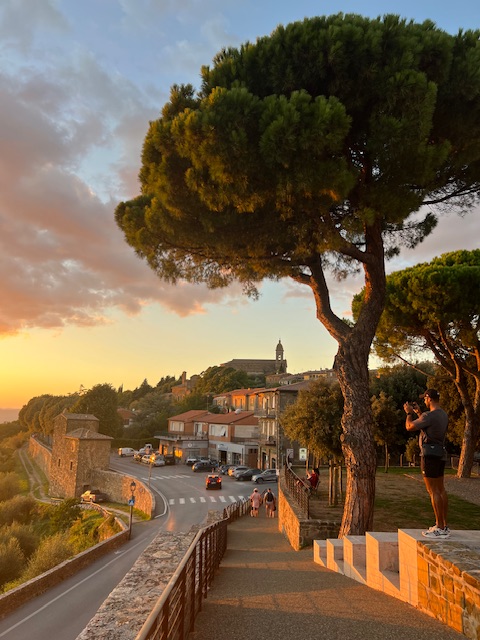
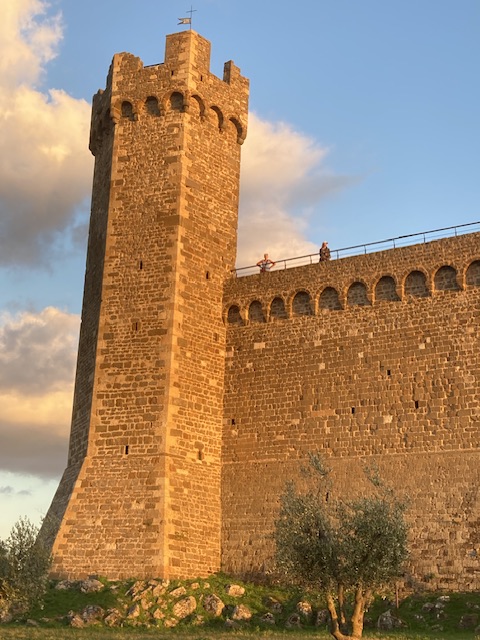
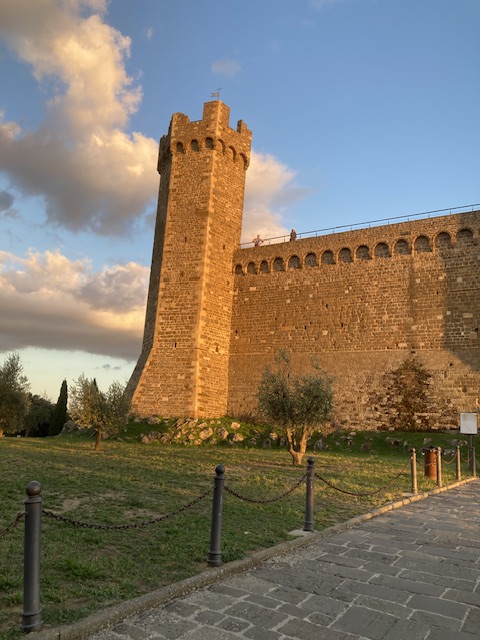
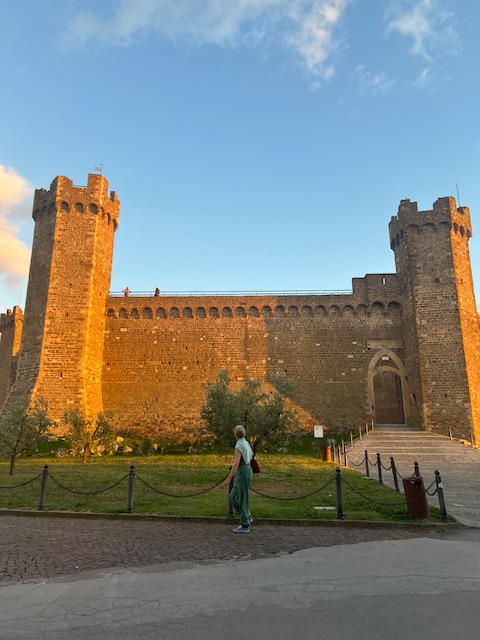
We spent the early evening walking around the town to get our bearings; searching for former hotels, bars and haunts, and saw the sun go down in the west at 19.30 illuminating the walls of the massive Fortezza to the delight of on lookers, before eating in Ristorante San Giorgio on the via San Saloni.



Thursday 4 September
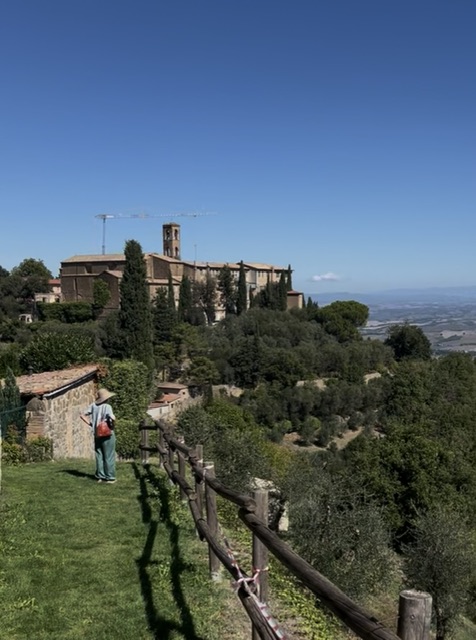
We spent the first half of the morning walking around the edges of Montalcino on a footpath which gave us a fine view of the hospital (formerly a monastery)
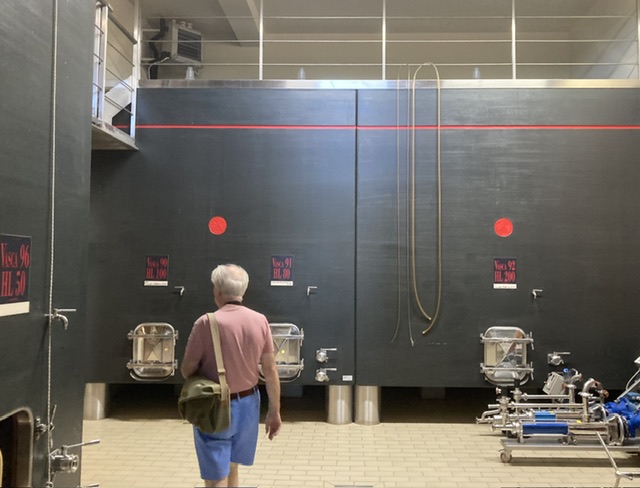
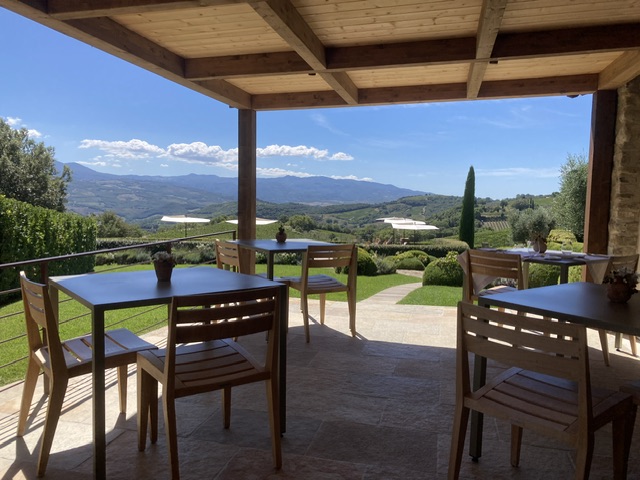
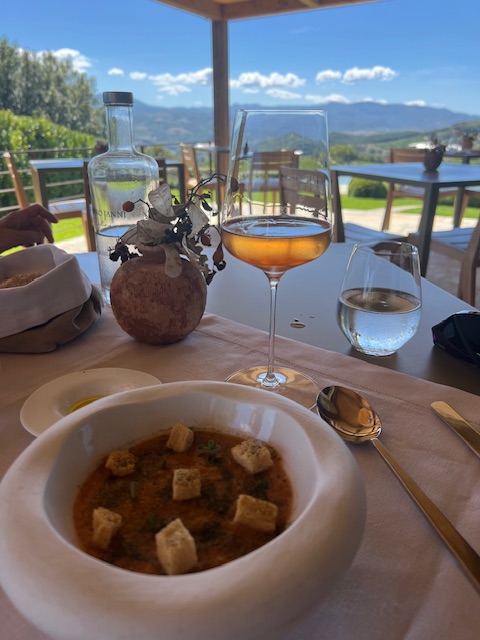
before heading up another dreadful white road (David executed an impressive skid just as we approached a narrow bridge over a seasonal torrent) to Mastrojanni and lunch as their guests in its Relais restaurant.
We had expected the wine maker (who had sent the invitation) to join us, and we were puzzled by the blank faces who received us at the winery end of the business. Nonetheless, we were made welcome in the restaurant and settled down to lunch with a very fine view, as well as very fine food, and mercifully, one other table to keep us company.


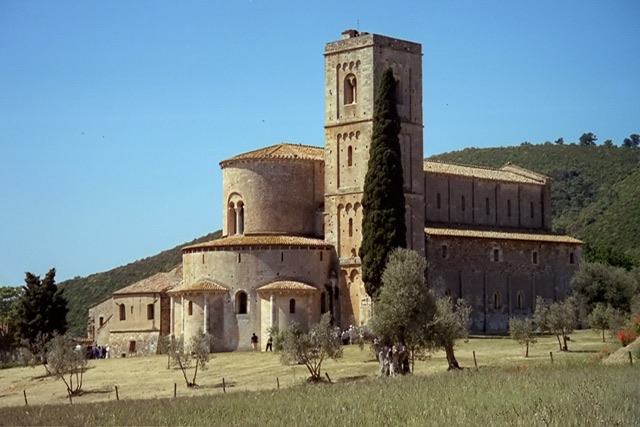
Mastrojanni is very close to Sant’Angelo in Colle, (where many years ago we rendezvoused with two young optimists keen to show us their project, one of whose father had vines from which they planned to make Brunello). I was very keen to revisit the Abadia di Sant’Antimo which has occupied this beautiful site since the time of Charlemagne at the end of the eighth century.
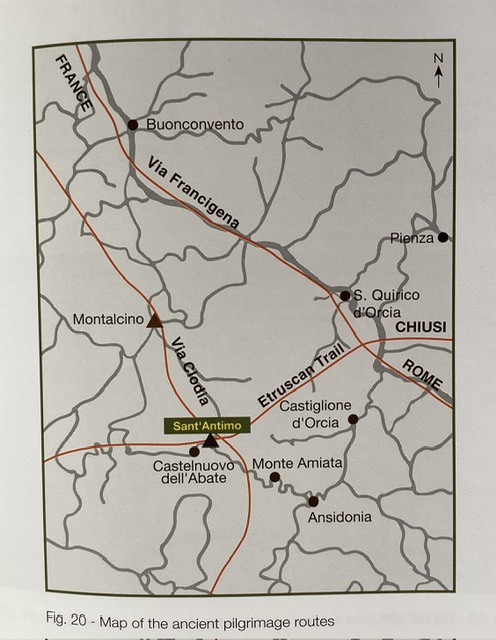
This abbey has enjoyed very mixed fortunes over the centuries. Its significance grew as the numbers of pilgrims and travellers using the nearby via Francigena steadily increased from the early middle ages. The benedictine community increasingly enjoyed the patronage of the region’s rulers, and a vast endowment in the twelfth century enabled the abbot to embark on the ambitious rebuild visible today.
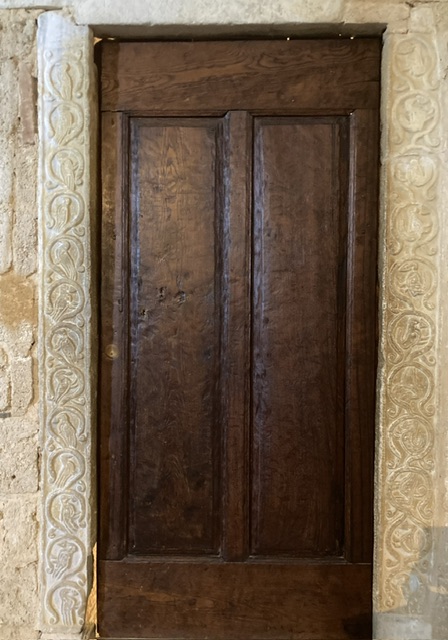
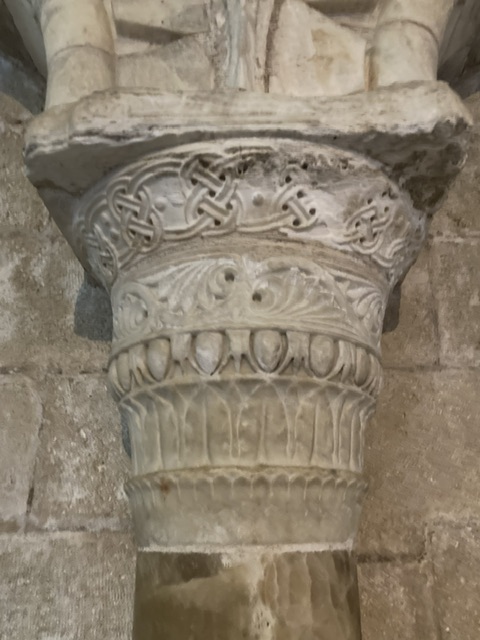
The interior matches the beauty of the exterior, benefitting from scrupulous restoration of so much of its medieval legacy. The building incorporates roman material from a nearby villa, stonework from the ninth, tenth and eleven centuries, and early medieval wooden sculpture of great quality

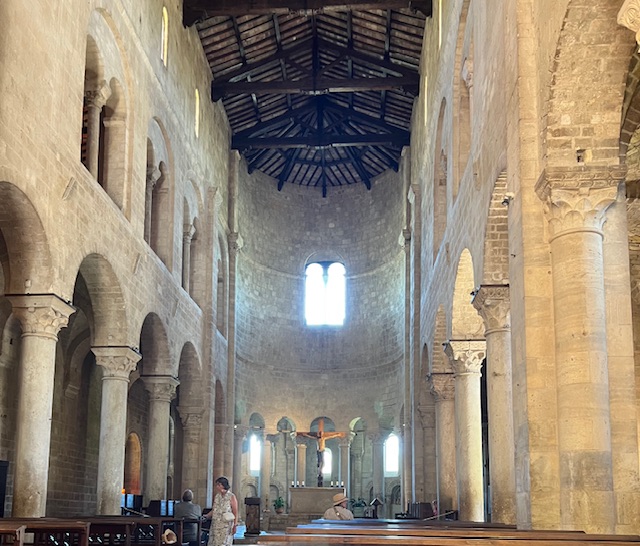

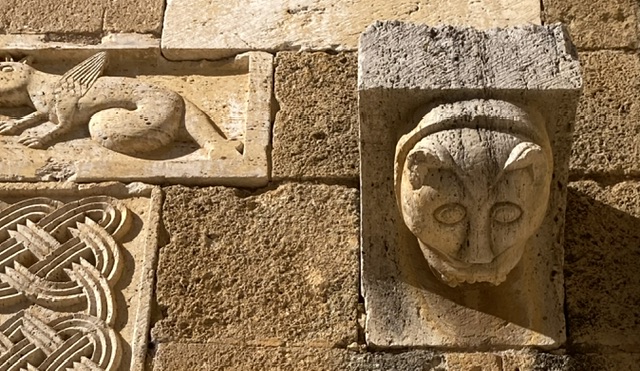

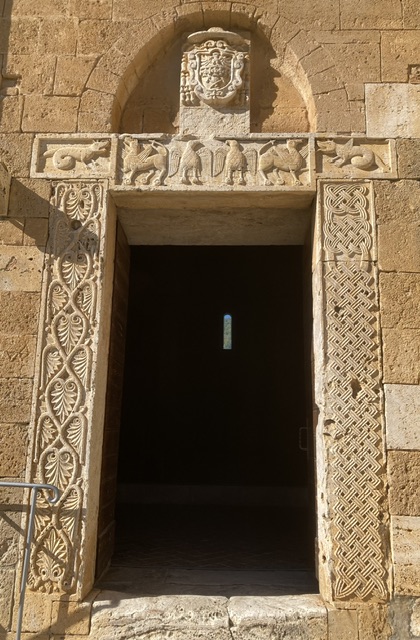
Sadly greater wealth and status corrupted the community, and as its moral authority stalled, so did its economy. The earthquake of 1320 also caused serious damage and costly repairs. Despite interventions by Catherine of Siena in person in 1377, to support the reforming Abbot, the abbey declined further, and the community was formally suppressed by the pope in 1462.
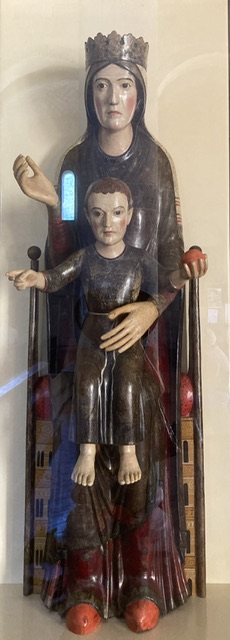
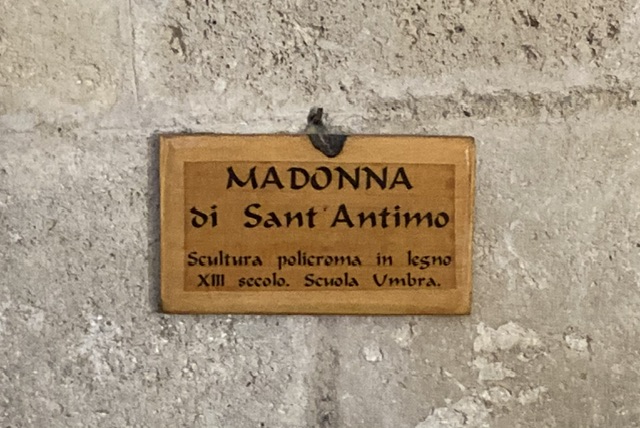

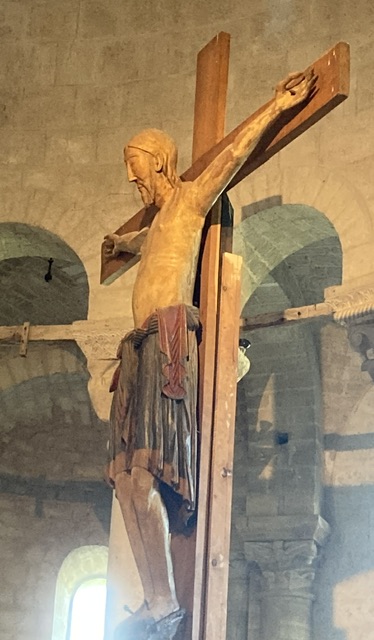
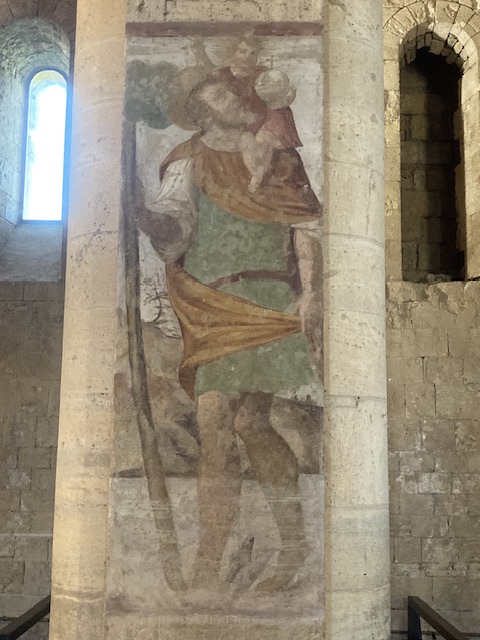

After several centuries of neglect, in the nineteenth and twentieth centuries the abbey was painstakingly restored to its original proportions and design, and many of the artifacts stolen or recycled from it over the years were reclaimed and re-instated. The restored Madonna of St Antimo is an outstanding example of medieval wood carving; and Catherine of Siena prayed for the renewal of the monastery at the foot of the wooden crucifix.
The stonework from its earliest years is astonishing! A very early stone carving of Mary, (below left) the Christ Child and assorted angels, birds and images resembles closely the one (below right) we had seen and photographed in the church of Santa Maria Assunta in nearby San Quirico D’Orcia in 2018.
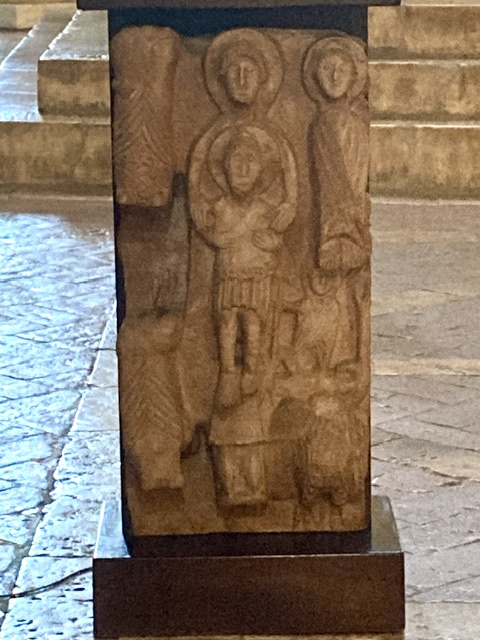
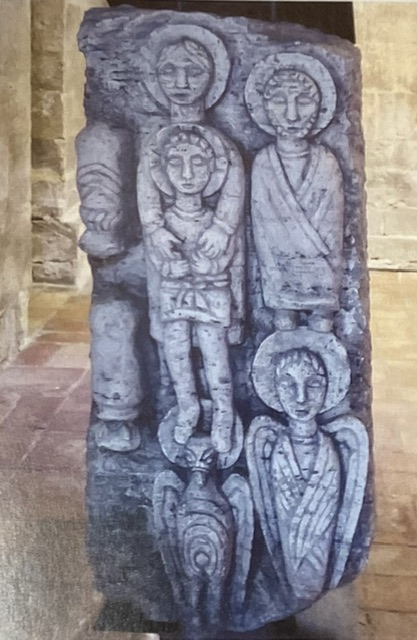
These two churches, whose functions, origins and dates are very close (early ninth and tenth centuries sanctuaries, along the major European pilgrimage route to Rome) have so much in common; perhaps sharing both stonemasons and materials during this prosperous period
We returned to Montalcino, and ate in the Hotel Il Giglio where many years ago we’d attended a wine tasting with Gabriele Gorelli and his friendly tasting group, practising for the MW exam. Here we met Michele and his father once again; and heard news of the Sicily project in which Michele, Gabriele, and Pietro Rosso are involved.
Friday 5 September
Today was full-on! And David had snuck in an extra tasting at Capanna for 11.30. We carted our luggage to the car, still parked in the viale Strozzi car park, and then returned to the Oro di Montalcino in the former church of Sant’Agostino which provides a tourist information centre, upmarket souvenirs, an enoteca and cafe, and various museums including some early medieval art and wooden sculptures; plus il Tempio di Brunello. On this occasion we went for the art….
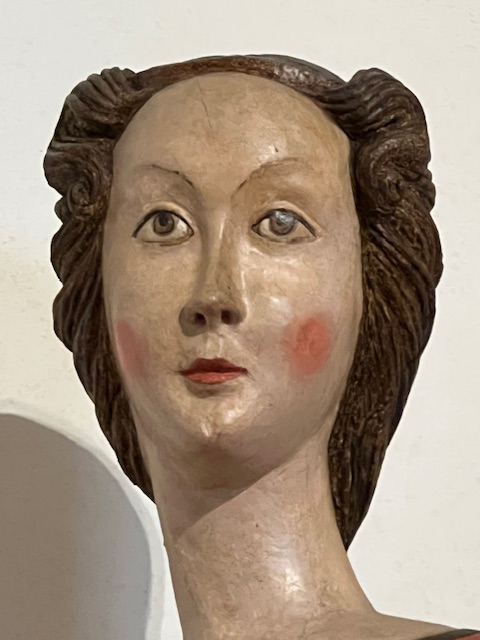
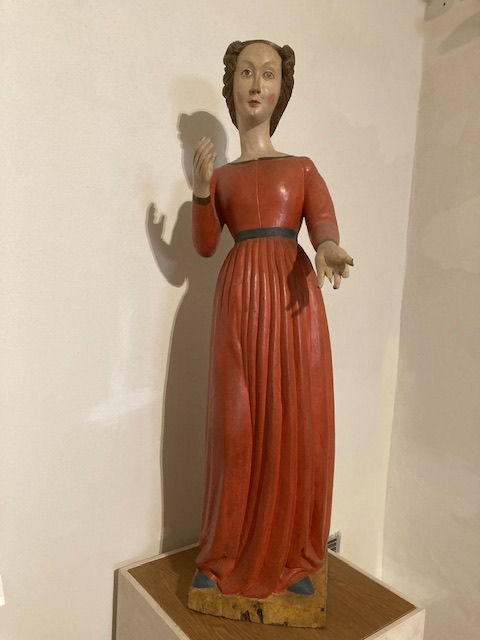
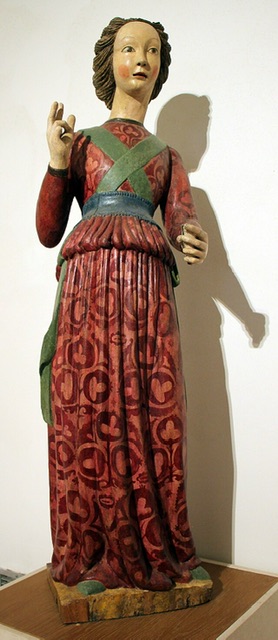
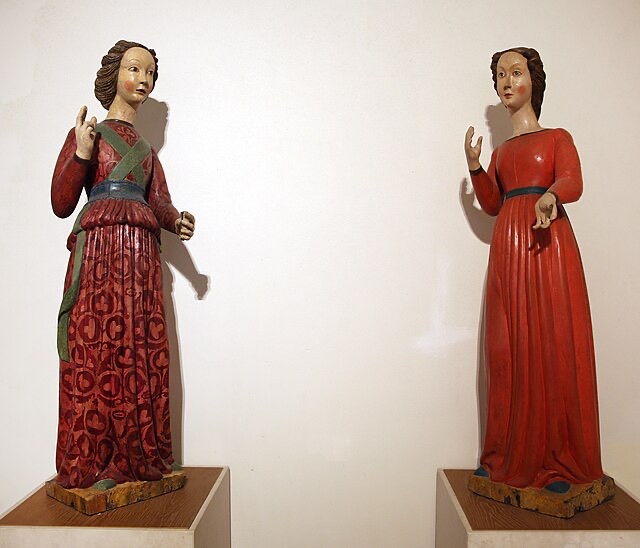
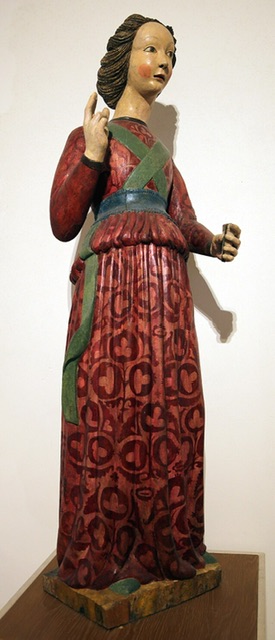

The wooden sculptures were very striking; we were especially moved by the life size treatments of Mary and the Angel of the Annunciation, created by an artist known as the Maestro della Santa Caterina di Alessandria, at some point between 1400 – 1415 for the church of San Simeona a Rocca d’Orcia. Mary wears red, and has such a simple elegance. Extraordinary!
In addition to these remarkable pieces, the gallery had several exhibits originally painted for churches in Montalcino during the first half of the fourteenth century, by Sienese artists of real distinction. These include Ambroglio Lorenzetti, one of the stars of the National Gallery’s recent exhibition: Siena 1300 – 1350 (see my blog piece earlier this year) and more of whose work we were to admire in the Palazzo Pubblico in Siena the next day. (Swipe from right to left on the pics in slide show gallery)
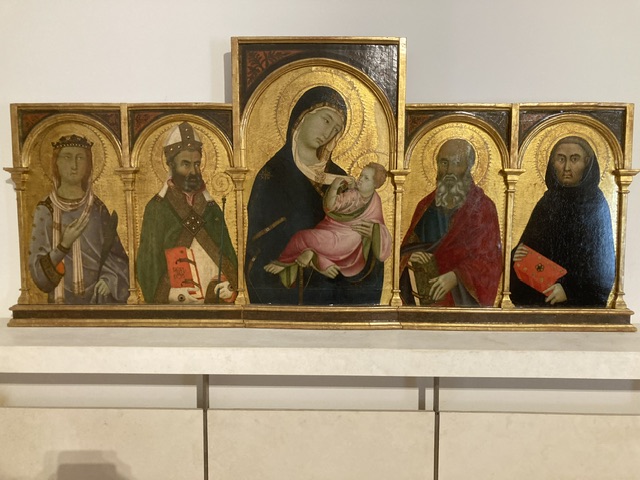
1328 – 1339: Madonna and four saints : Francesca di Segna 
S. Agostino e S. Giovanni Battista by Maestro del 1346 
San Pietro e San Paolo by Ambroglio Lorenzetti d 1348 
Madonna w Bambino by Bartolo di Fredi (c 1353) 
1369 Annunciata Vergina by Domenico di Agostino 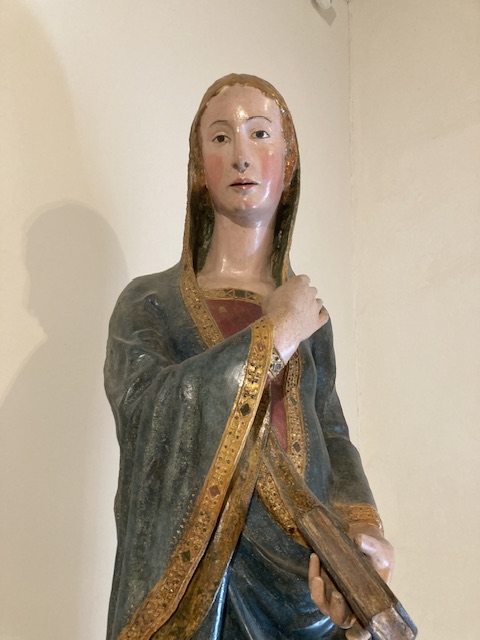
1369 Annunciata Vergina by Domenico Di Agostino 
1388 Coronazione della Madonna: Bartolo di Fredi
We raced off on the longer route (having been warned by its website to avoid Google’s shorter white road route) to Capanna where we were hosted by a very competent woman who quickly got the measure of her very different clients. (Our Japanese fellow tasters were still recovering from following Google!)

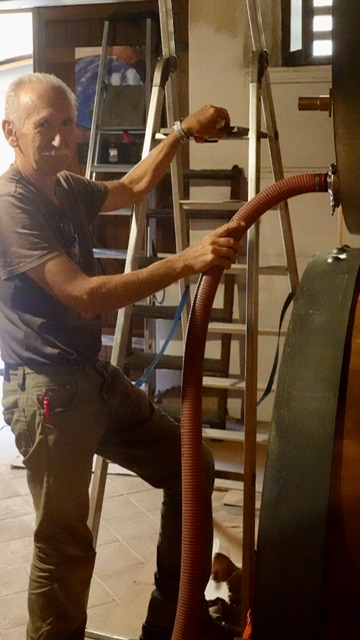
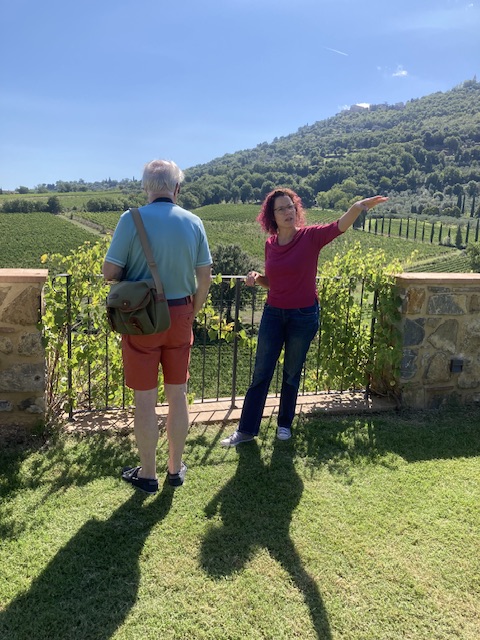
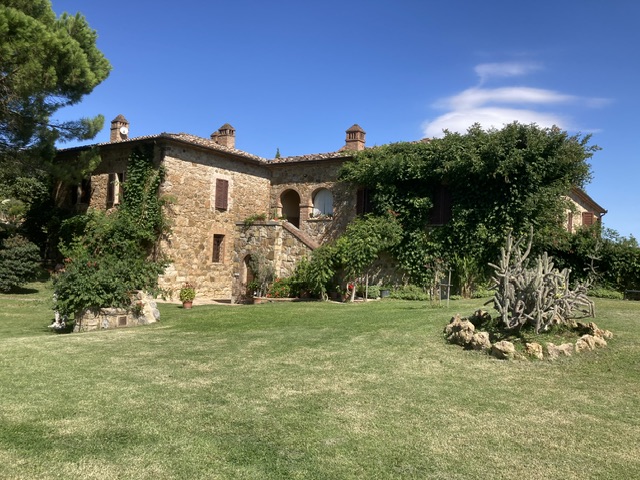
The view from the garden surrounding the winery was spectacular, with their vineyards below. We also met the founder of Capanna as he was working in the cellar, a modest man, not very keen on being photographed, but who graciously agreed.

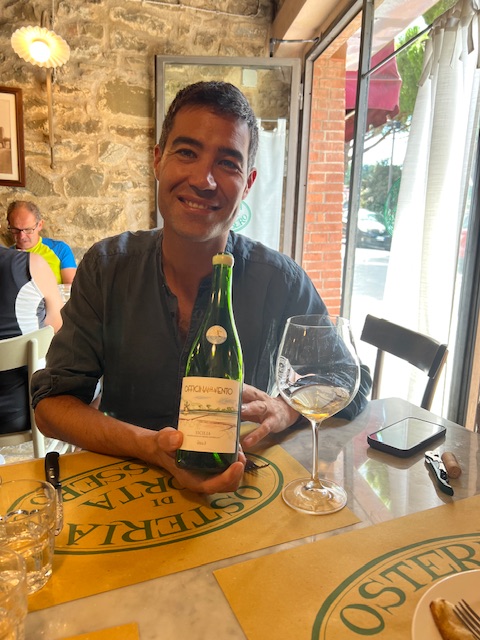
Our next appointment was with Gabriele in the Osteria di Porta al Cassero, a small but very obliging restaurant within sight of the Fortezza and the very large and nearly full carpark below it, where we had parked. And we tasted his newly bottled Sicilian white wine which he and his friends have been busy producing this summer. Having spotted how busy the loo was, I dodged next door to use yesterday’s bar’s facilities, rapidly downing an espresso to establish my credentials there, and to be granted the key!
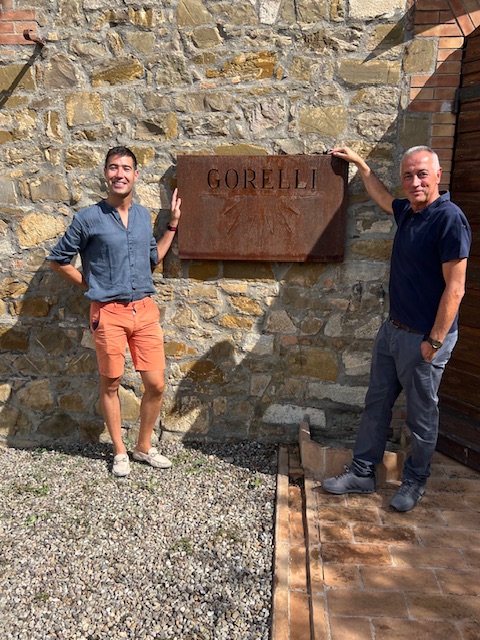
Our next appointment was with Gabriele’s uncle, Guiseppe Gorelli, himself an established consultant and now, wine maker. Coincidentally, he lives and makes wine where Gabriele and Azzura used to live before they moved into a more modern and better equipped house due passi from the Fortezza in Montalcino. He was nervous of our visit, and before our arrival, had furiously cleared up after the last of the grapes were safely stowed away. He talked at length about his newish project, and about his experience of many years working with wine makers.

I was on tenterhooks. The car was due to be returned to an industrial estate on the outskirts of Siena by 18.00, and we had no idea how the Friday early evening traffic might affect our journey. Remarkably we arrived without incident at 17.53, to be greeted warmly by two highly efficient (highly motivated) men keen to close up and go home. We were touched that one of them stayed until our taxi arrived to take us to our hotel. Our 36 hours in very busy, warm and sunny Siena started here.
 countrymouse