
Monday 22 December 2025
Part of my Christmas present to David was lunch at Locatelli’s new restaurant, ensconced in the Sainsbury Wing of the National Gallery. Having booked some weeks ago, we combined this with a visit to the National Gallery’s Radical Harmony exhibition of Neo-Impressionist art (and a quick tour of Wright of Derby for good measure – though no pics)
Our tickets were for 11.00, and having caught the 09.06 from Andover, we walked over Waterloo bridge passing through Covent Garden to purchase eight sublime Portuguese custards from Santa Nata, a gift for our hosts this evening.
As the blurb on the NG website tells us, ‘the Neo-Impressionists painted in small dots of pure colour. Viewed from a distance, the colours blend to create nuanced tones and an illusion of light. Now known as pointillism, this technique simplified form and played with colour in an entirely new way, verging on the edge of abstraction.
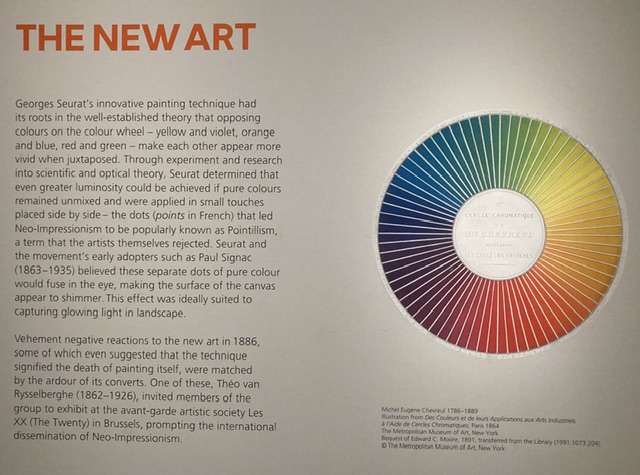
Alongside this exciting approach to colour, their style went hand-in-hand with radical political ideas. They captured late 19th-century European society through luminous landscapes, portraits and interior scenes, while also depicting the struggles faced by the working class, in reaction against the industrial age.
Most of the paintings exhibited were collected by Helene Kröller-Müller, one of the first great women art patrons of the 20th century. These works now form part of the Kröller-Müller Museum in the Netherlands.’
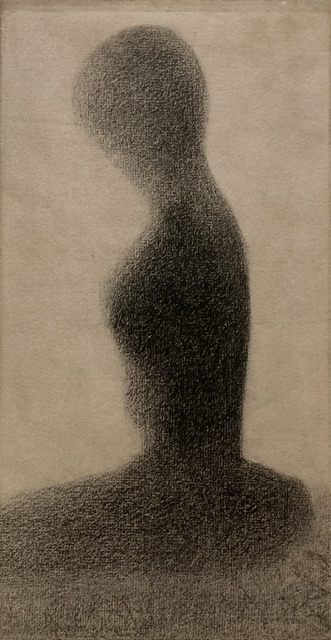
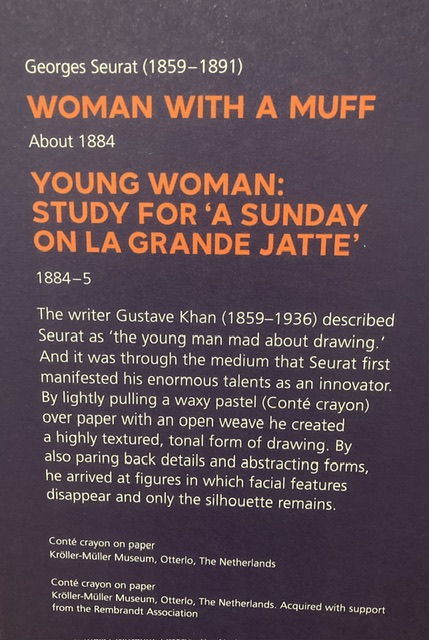
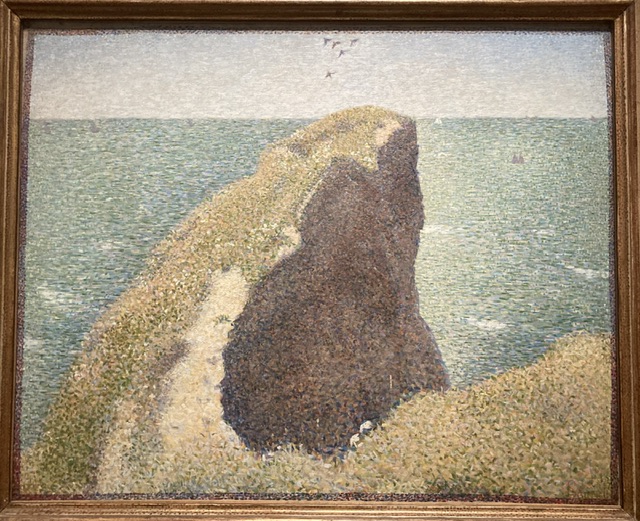
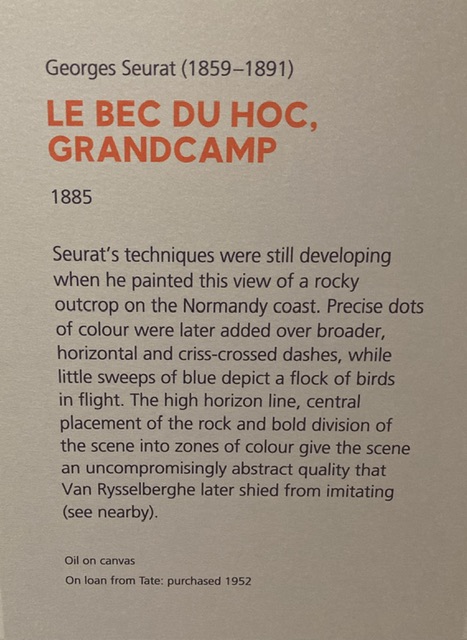
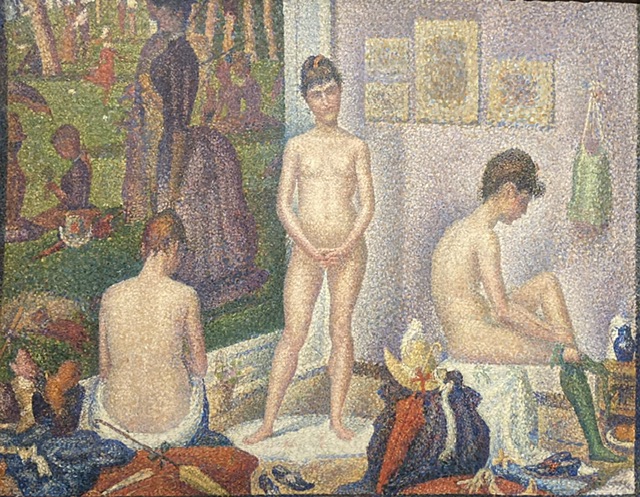
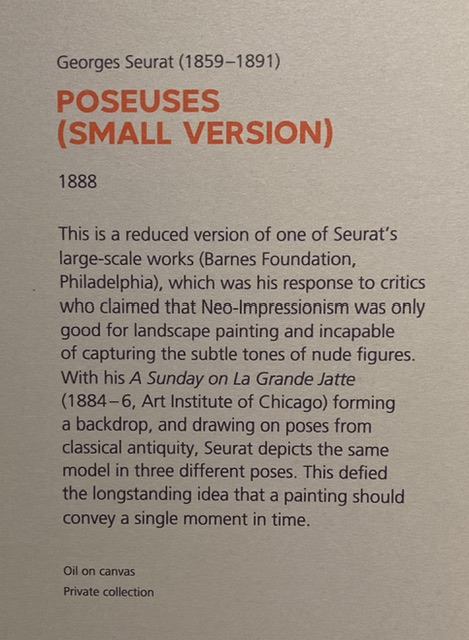
Georges Seurat (1859 -1891) gained his reputation with Bathers at Asnieres (1884) and A Sunday Afternoon on the Island of la Grande Jatte (1884-5) which heralded the move on from Impressionism. These paintings were not part of the exhibition (though the latter figures as a backdrop in one that is – Poseuses)
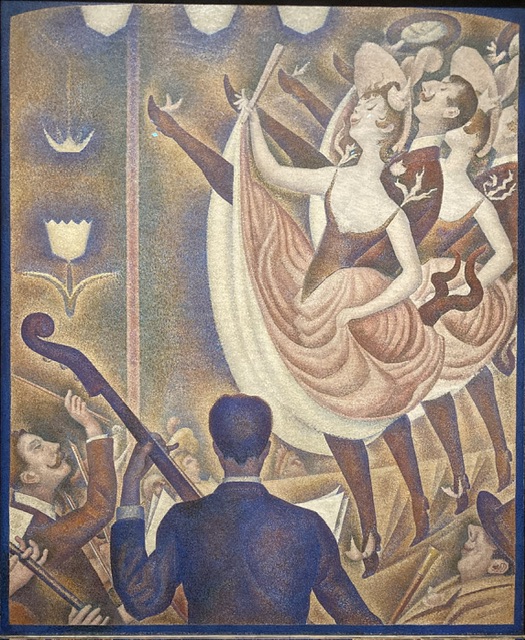
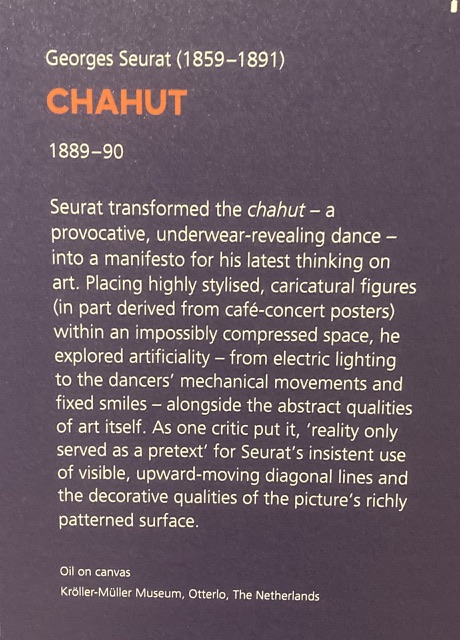
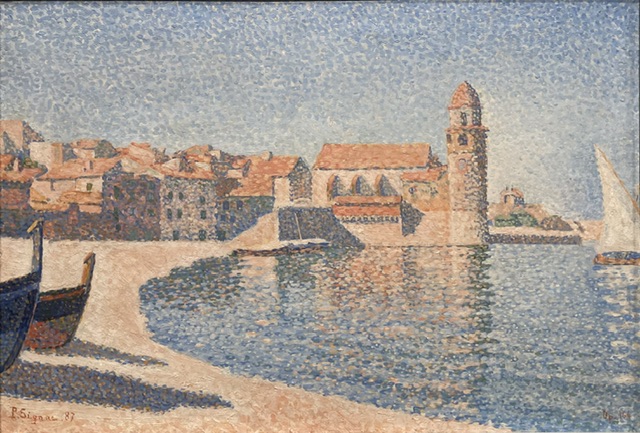
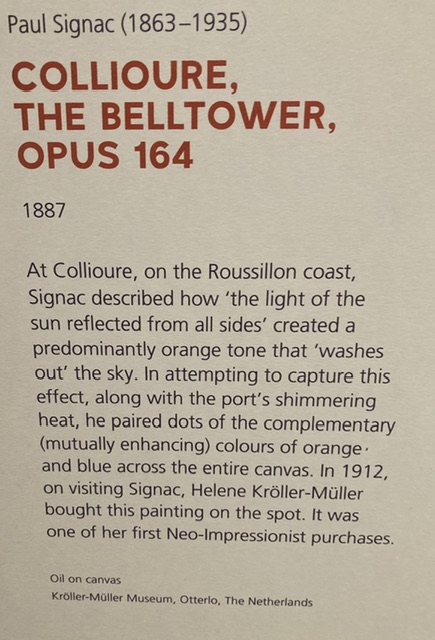
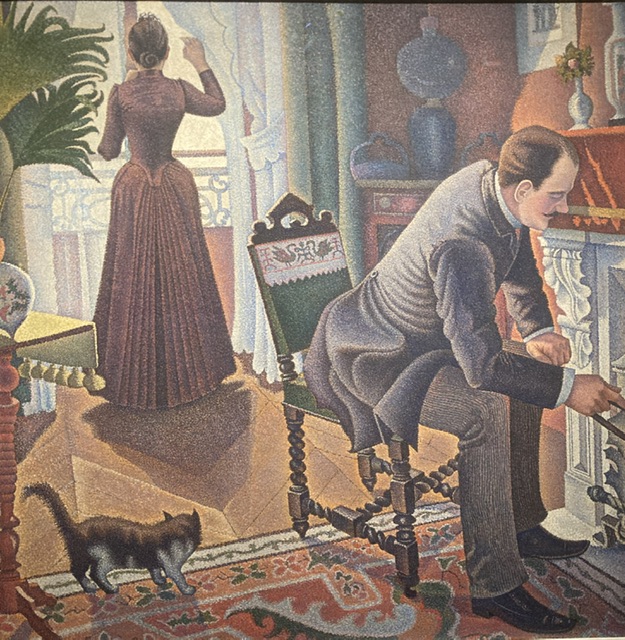
Paul Signac (1863 -1935) ) ‘s painting The Belltower at Collioure (1887) shone in the first room of the exhibition, and his very different much large piece Sunday dominated a later room.
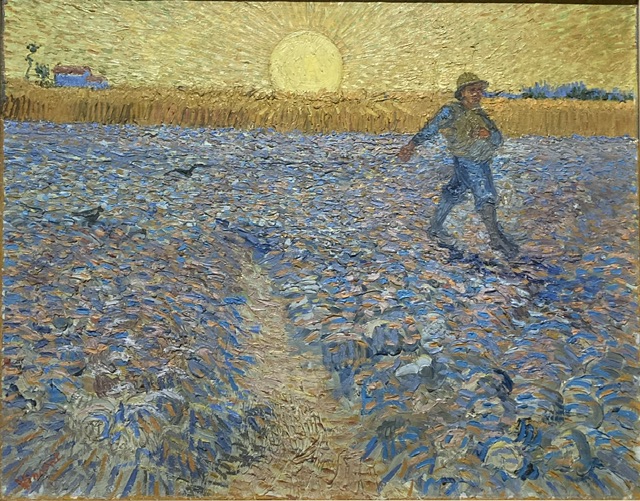
The Sower (1888) was instantly recognisable as the work of Vincent van Gogh (1853 – 1890)
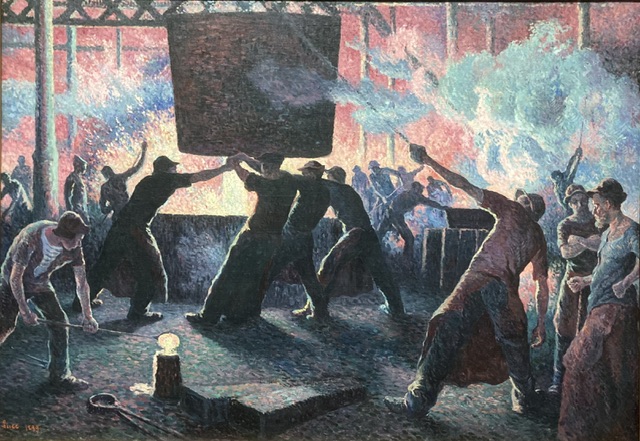
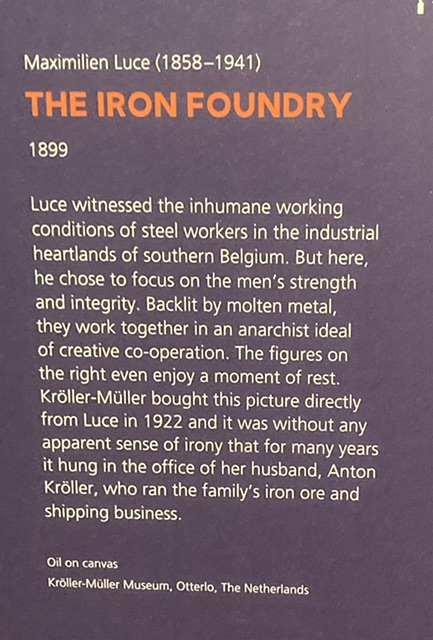
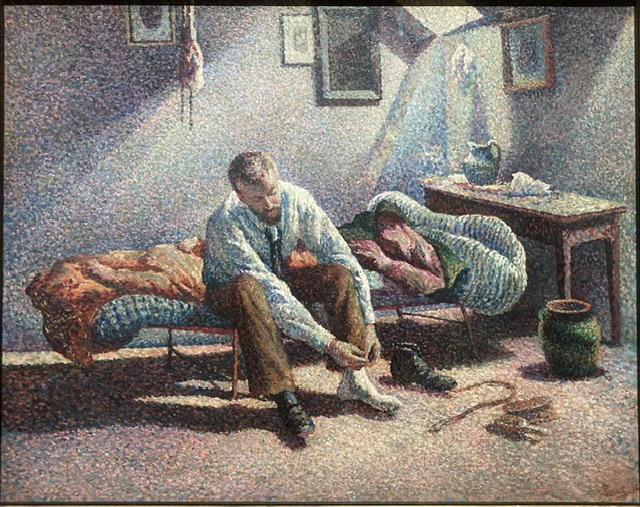
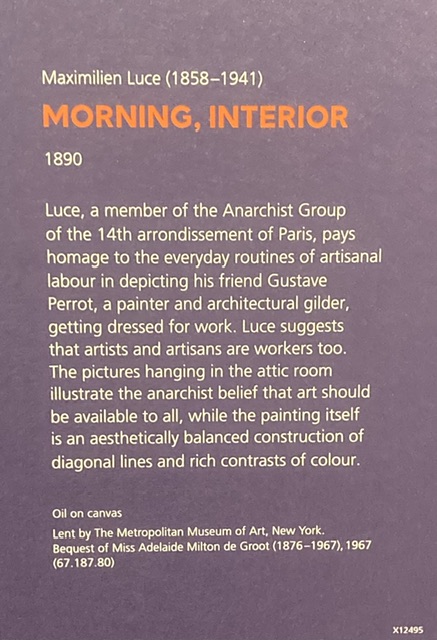
The two paintings by Maximilien Luce (1858 – 1941) were breathtaking. The sheer physicality of The Iron Foundry (1899) was show-stopping, as was his brilliant and moving Morning (1890)
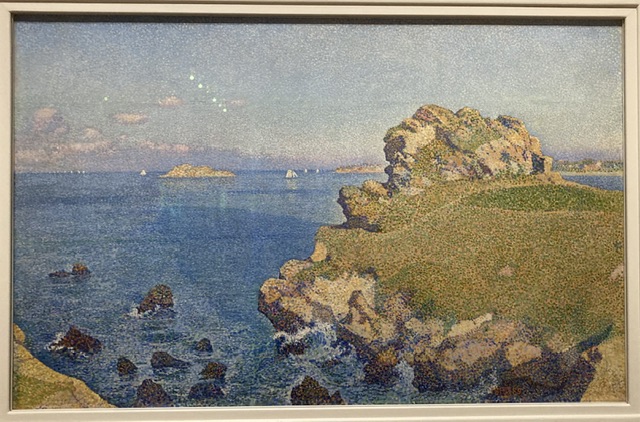
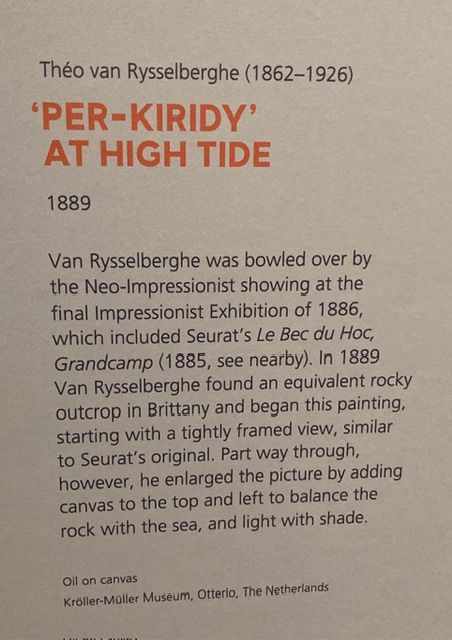
The four pieces by Théo van Russelbergh (1862 – 1926) belong to precisely the same period
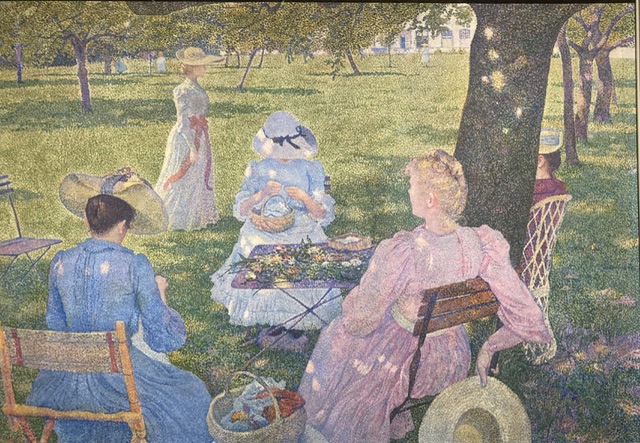

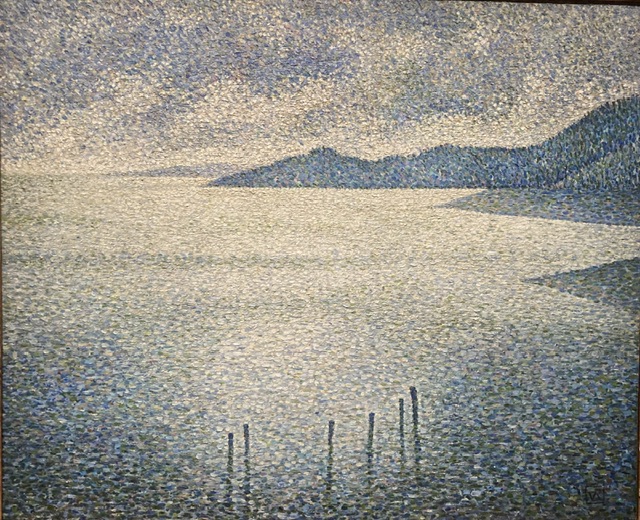

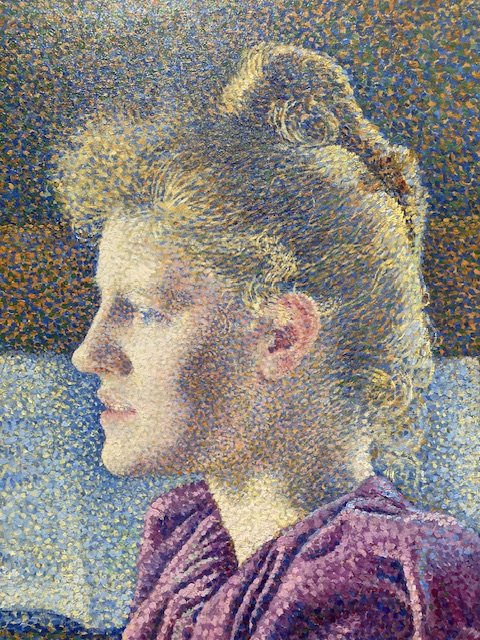
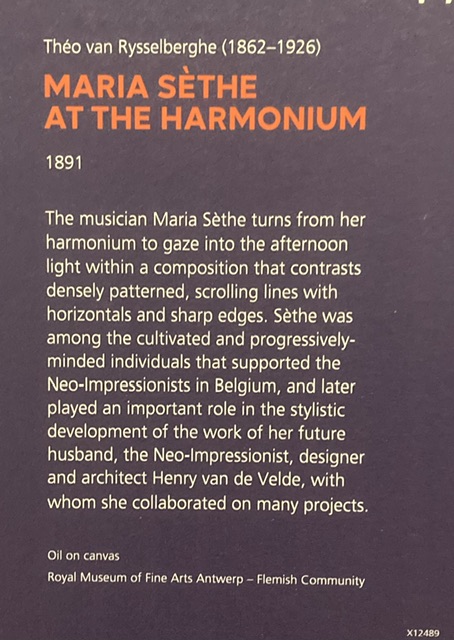
Anna Boch (1848 – 1936)’s Evening (1891) contrasts in so many ways, notably its scale, and its detail
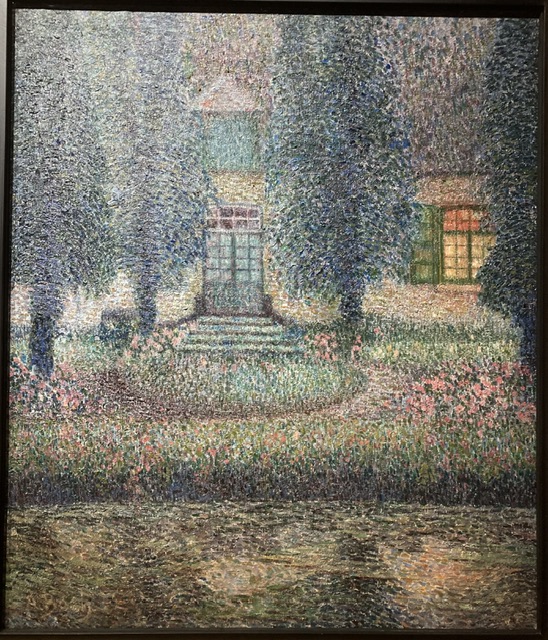
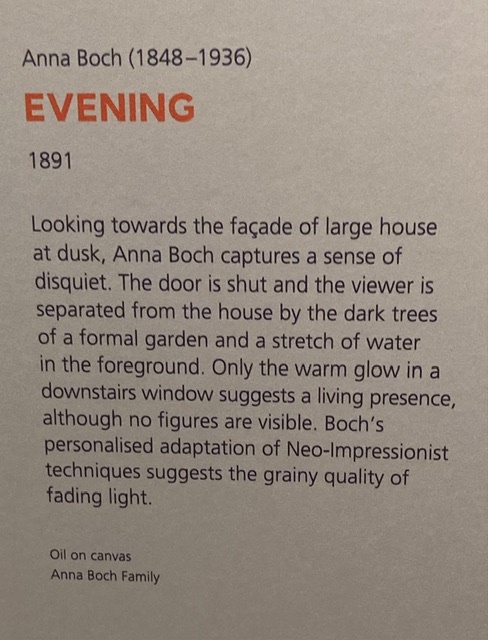
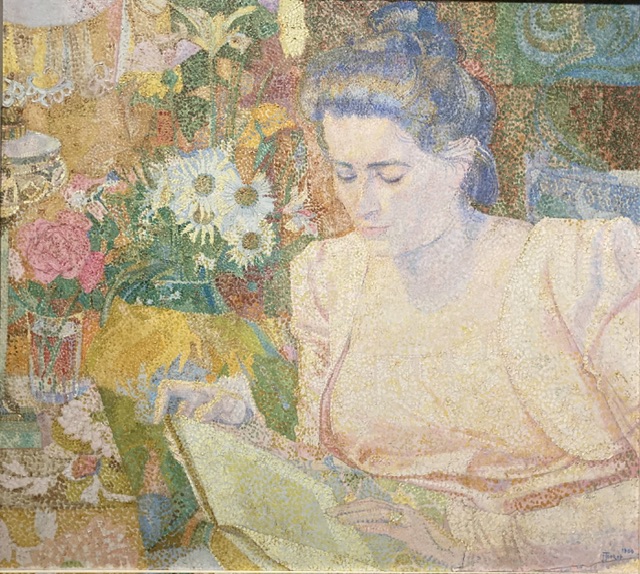
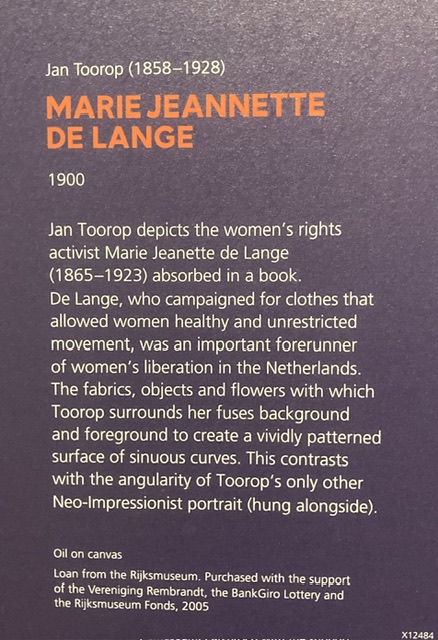
And finally Jan Toorop (1858 – 1928)’s work, painted almost a decade later, offers further developments, especially in the representation of the casual, loosely and comfortably clothed Marie Jeanette de Lange, already well-known for her commitment to women’s emancipation.
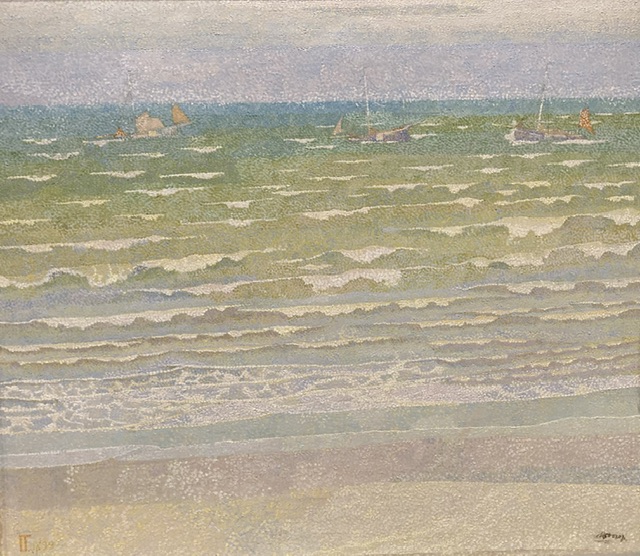
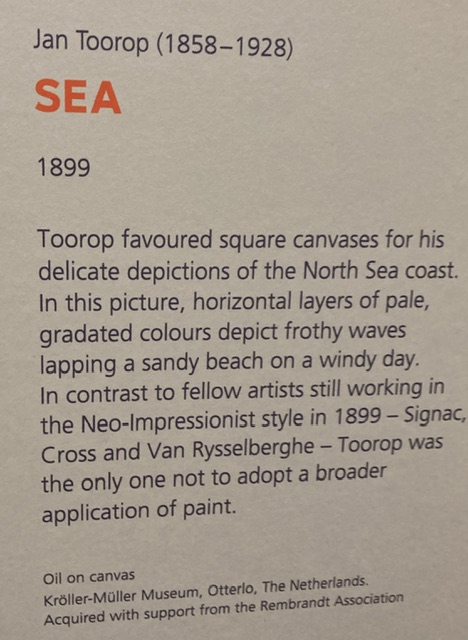
Of course, there were many other examples from this fin de siecle artistic movement, but these particularly caught my eye and my imagination. Our friends that evening were so moved they now plan a Spring visit to the Kröller-Müller Museum in the Netherlands, which houses a large collection of Neo-Impressionist paintings, including the largest collection of Van Gogh’s work outside Amsterdam.
0
 countrymouse