
Thursday 19 September
We left Andover at 10.06 travelling via Waterloo and Blackfriars for a Thameslink train to Luton Parkway and the newish Dart shuttle, arriving at the airport in plenty of time for the 15.25 Easyjet flight to Lisbon where a pre-booked taxi, though hindered by serious parking restrictions, arrived within 15 minutes and drove us to the Residencial Setubalense at 28 Rua de Belém. Advertised by Booking.com as a hotel, it really performs as rooms with 24 hour reception, in the centre of what proved to be a delightful district.
(please note: many – though not all – of the photos are slideshows; simply tap on the arrows)

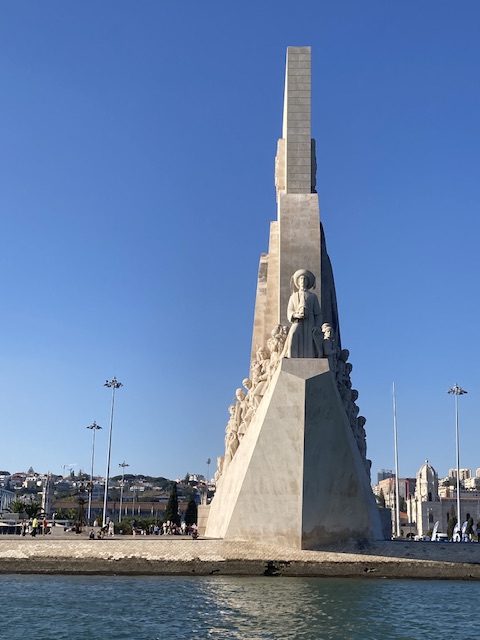
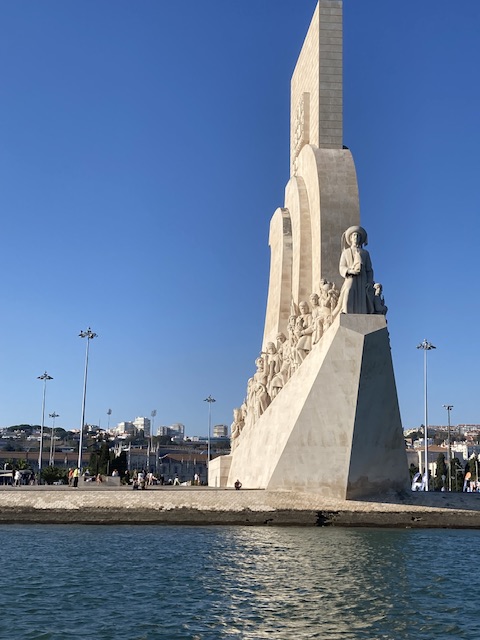
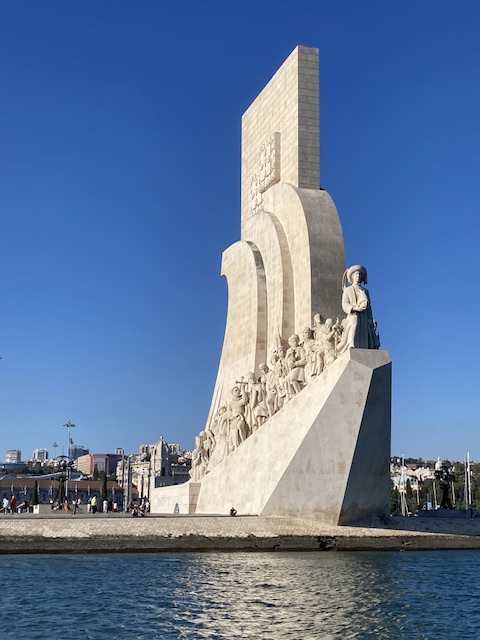
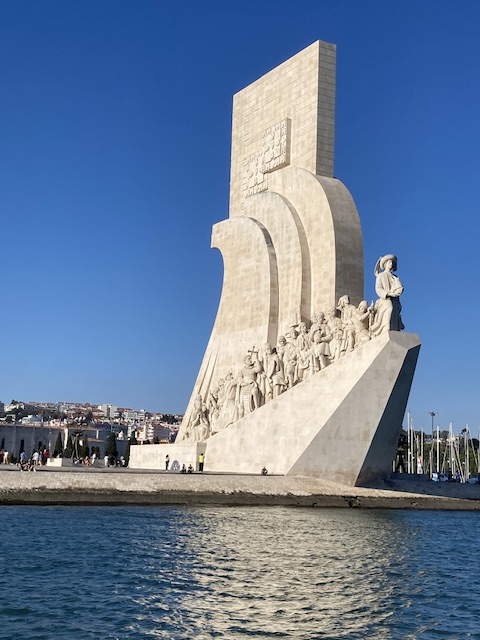
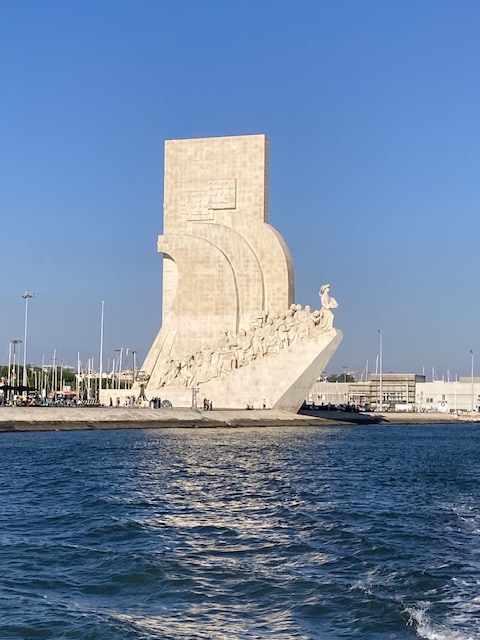
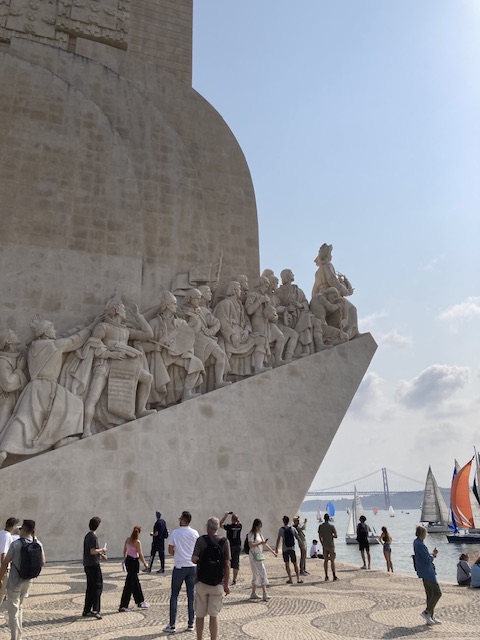
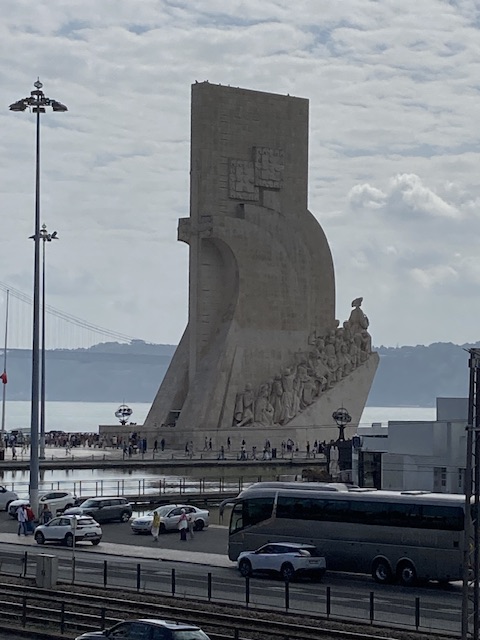
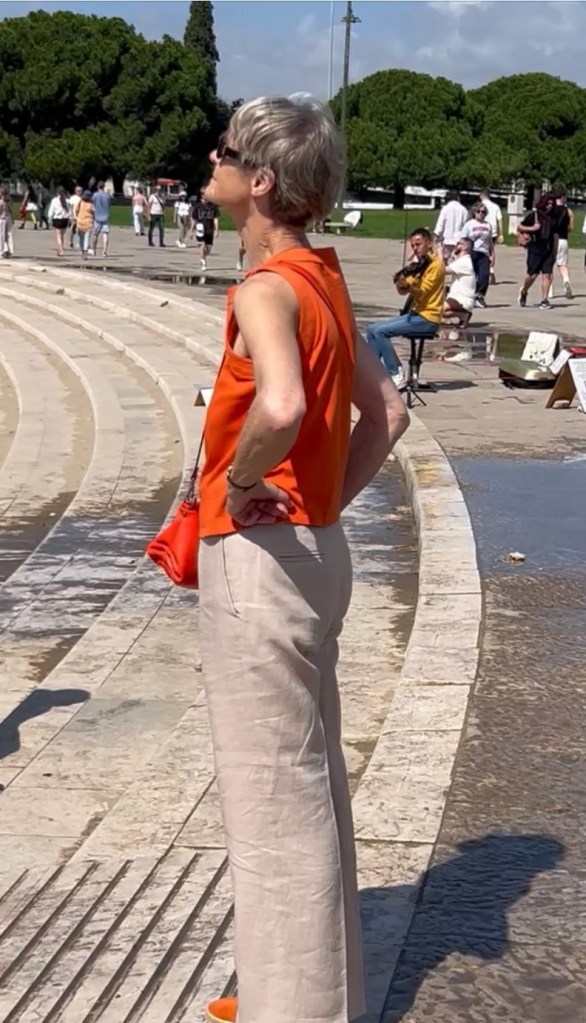
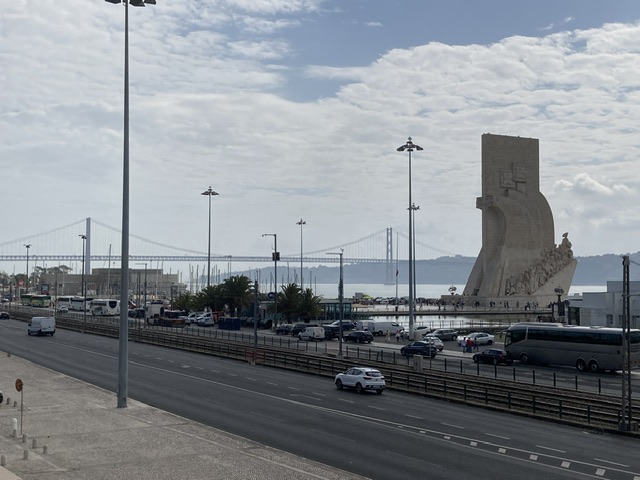
Belém is the port from which the Portuguese explorers departed on their extraordinarily brave voyages in tiny boats with rudimentary navigation. A 54m high Padrão dos Descobrimentos (monument to the Discoveries) graces the shoreline, as shown above. Built in 1960, it commemorates the 500th anniversary of the death of Henry the Navigator. He leads the line of statues of kings and heroes (and even the odd woman!)

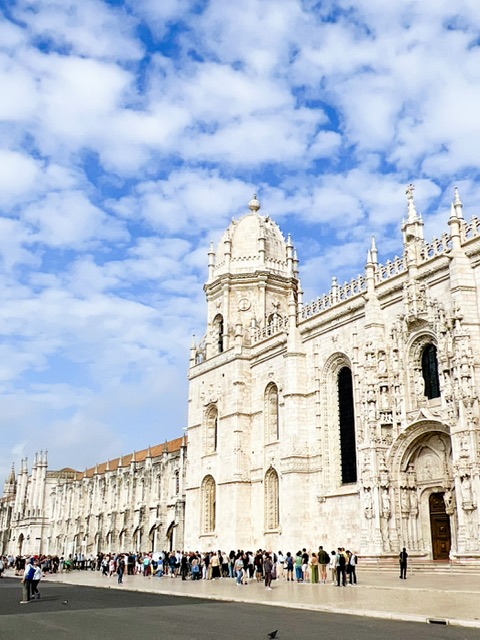
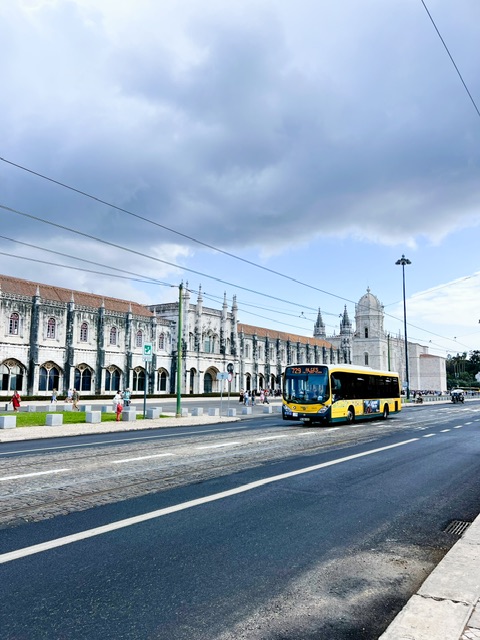
Vasco da Gama succeeded in finding a passage to India in 1497, and as a thank offering for his safe return (with mind-bogglingly valuable spices) King Manuel I fulfilled his promise to build the Mosteiro dos Jerõnimos, a monastery of astonishing proportions, in little more than 20 years, dedicated to San Jerome, designated as one of Unesco’s World Heritage sites, and now plagued by thousands of visitors.

Those explorers who returned after 1513 were greeted by the Torre de Belém, another of Manuel’s projects which at the time was situated in the middle of the wide passage, surrounded by the sea. The earthquake of 1755 caused such land movement that now it sits right on the edge of the coastal strip that emerged, which today carries two dual carriageways of road traffic, either side of the railway, that runs along the coast for four kilometres into Lisbon proper.
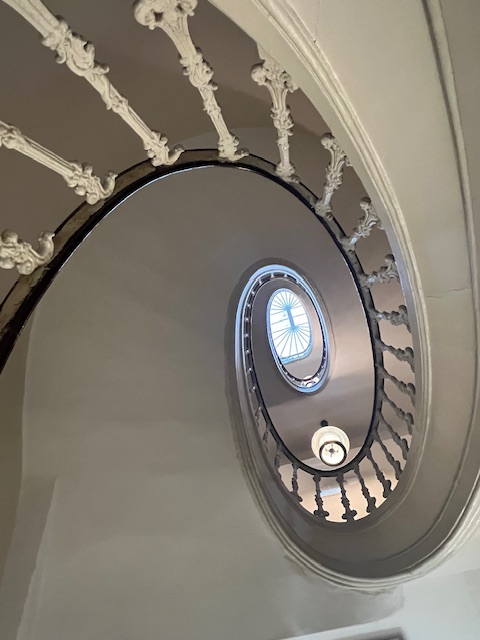
We took advice on where to eat from the helpful receptionist, and having gingerly trialled three flights of an extraordinary spiralling tiled main staircase (restored sympathetically in 1993) we set off for Prado and some authentic if basic portuguese food: plateful of mussels for David and ‘shrimps’ (aka large prawns) for me, followed by liver and boiled potatoes. The football was on; lots of locals.

Friday 20 September
We had opted for Belém in order to be close to the Centro Cultural de Belém (a striking building opposite the Mosteiro dos Jerõnimos) which the Organisation of Vine and Wine (OIV) used for their awards reception on this evening. This stylish pink marble complex was built to host Lisbon’s 1992 presidency of the European Union, and now regularly hosts photographic and art exhibitions, concerts and shows. It was peculiarly quiet, and almost empty, in marked contrast to the monastery opposite.
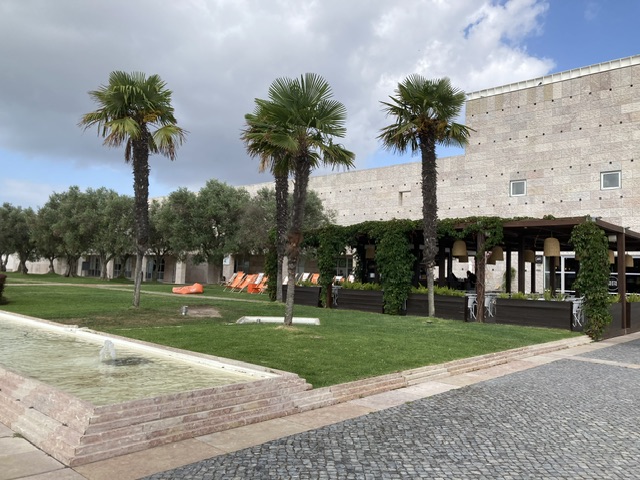
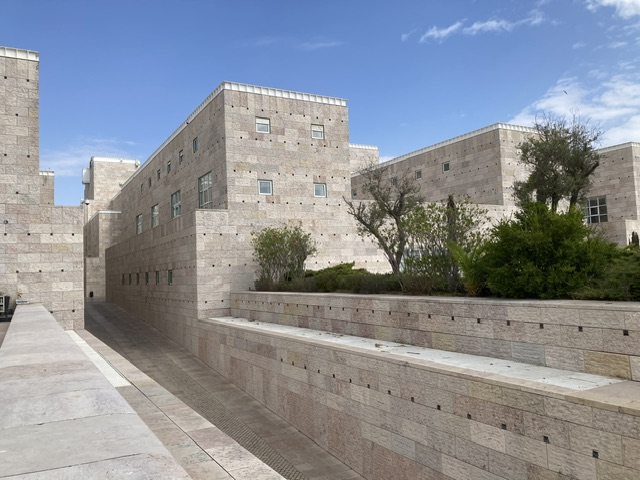
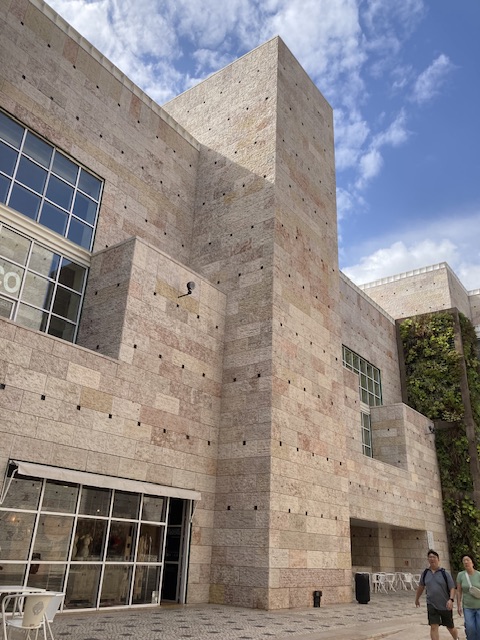
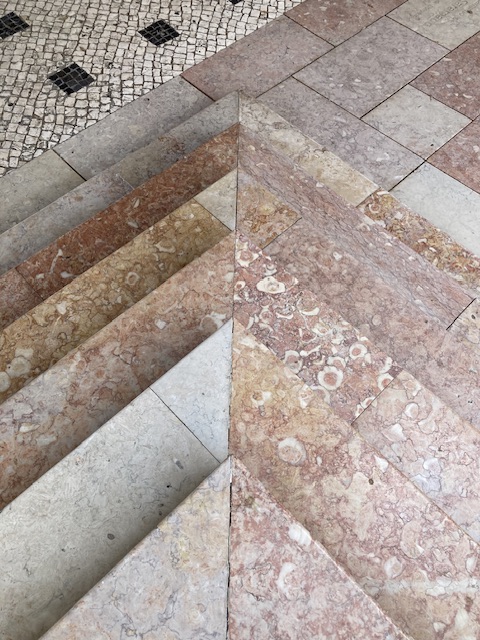
David’s book The Wines of Piemonte has been awarded a Special Mention by the OIV, and he was invited to attend to receive the award. Having by-passed the vast queue of tourists patiently waiting to enter the monastery, its car parks flanked by huge numbers of coaches, we spent the morning exploring this remarkable building, with its art gallery, three restaurants, two cafés, bookshop and conference suites. However, a late breakfast of coffee and elaborate vegetarian flans (mine goat’s cheese) may have been the cause of the afternoon’s dramatic adventure….
David had of course researched the local eateries, of which there were many, and on our stroll we had discovered a superior elegant (ie table linen) wine-focussed restaurant Descobre in which we enjoyed local sparkling wine and well-presented quasi tapas-type plates: wild asparagus, mushrooms and fish, with two smaller sides of greens, followed by cheese and pineapple. It was delightful – until I was suddenly overtaken by violent gut pain, and spent a distressing half hour on the loo, sweating profusely and fending off fainting between outbursts. Ghastly.
The poor proprietor looked on very alarmed. She ordered a taxi for us, and we were in our room by 16.15, where I fell asleep immediately for 40 minutes, and came round cautiously. We changed, and left at 18.00 on foot for the reception in the Cultural Centre, my sitting cautiously with a cup of water to hand, and close to the door of the awards space.
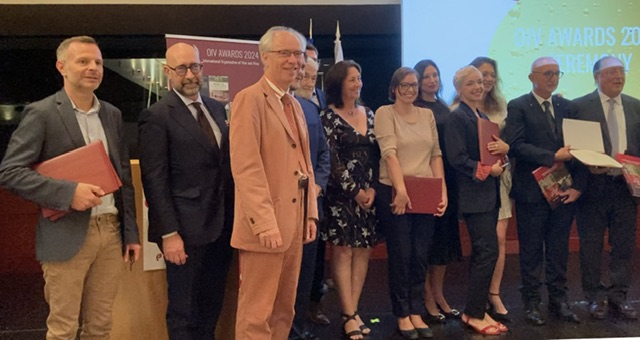
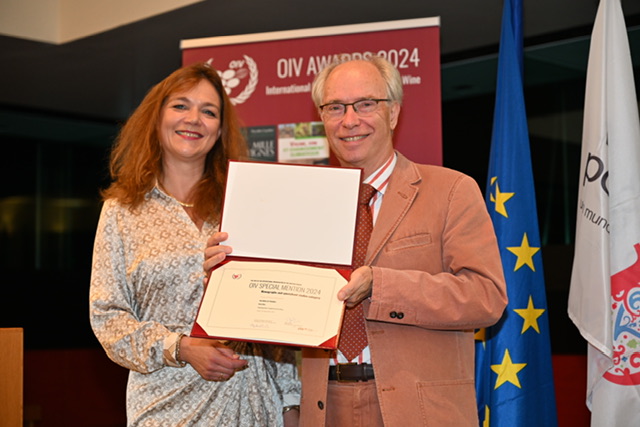
David’s turn came near the end, after a couple of promo videos (one on Moldova) and alot of clapping and many mercifully short thank you speeches. He made a great impression with both a plug for the WSET (and his reliance on OIV data : might it be available a few weeks earlier?!) and a joke about winning a prize for a competition he didn’t know he’d entered.
A very happy evening, meeting (among others) Rosa Roncador from Trentino (an archeologist really, but working with the consorzio, and Attilio Scienza) and only marred by my necessary caution over the sophisticated nibbles and drinks.
Saturday 21 September – Olive’s eighth birthday!
On our perambulations yesterday we had spotted and bought a three-day pass for tourist bus and boat travel with the Gray Line (whose buses are confusingly red). It offered a variety of hop-on, hop-off bus routes from Belém in both directions, around the city itself, and westwards to Cascais and beyond, and boat passages to and from Cais do Sodré, the main city stop.

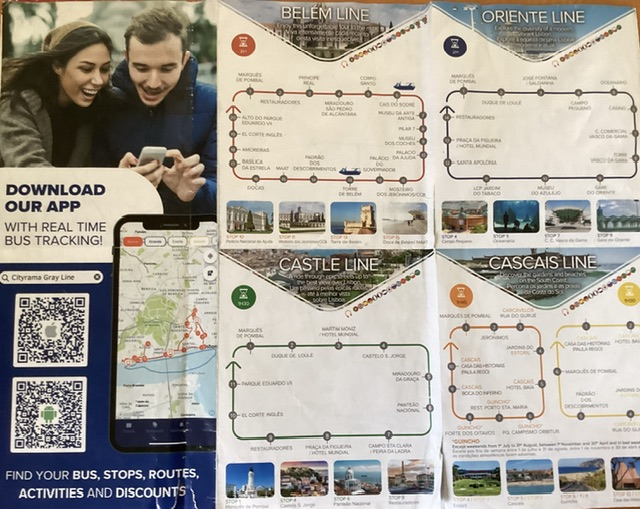
We were naïve to think this would be straight forward. There was steep competition from the Yellow Bus and Red Line companies; dreadfully slow traffic in a few critical places, contributing to uncertain timings, endless traffic lights and crossings; an app whose info was limited and a leaflet that was complicated if useful. If there is a next time we will tackle the efficient municipal trams and local bus services instead.
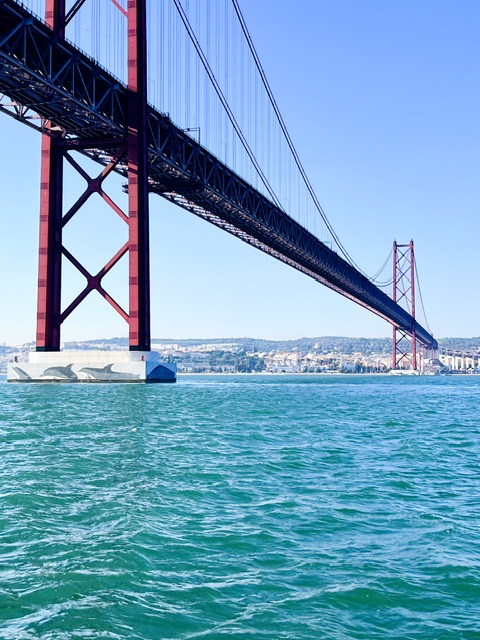
But the ferry was a real treat. A small unprepossessing blue vessel labelled Lisboat leaves the Torre do Belém quay (access via the café!) on the hour and chuggs east, passing several eye-catching landmarks and structures, under the huge suspension bridge, past the container docks and on to Cais Ribeira das Naus, and a little further to terminal Sul Sueste, where the city’s main gate overlooking a palatial square and suitably impressive buildings is a fine sight from the sea.

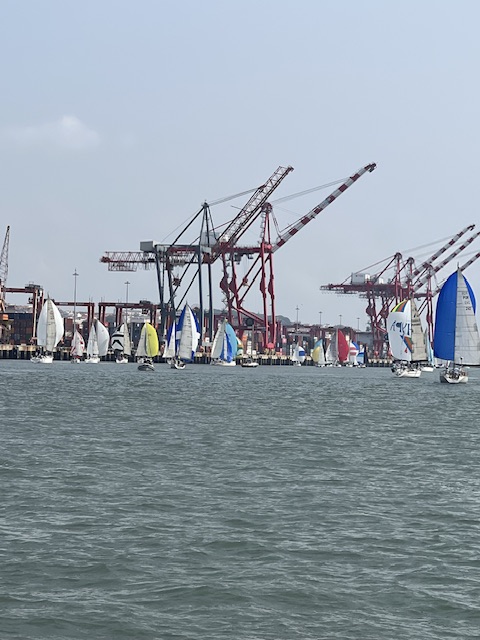
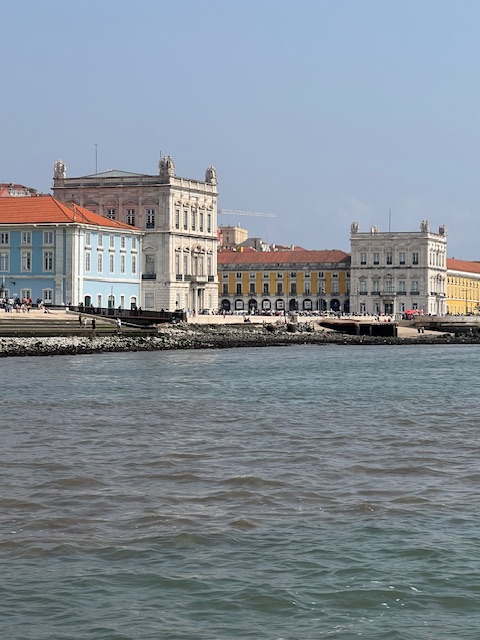
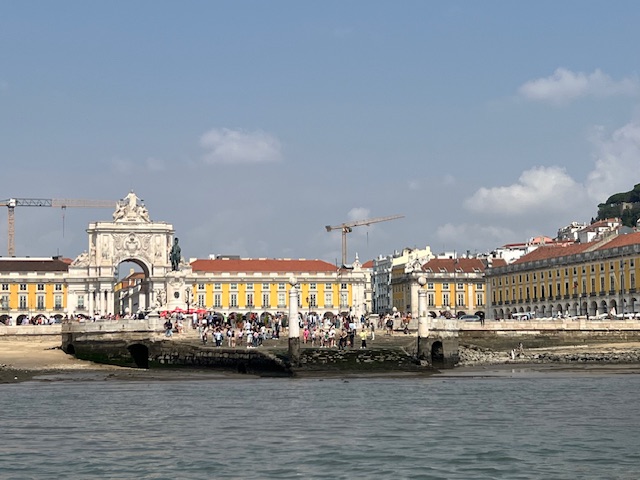
Well, we did our best! We trudged around the old town – slowly of course owing to the sea of other tourists we had joined, up, down and around the narrow streets of the castle hill, avoiding the many queues for the old fashioned yellow trams, for the Elevadors, and for the castle itself.
We are faint-hearted tourists, and quickly turned our attention to wine bars and eateries recommended on another of David’s handy apps. The stylish michelin one was full, and we returned to the smaller bar of Maria Palato whose former home in the Douro influenced many of his wine offerings, including the Pinot Noir and sparkling wines we tasted. His plates were simple and delicious (shrimps and white anchovies); his extra tastes of aged sherry and port generously bestowed (but definitely paid for). I was still eating cautiously, having only gnawed on a brown bread roll as breakfast, but our spirits rallied in his friendly company and that of a younger english couple..
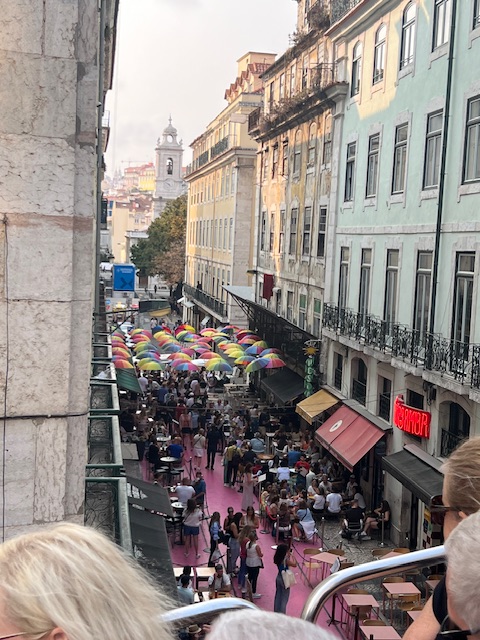
The next challenge, having wandered once more without much enthusiasm, was tracking and then catching a Belém Gray Line (red on the leaflet, red on the bus!) which we did eventually, on which we sped up to Marquis de Pombal roundabout, where the many lines terminated or began; difficult to know! It’s important to note that all the bus routes operate only in a clockwise direction; very important!
Finally heading west in congested, slow-moving traffic, frequently punctuated by lights and crossings, we were grateful to reach Belém, and settled for drinks in the evening sunshine at a kiosk bar close to our residence. The beer (well, lager) is by Bock. Good for thirsty convalescents.
David was intrigued by the lack of information on a restaurant we’d seen within the cultural centre, and as other possibilities were fully booked, we opted for Sauvage. It turned out to be civilised, stylish and quiet, offering excellent food, though my chicken salad (still cautious) was dull. More fabulous ‘shrimps’ though !
Sunday 22 September – Hugh’s birthday!
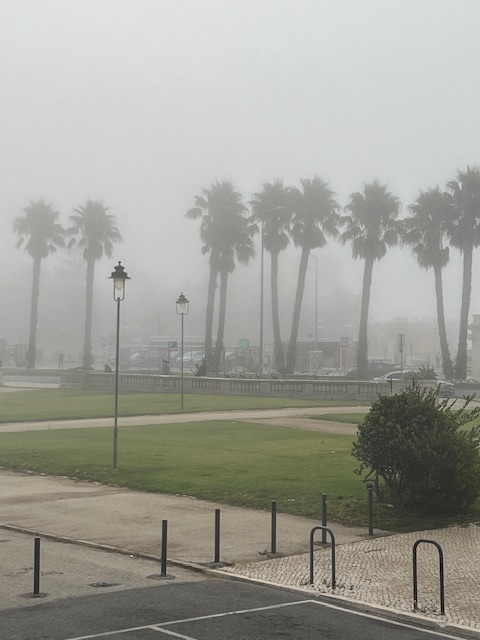
To avoid the weekend crowds we had decided on a bus trip to Cascais which was a very brisk even chilly 45 minutes on the open top deck with a sea fret over much of the coastal road. It took us through Estoril, once a glamorous celebrity destination, with its casino immortalised by Ian Fleming in Casino Royale, but now over-expanded with huge hotels and regimented apartments.
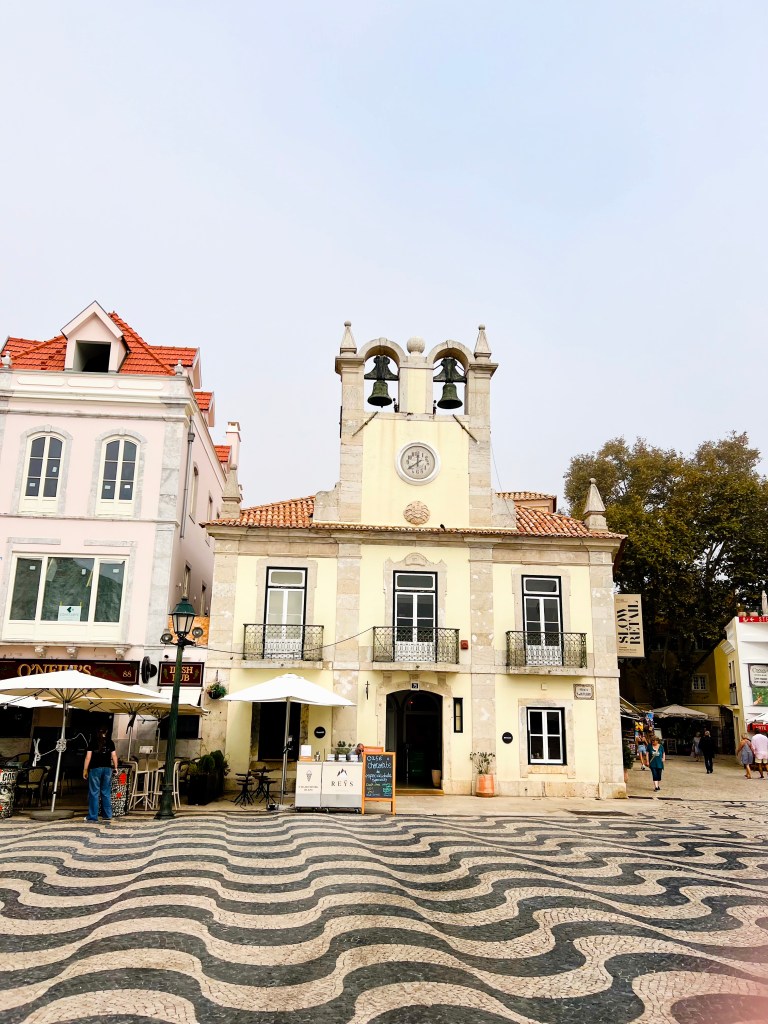
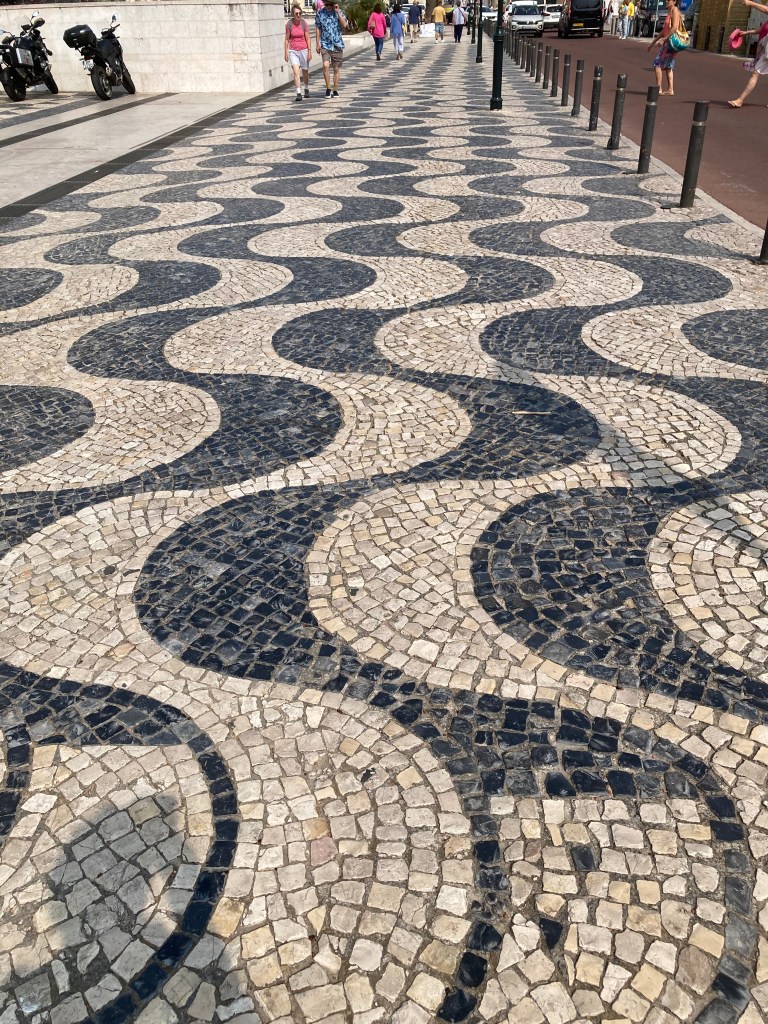
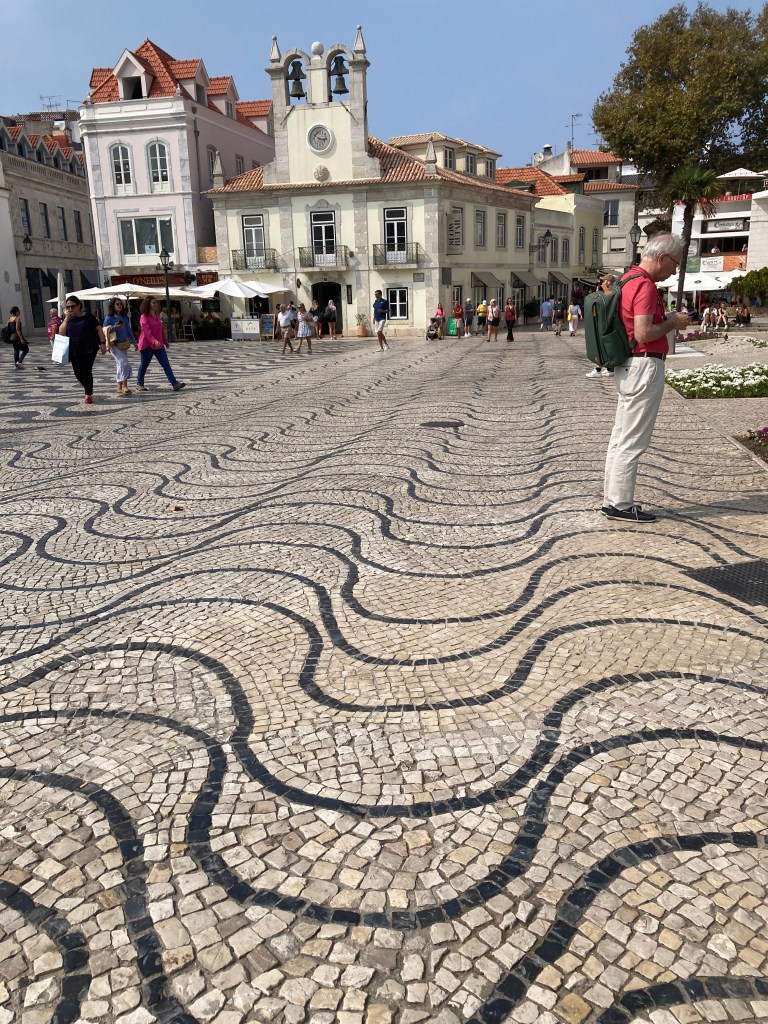
Cascais has an attractive, mesmerising, pedestrianised area around its harbour, though now stuffed with cafés, bars and restaurants and heaving with people, some of whom had come to watch a series of sea-swimming races which took all day and whose announcements dominated the air ways.


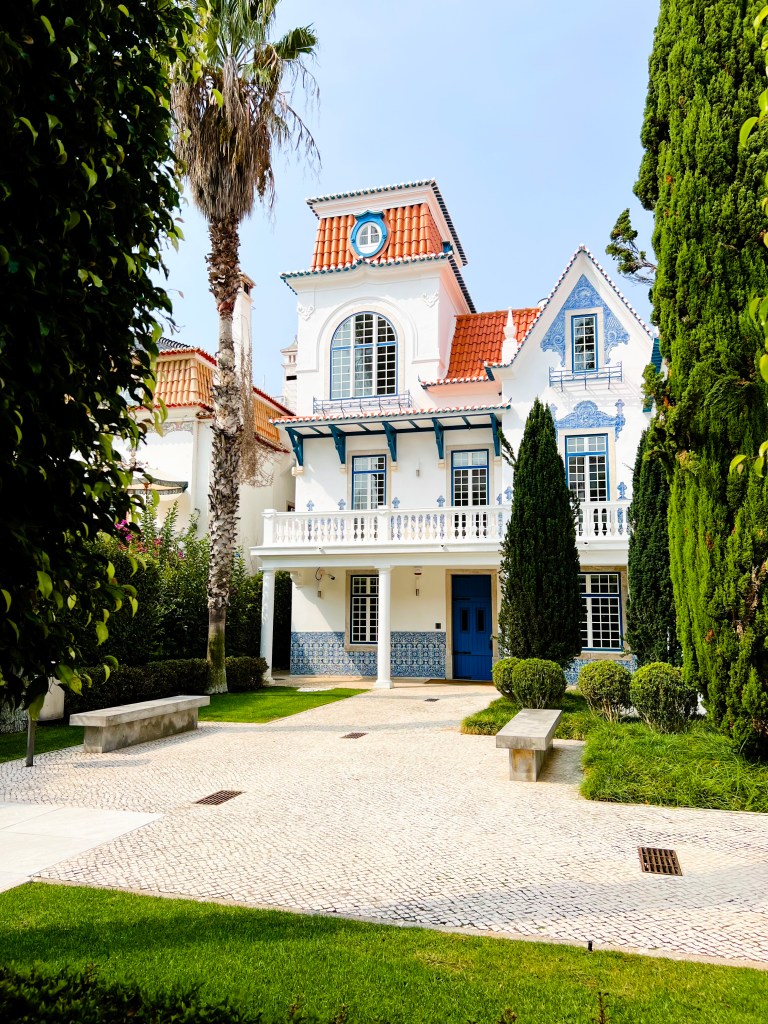
The disappointment was offset by the discovery in the quieter residential area, the permanent exhibition space for Paula Rego’s work Casa das Historias (House of Stories), opened in 2009, designed by Eduardo Souto de Moura, set above the old town.
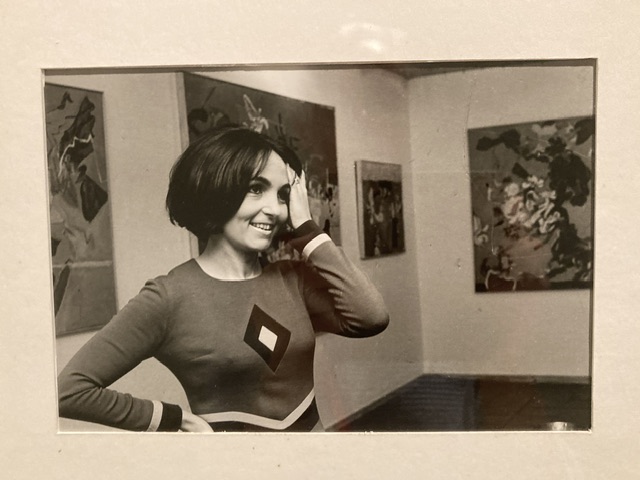

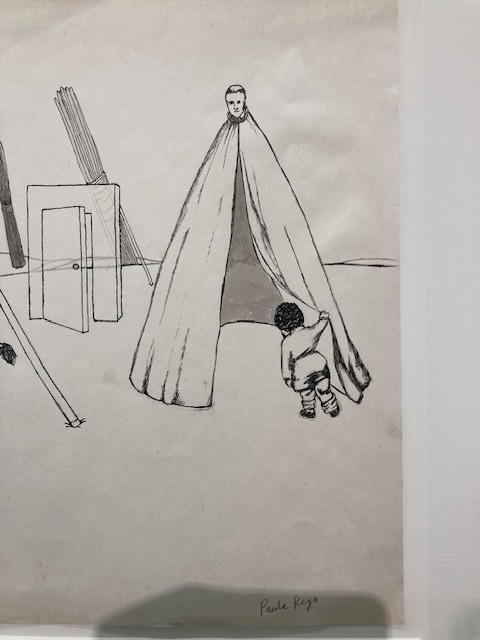
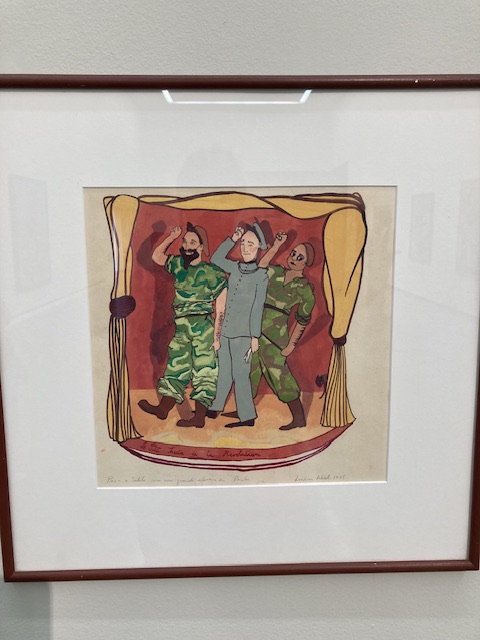
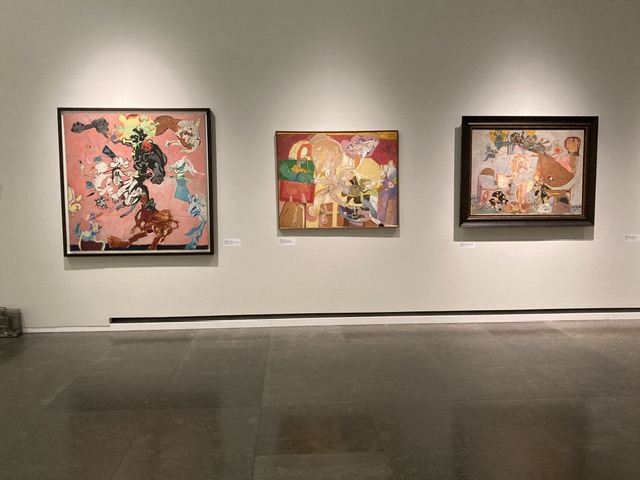
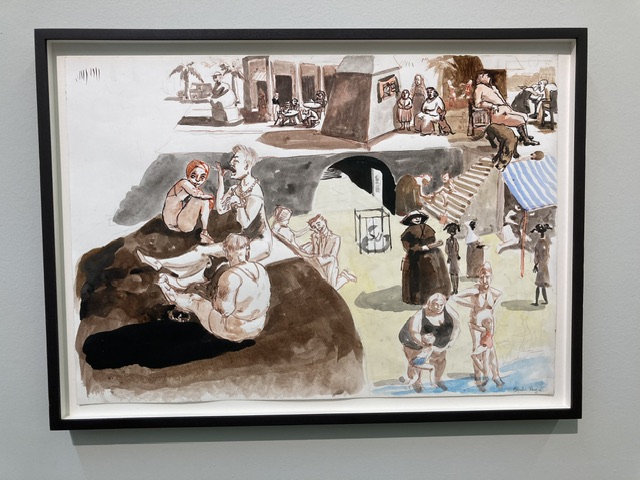

It was showing a replica of her subversive show of 1965 called Manifesto (for a lost cause) with its contorted, complex multi-material collages disguising her critique of male-dominated portuguese culture (then still a dictatorship of Salazar). Having moved to safety in London, she went on to create series of explicit paintings as protests about misogyny, and the condition of women in Portugal, some with very graphic treatments of first abortion, and later, female genital mutilation (FGM). She was a member of the Royal Academy, and made a Dame of the British Empire in 2010, and died aged 87 in 2022.
Having survived that, we hunted down the Galleria House of Wonders, mentioned in the pocket Rough Guide : a dutch woman’s innovative and offbeat vegetarian offerings with the menu made from the displayed dishes themselves; and seating on three or four levels including the roof top.
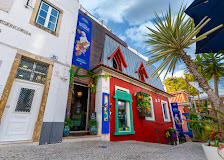
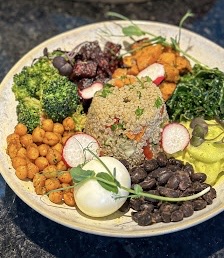
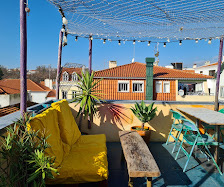
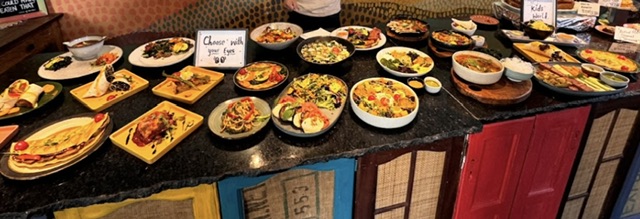
She hadn’t seen or heard of the entry!
After a short walk to inspect the small beaches alongside the old town streets, we waited by the Hotel Baia for the 15.00 bus, and returned in the warm sunshine, and with better views.
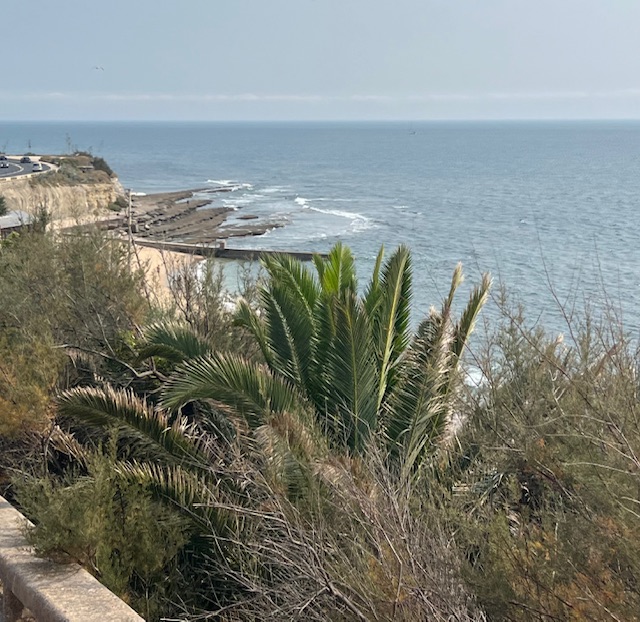
As the city is less than 30km away, it isn’t surprising that the 3.8 million inhabitants of Greater Lisbon have annexed most of the coast. How different it must have looked in the fifteenth century!
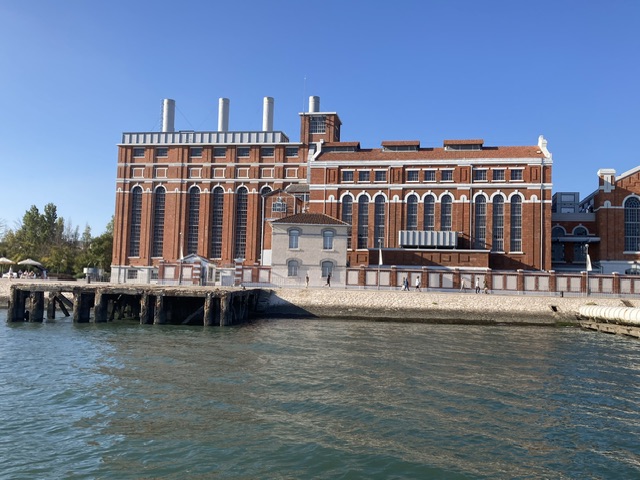
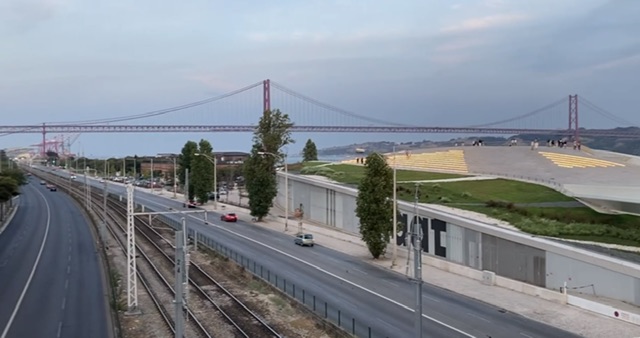
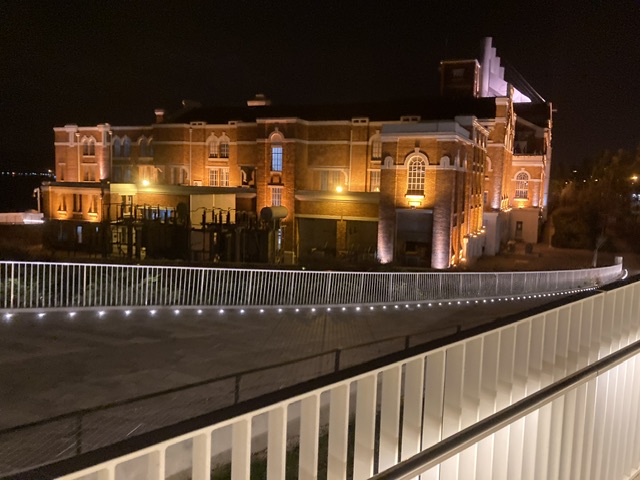
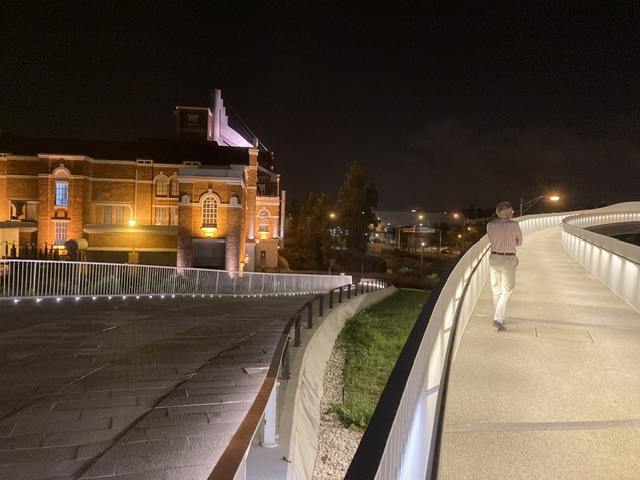
Back in Belém, we tracked down a highly rated local restaurant called Canalha learning that the only table available was on Monday at 19.00. We booked it nevertheless, and went in search of tonight’s meal, stopping for a delightful drink on the balcony of the brand new MAAT gallery, built alongside the beautiful old brick power station, all which has been completed re-purposed and integrated for this temple to art, architecture, design and technology.
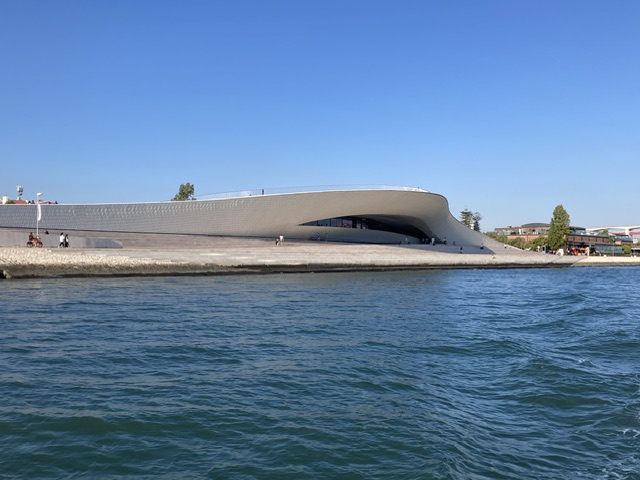
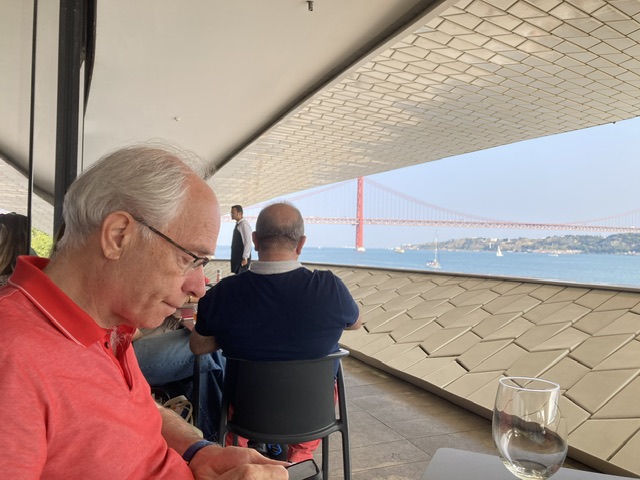
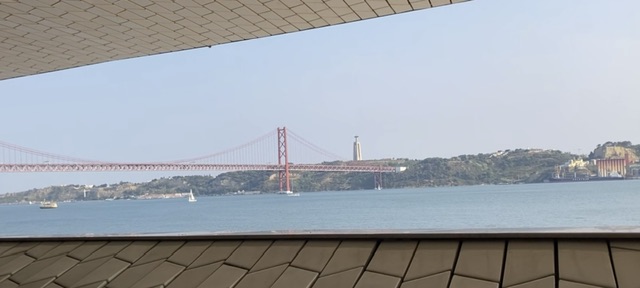
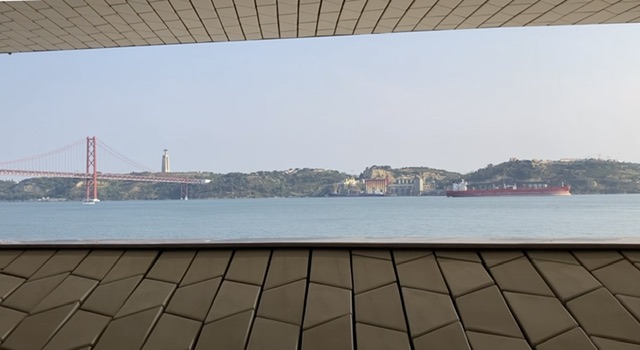

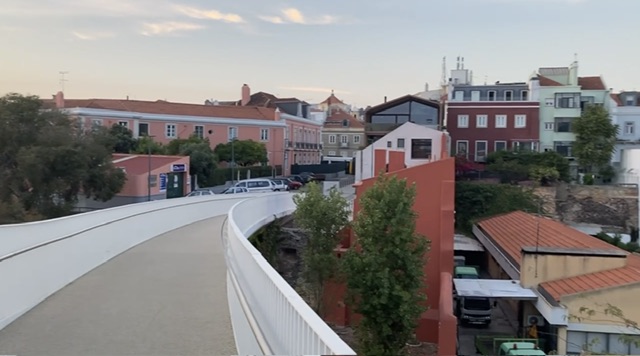
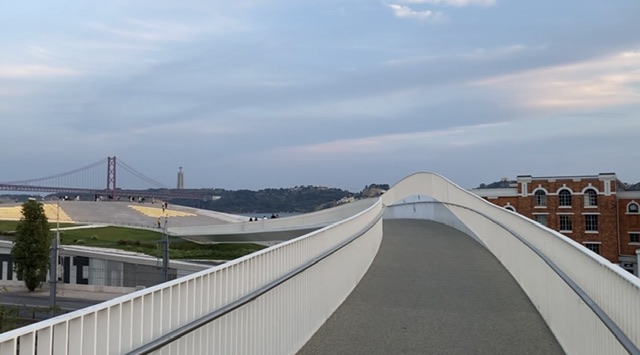
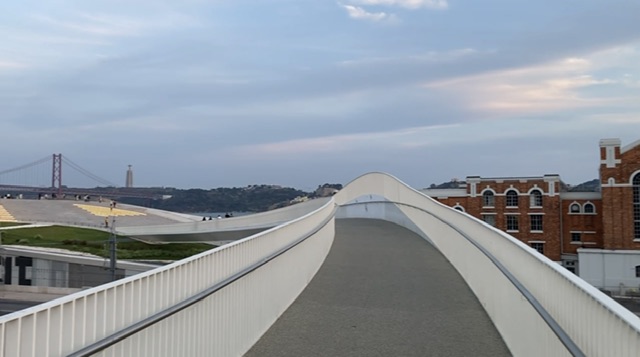
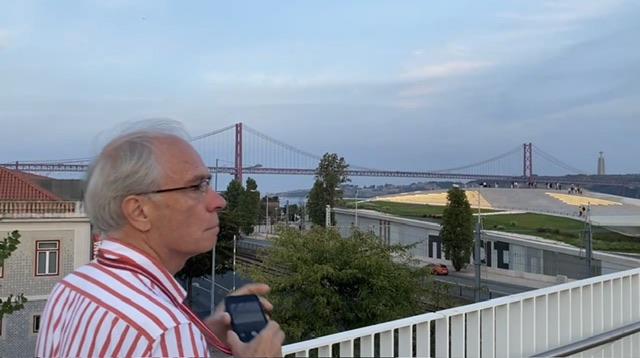
The gallery’s brand new white tiled structure, its undulating lines evoking waves, surf and movement is the work of Amanda Levete, an english woman architect. The building flows into a phenomenal footbridge spanning the two busy dual-carriages and railways, with views of the long suspension bridge, the huge Christ the King across the sound, the docks to west and the monuments of Belém to the east, with the handsome former power station alongside. A magnificent, breath-taking, inspirational piece of design. The location – and the wine list – were so beguiling we returned that evening to eat there.


Monday 23 September
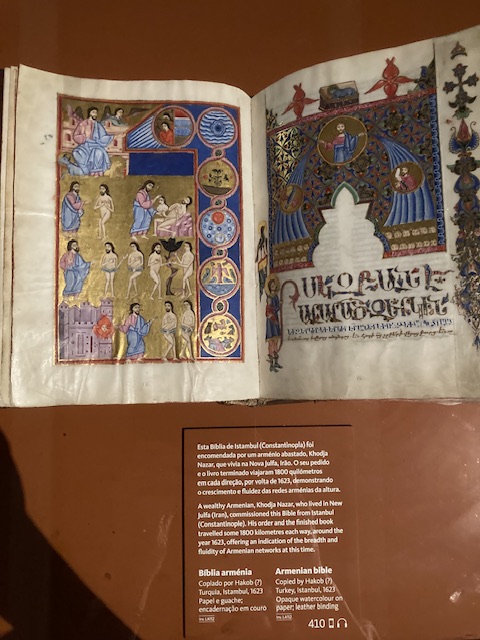
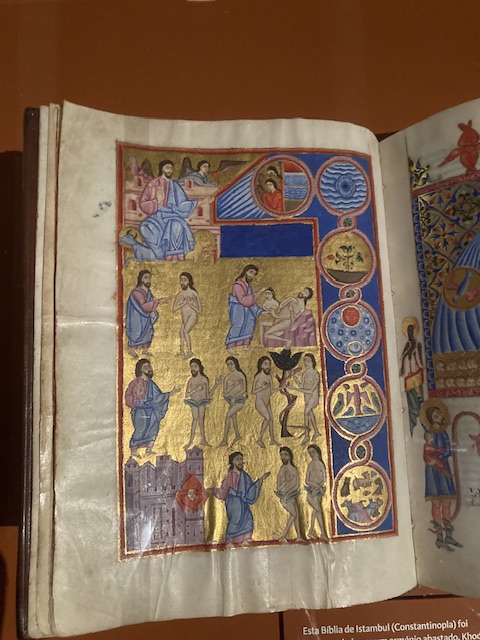
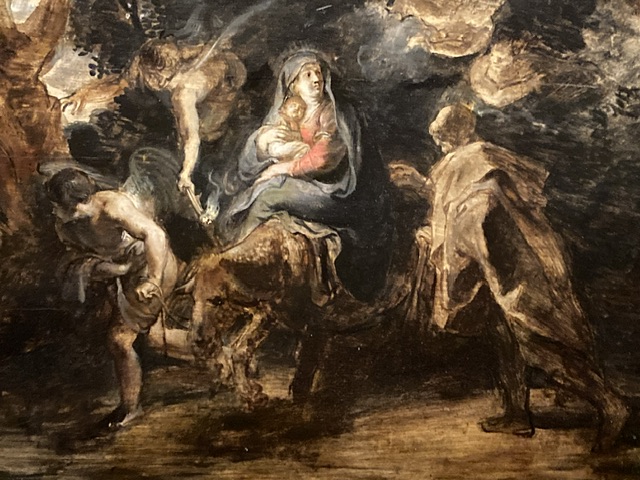
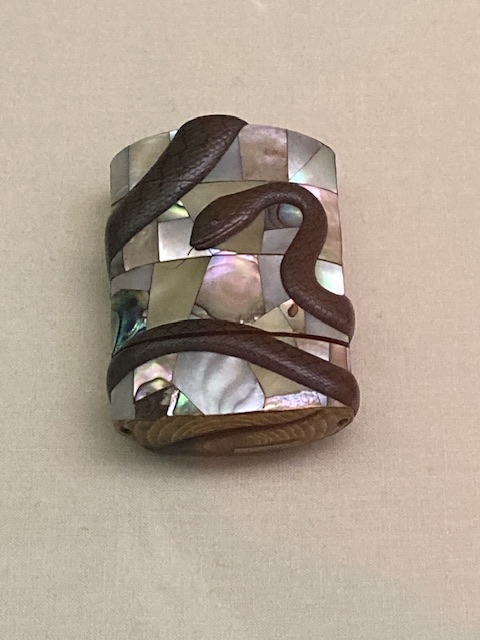
The Gulbenkian Museum was a sufficient draw – just – to get us back on a bus into Lisbon centre (though the wait at the stop was irksome, and once the bus finally arrived it quickly became snarled in a jam created by yet more tourist coaches, requiring a police woman’s single-handed intervention to unblock the whole dual carriage way). Eventually we arrived at the top of the large park with views of the whole city below, and stumbled into the very brutal building designed in 1969 (and reminiscent of Darwin College, University of Kent, built in the same year) to contain six thousand pieces amassed by Calouste Sarkis Gulbenkian (1869 – 1955)
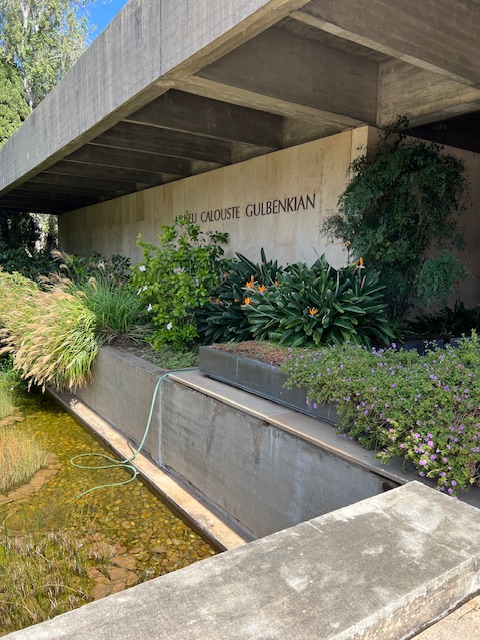
No queues here except for lunch in the museum café with its pleasant outdoor space; we broke our viewing of Egyptian, Greek and Roman artefacts after the Islamic room 4, returning afterwards to rooms 5 – 8 for China, renaissance and modern Europe, and finally Lalique. Gulbenkian, born in Armenia had made Portugal his permanent home on the basis that the nation would subsequently curate and house both his complete collection and oversee his on-going legacy. The artefacts speak for themselves, displayed and beautifully illuminated in manageable volumes. Awesome.


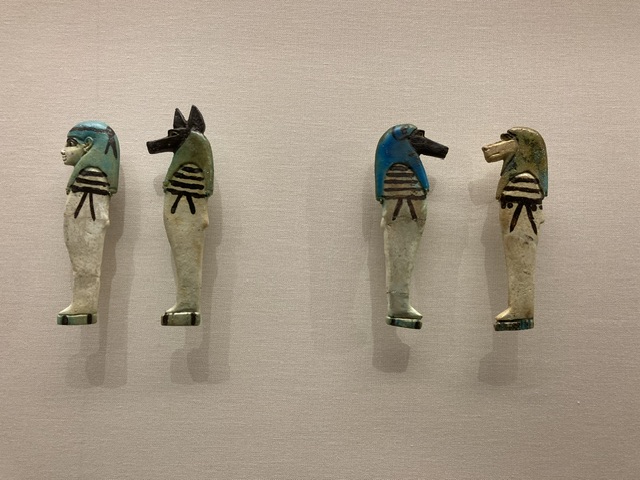
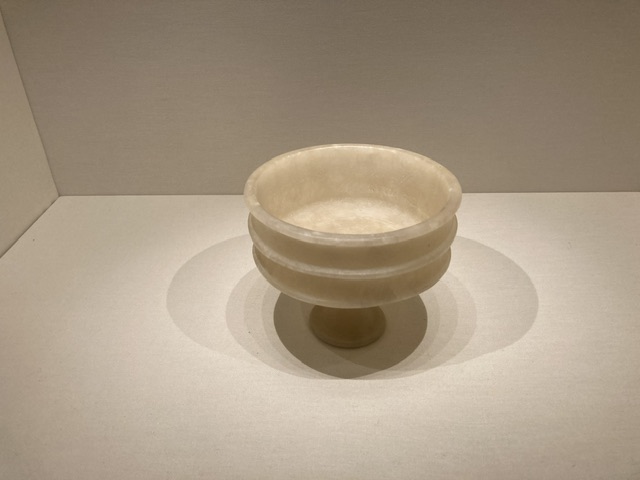
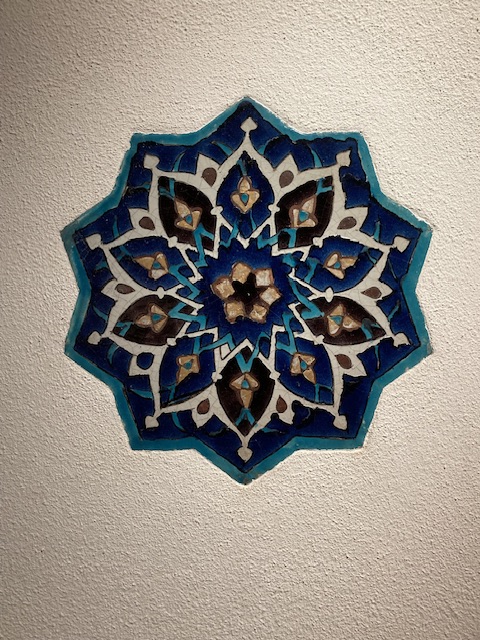
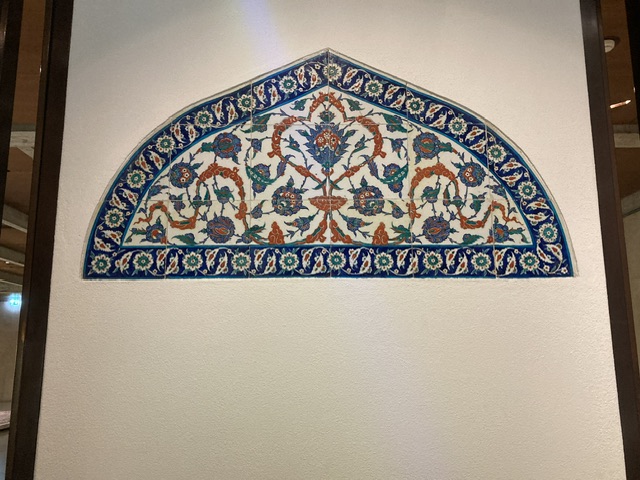
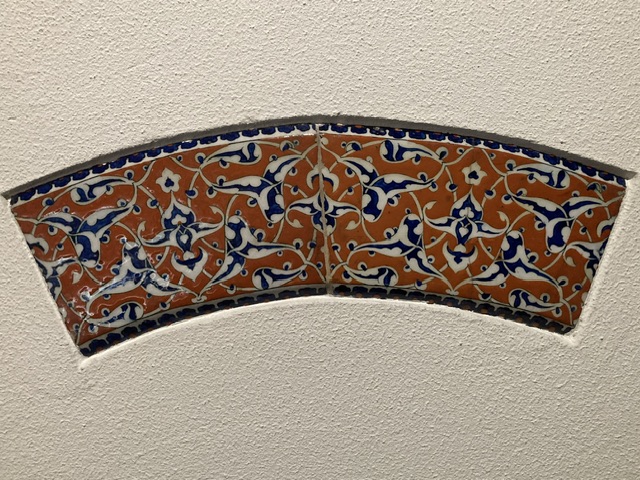

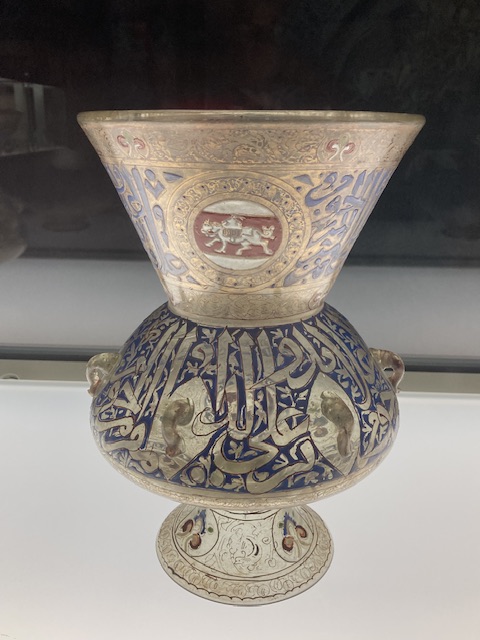
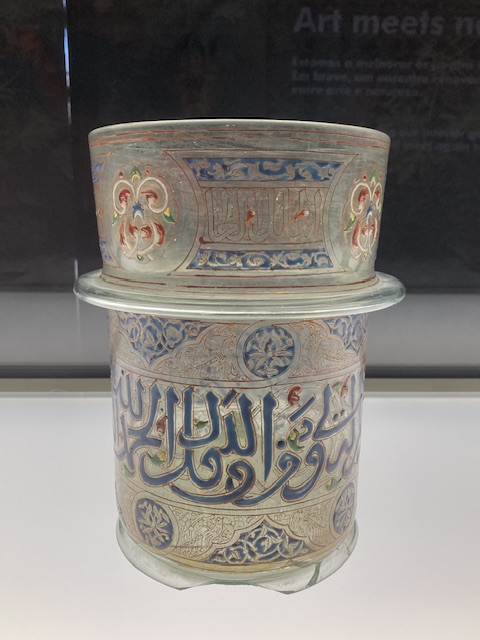
The galleries were beautifully lit and very spacious, with each artefact having sufficient space to shine.

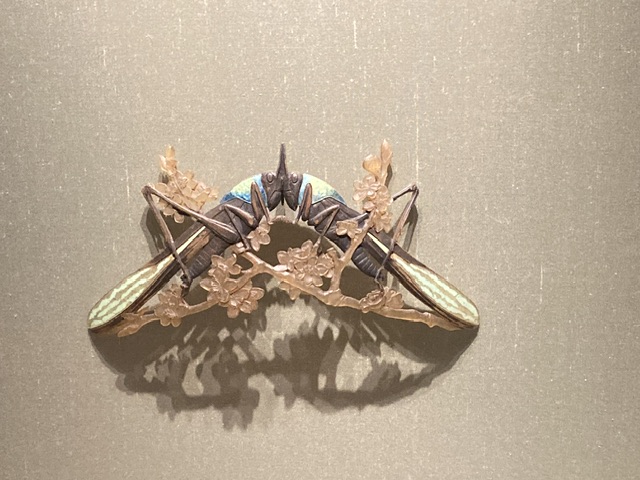

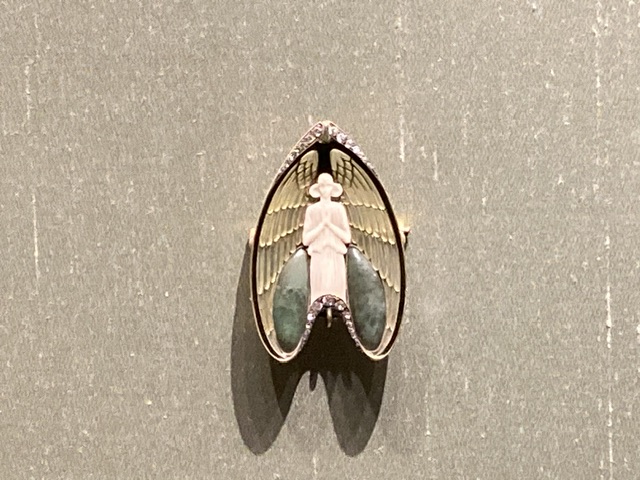
We raced downhill through the Parque Eduardo VII to reach the bus terminus at Praca de Pombal, only to wait for ten minutes before departing on a round trip of the Avenida da Liberade – which we abandoned at the nearest point to the Cais do Sodré, and walked the last twenty minutes at speed to reach the 16.45 Lisboat ferry home.
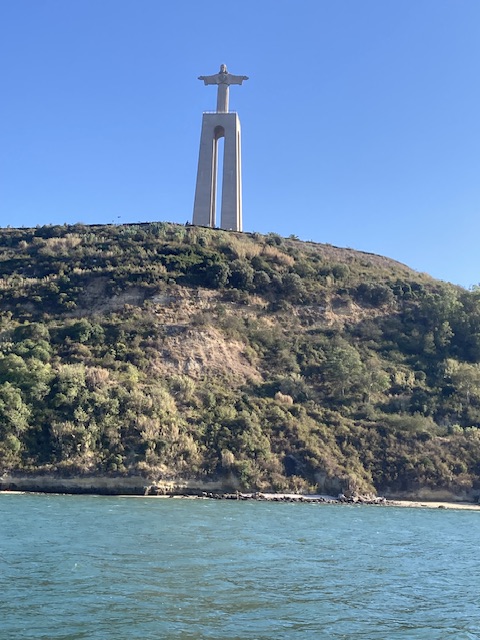
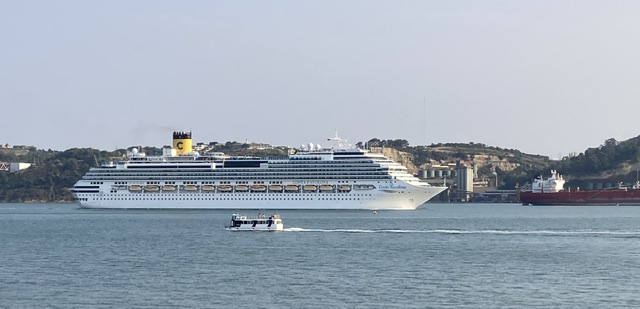
After a ten minute delay at Sul Sueste, we headed across the sound and chugged along the opposite shore, past the great Christ the King statue, under the suspension bridge, crossing again to view all the fantastic shoreline landmarks in late afternoon sun, to the Torre de Belém. Absolutely fantastic!


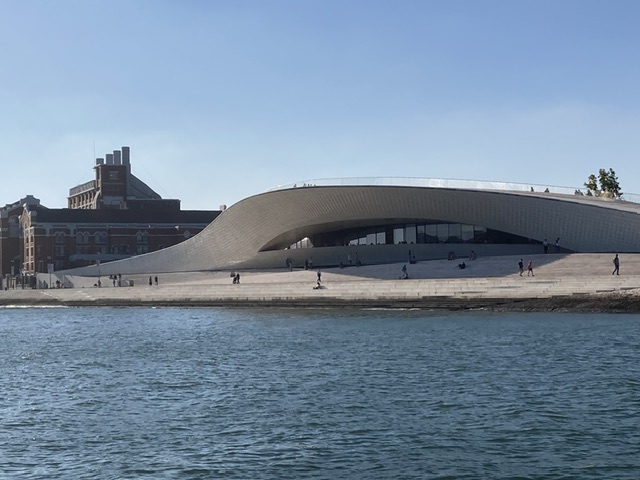
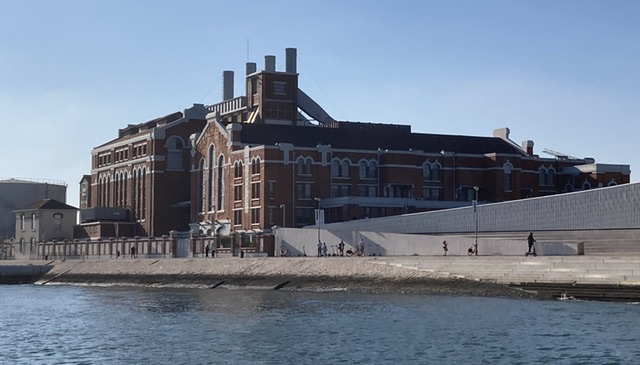
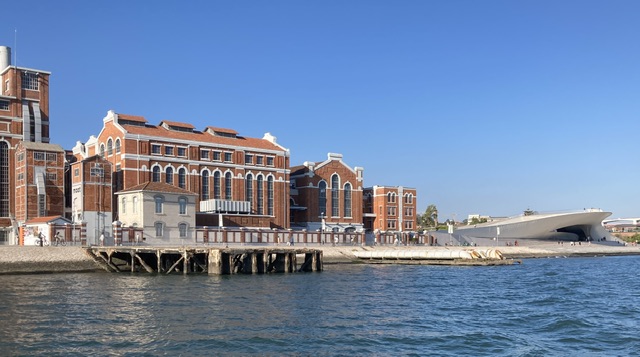
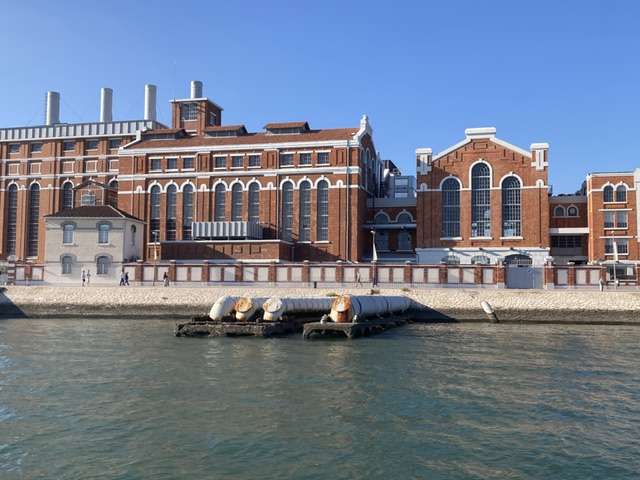
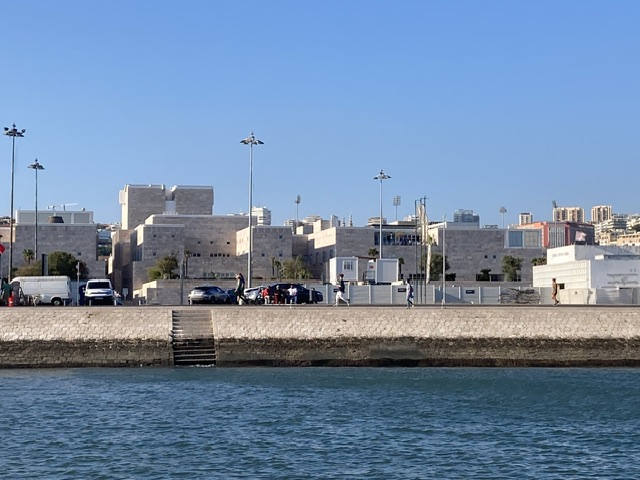
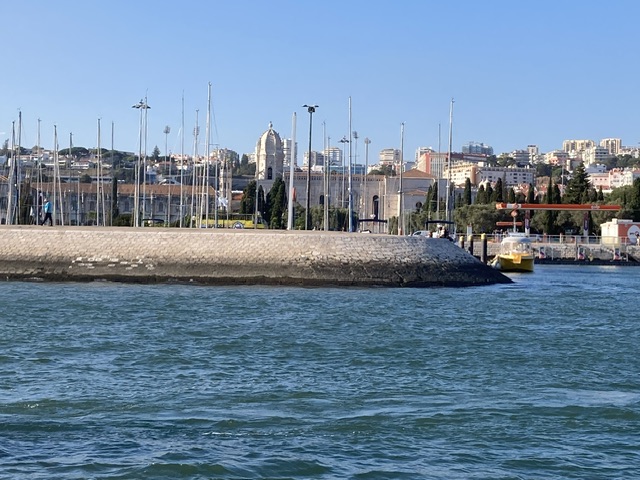
Another beer and coffee stop in the setting sun, just outside the MAAT museum entrance gave me the chance to pop into its bookshop and admire the use to which this great space has been put. Very reminiscent of Tate Modern, though on a more human scale and built in more cheerful red, rather than London’s (sometime) yellow brick.
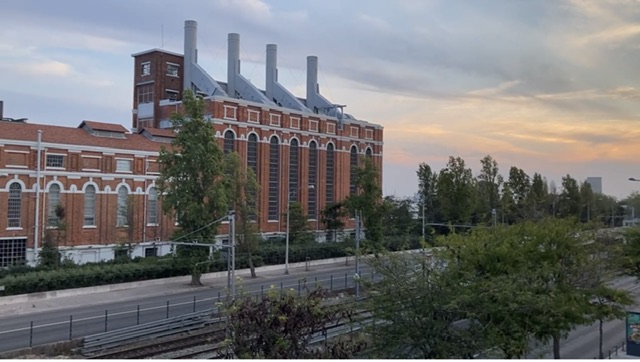
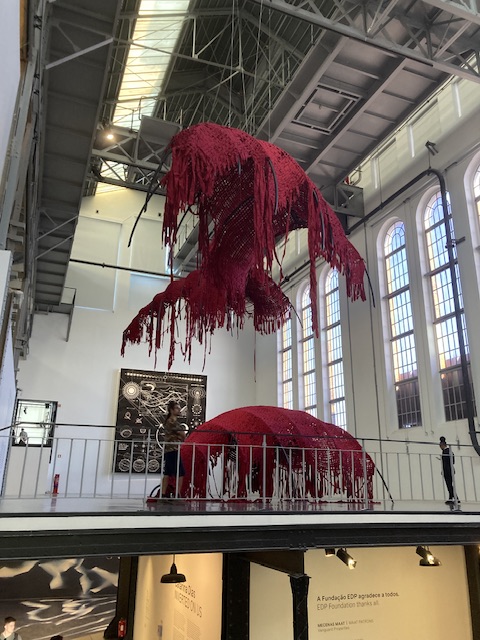

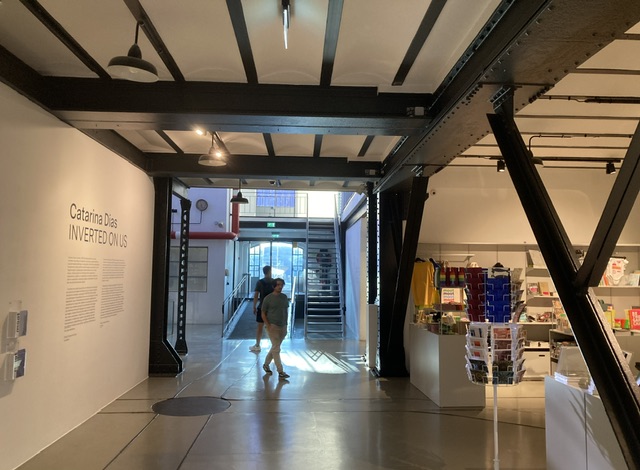
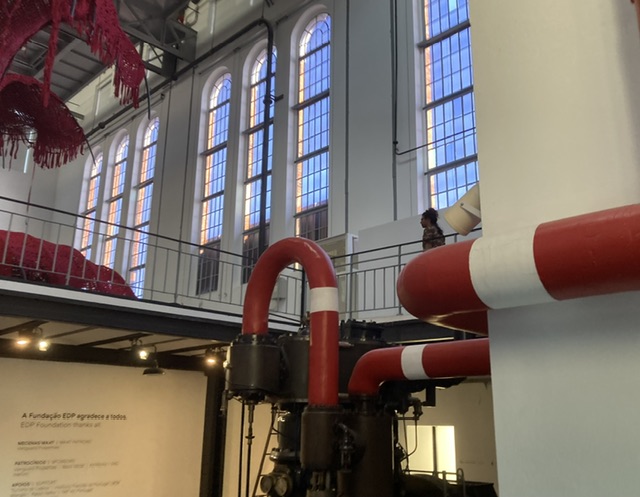
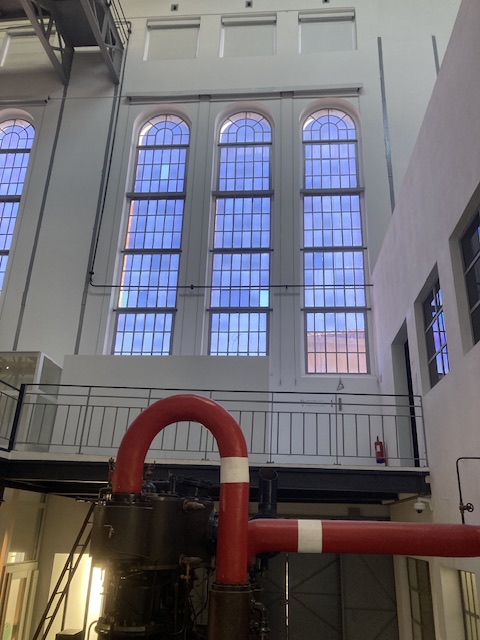
We walked over the fantastic connecting overpass in the failing light for our final meal at a very busy Canalha which involved a single anchovy as a starter and finally a really good bottle of wine !


Tuesday 24 September
The taxi arranged through booking.com arrived five minutes early and we were at the airport by 08.20, bag checked in by 08.30, and through security by 08.50. The airport seemed busy; and though breakfast was basic, there were some light-hearted distractions….

A Ferris Wheel of revolving vintage tins of sardines….
We arrived at Luton on time, retrieved the luggage immediately and sped via the brand-new DART shuttle to catch a fast train to Blackfriars, and on to Waterloo, and drank a reasonable cup of coffee before boarding the 15.50; a very efficient and comfortable route to Andover, and home.
 countrymouse