
Thursday 27 November 2024
Stansted is perhaps the least inviting airport for those living on the diametrically opposite side of the huge M25 circle, but by using the 09.06 train from Andover, changing at Clapham Junction for Vauxhall and the Victoria line to Tottenham Hale, followed by half an hour on a Greater Anglia train, we reached Stansted by 11.40, two and a half hours before Ryanair departed for Turin. The airport was quiet; luggage drop and security were rapid, and the plane left promptly. Even the sun shone.
In Turin the cases were immediately available, the car hire efficient, the motorway relatively quiet. Only the last few kilometres towards Gattinara in fog on narrow country roads through the rice fields (and their accompanying deep road side ditches) seemed hard-going.

We unpacked in the hotel Il Vigneto and were seated in the Trattoria del Sorggiorno by 20.00, where we have always eaten well, and whose wine list offers only high quality locally made wines. Perhaps travelling in late November has its advantages!
To his delight, David has recently been commissioned to write detailed background information to support the release and sale in 2025 of a number of mature Piemonte wine vintages. As he had hoped, his book The Wines of Piemonte has made his reputation as an up-to-date authority.
Friday 28 November 2024
Most of the research visits are scheduled for the next week, and as weekend flights were scarce (until proper skiing snow falls and tourism picks up) we had planned for a few days’ leisure first.
Just as well! For the last couple of days, David had been experiencing strange sensations, general weakness and sensitivity down his right arm; slightly headachy and generally under the weather.
Could it be the beginnings of a stroke? Or a heart-related issue? Rapid research, FAST tests, hand squeezing, speech tests, pulse-taking followed its first appearance. On balance the symptoms seemed mild; no acute pain, no chest or back pain, no loss of appetite or general strength, no temperature, and the headache responded to paracetamol.
I had a sinking feeling: could this be another Gorizia coming on? (where David had had an acute gall bladder episode, was admitted to hospital, and underwent emergency surgery in 2017).
At bedtime we noticed a raised circular lump on his upper arm, with the skin hard around it and pimply puckering beginning to appear; it reminded me of a cold sore. Might it be an allergic reaction? In the night, it dawned on me: was it shingles? but the lesion neither itched nor hurt….
Whatever, we were due at Noah at 09.30, to meet Andrea, a producer in Bramaterra, 20 minutes drive west. It was a beautiful morning, sunny, clear if cold, and we sat in his restored former farmhouse dazzled by the low sun.
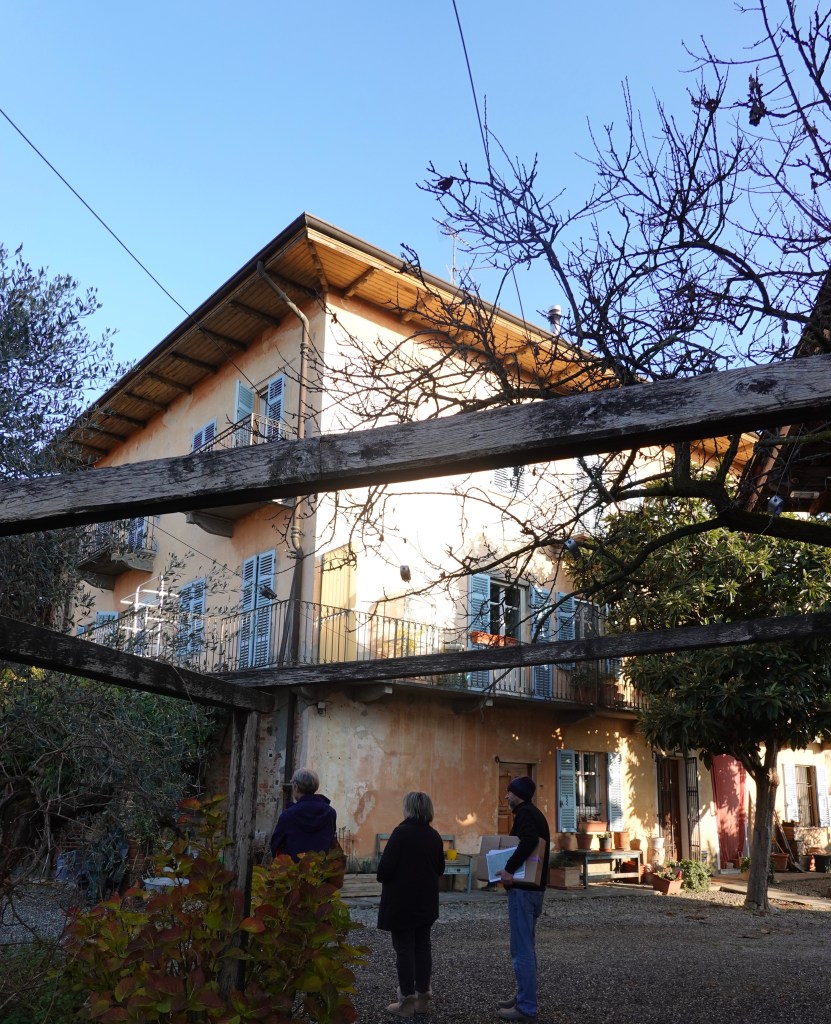
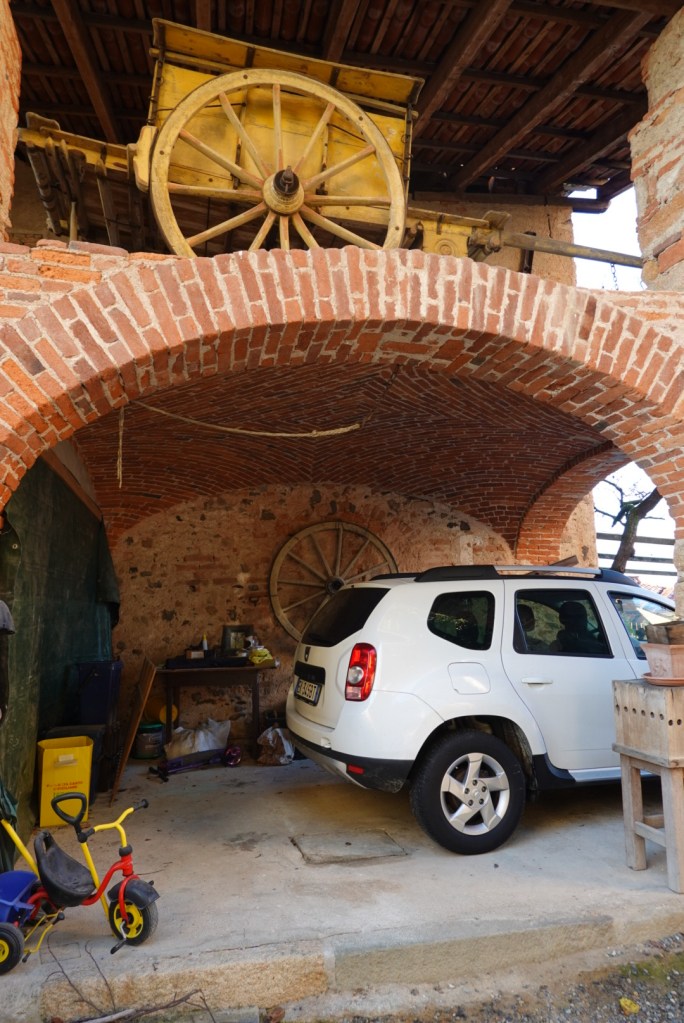
In 2008, after the economic crisis, Andrea had decided to exchange work as an architect in Milan to return to his roots, and despite no formal training, to attempt to grow vines, and make wines. He was able to purchase a vineyard close by, and began wine-making in its former owner’s cellar. They also found a dilapidated farmhouse in the centre of the Salera cantone (hamlet, within a borgo) and having made the first and second floors habitable, moved in with their very young family. Since those early days they have slowly converted the stalle (animal shelters) beneath into a very functional cantina, more spacious than he had hoped.
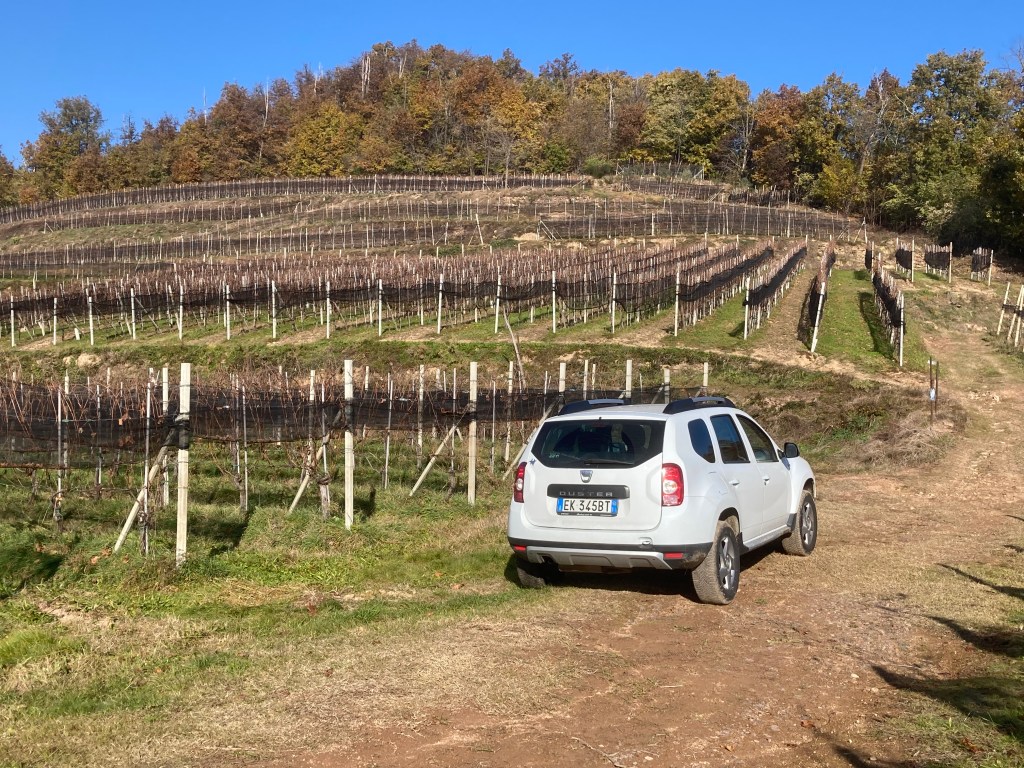
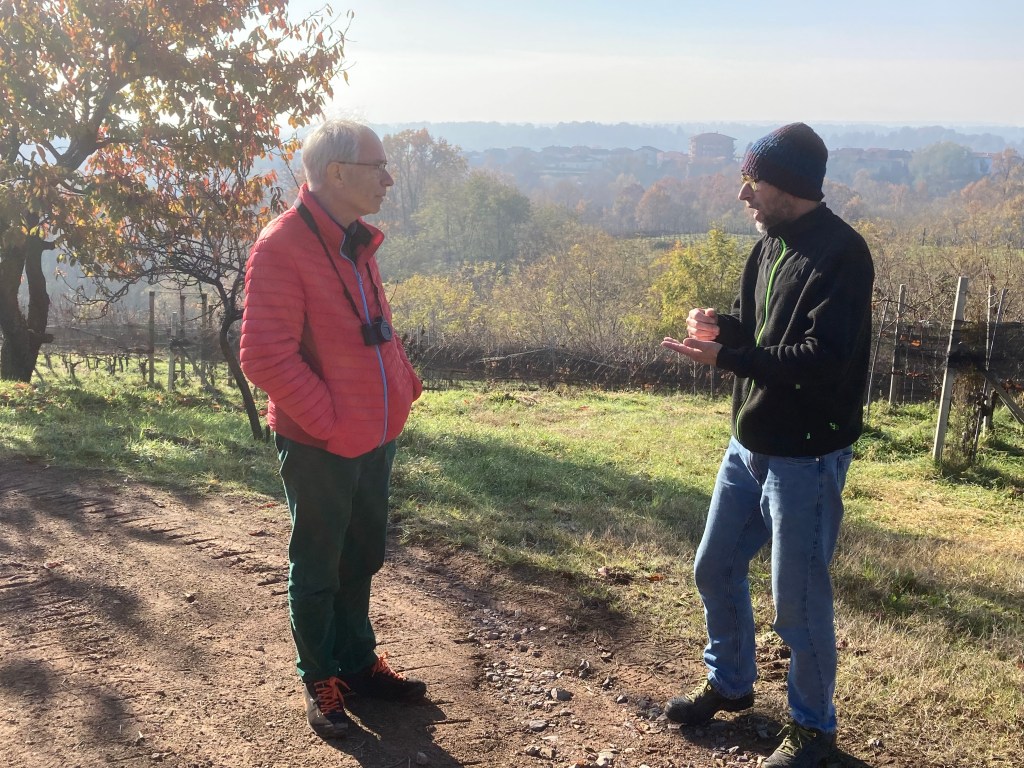
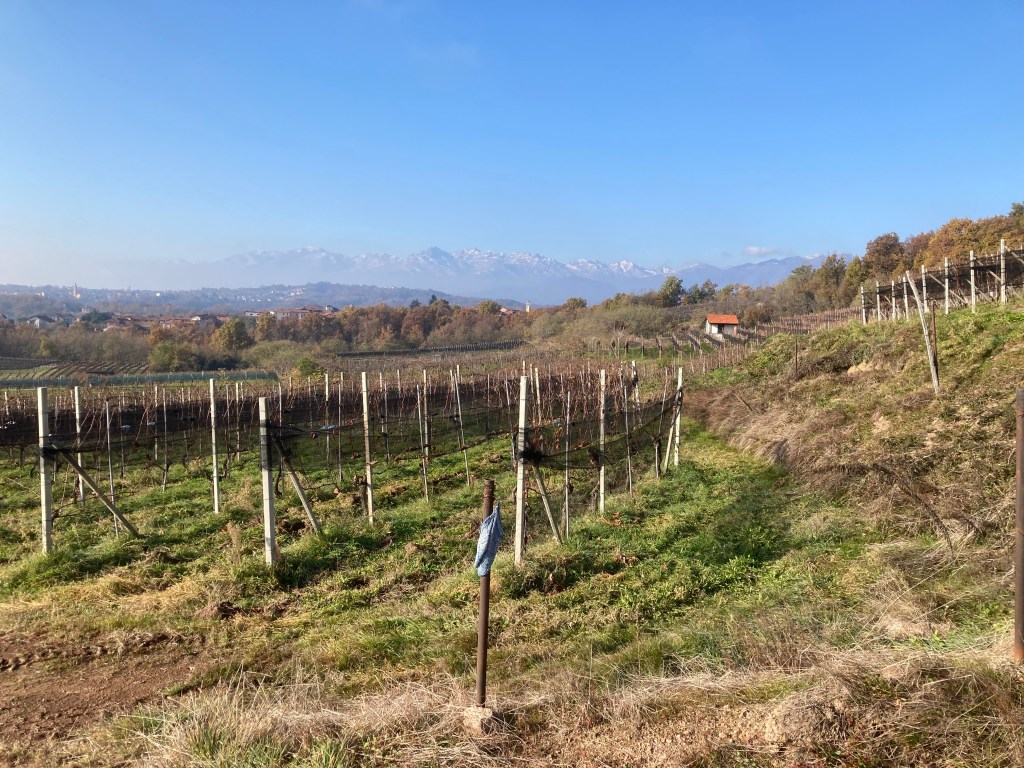
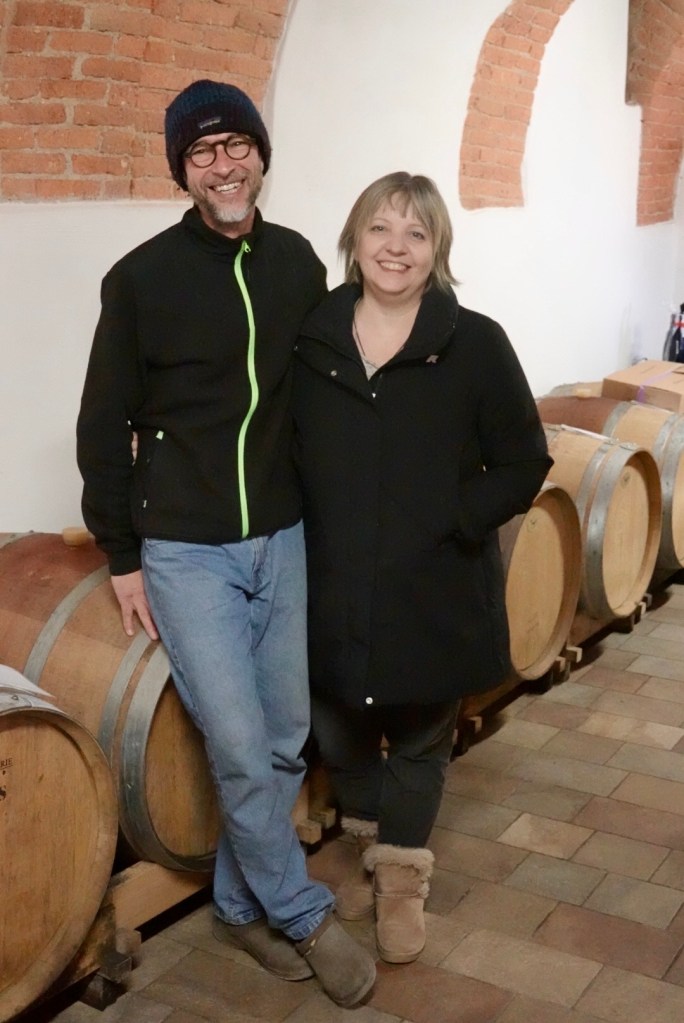
Andrea drove us to the vineyard, high above the village, with its fine views – and alot of pruning!
It has been a hard journey for the family, nevertheless, and the dreadful summer of 2024 has delivered very modest returns after the continuous struggle to suppress fungal disease rampant in wet conditions. Fortunately 2023 was a generous year, but the enterprise feels fragile; in 2022 damaging hail in late September dashed ripe fruits and hopes. Clearly climate change makes for a precarious, unpredictable future.
We ate a slightly chaotic Pranzo al lavoro in a large roadside ristorante, Piano di Monolo which boasted service every day of the week, and then returned to the hotel in Gattinara for a rest.
David appeared unaffected; an on-looker would not register a slower gait, a pale face and greater caution; no visible signs of illness. However, on inspection the surface of his right arm had by now developed long reddish streaks and mild swelling from elbow to wrist, and small weals on his hand and arm were bubbling up with tiny blisters.
The Farmacia has an important place in the italian psyche and society. We headed there mainly to replenish supplies of paracetamol. However David, characteristically direct, declared to the assistant in impeccable italian that he had arm pain and a rash, which might be herpes zoster.
What followed was remarkable. The woman cross-examined him; summoned another colleague, conferred on the information, and then hustled David into the back room, to examine the arm. It was inspected by no fewer than four different grades of staff, as well as a spare young man called Marco, whose status was indeterminate, but who quickly rose to the occasion.
A definitive diagnosis from a fully fledged medic was needed to dispense anti-virals (as I had feared – and 17.00 on a Friday didn’t feel like a promising time to find one). Young Marco subverted advice to present the next morning at an emergency clinic down the road, by phoning a retired (but very experienced and simpatico he said) Dottoressa who lived 300m away, and negotiating an appointment there, in 20 minutes.
Dot.essa Maria Pia Fila showed us into a small room in her second floor flat, and after a thorough examination, accompanied by various mutterings about Herpes Zoster, she hand-wrote a script on a sheet of headed notepaper, advised on pain relief and dosage timings, and after a warm exchange about Gattinara’s wonderful wines, sent us back to the Farmacia, where the whole staff greeted us warmly and excitedly, and graciously dispensed the anti-viral Aciclovir.
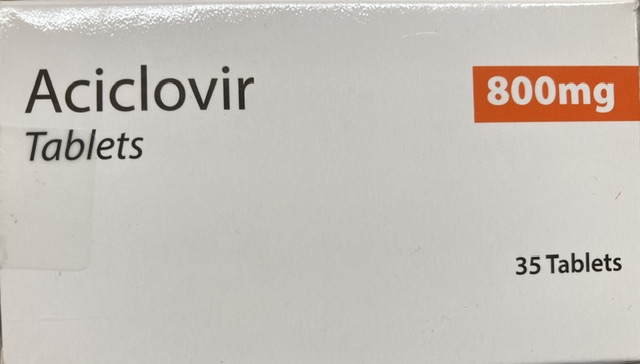
By 18.00 David had taken the first dose in Salsamentis, a wine bar opposite. 34 more to go, at 5 hour intervals. We shall be returning home on the day they finish.
Supper was in Usteria La Pitta di Pie close by; good enough food, a decent wine list and a slightly more contemporary feel. David’s shingles were now well and truly evident, though invisible beneath his clothing, but our mood had lifted considerably.
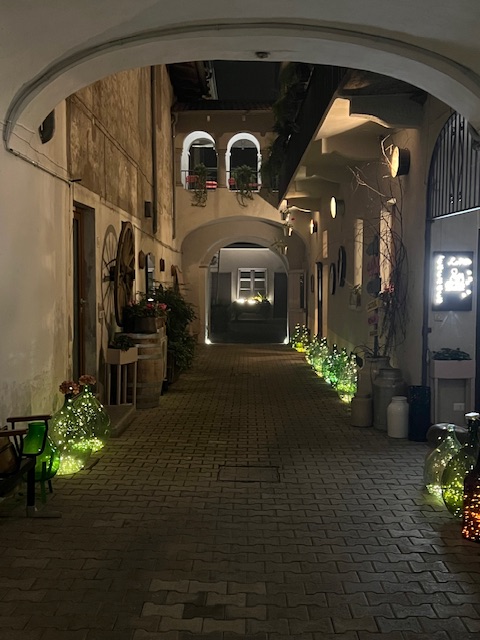
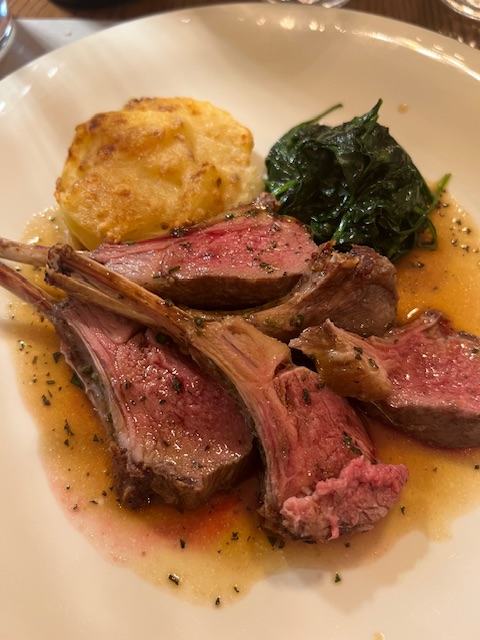
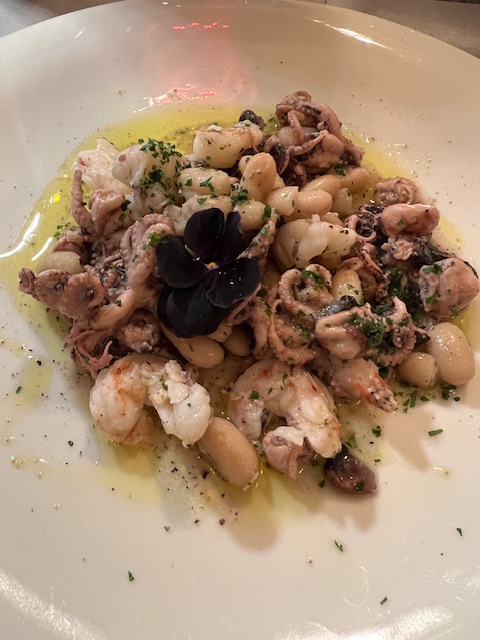
Cats have nine lives; and land on their feet. Likewise David. Phew….
Saturday 29 November 2024
Gattinara has a long and prosperous past to judge by its colonnades and its many orderly buildings with internal courtyards, farmyards or just yards built on a grid system of roads dating from well before 1693 when the map below was drawn. Its wealth was partly generated by a thriving, famous and long-standing wine industry throughout the vicinity, dating back to Roman times and probably earlier. Pliny the Elder wrote of the pre-Alps ‘covered everywhere by vineyards’ in the first century of the common era and there is further local Roman evidence of wine consumption.

Today Gattinara is remembered for its distinctive high quality Nebbiolos but scrub has reclaimed what were once vineyards, slowly abandoned after WWII. Other nineteenth and twentieth century industry (textiles, engineering, hydraulic equipment etc) has also faded, and both domestic and factory buildings stand empty and unused, as people were drawn into the neighbouring cities of Turin, Novara, and Milan, and more local factory work with valves, taps and high end clothing.
A few well known and successful wineries remain; Nervi was bought by Roberto Conterno in 2018 and transformed by massive investment. (See Piemonte 10) Of course there are others; small, and perhaps struggling but undoubtedly pleased that a world famous Langhe grower has shown such serious interest.
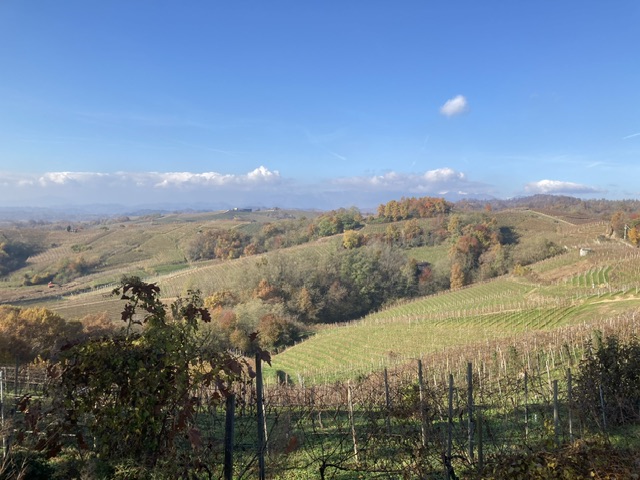
We visited Travaglini and Delsignore last summer (see Piemonte 24) and Antoniolo in 2022 (see Piemonte 10) as well as several of the other wineries David is researching next week, giving the great advantage of knowing our way around; car parks, ristoranti, bridges, and the viewing point next to the San Francesco vineyard high above Gattinara, to which we walked this morning, passing the Saturday market – and a curiously parked car! See the slideshow below. The italian graffiti says: Look at the countryside, not at your phone!
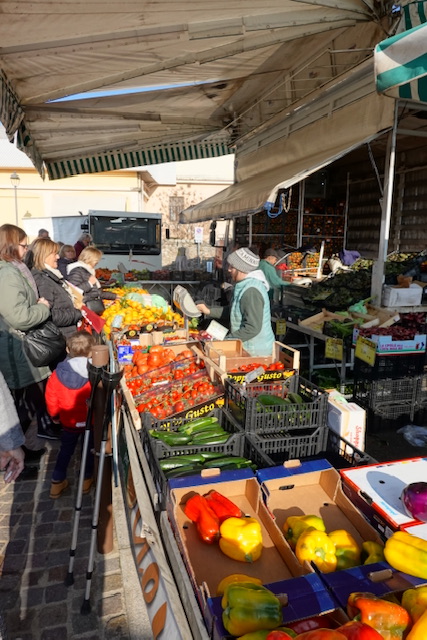
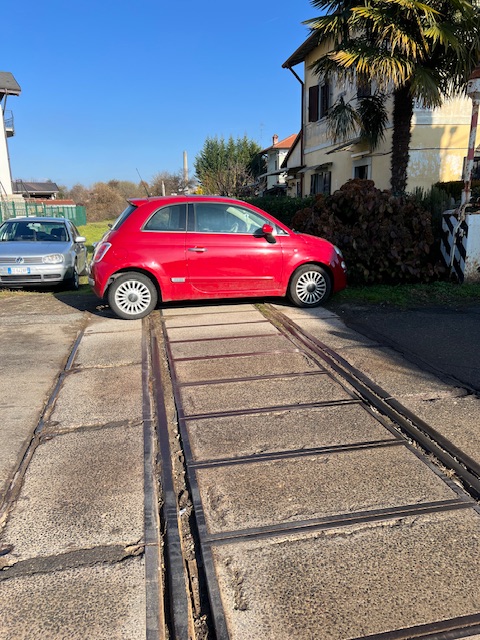
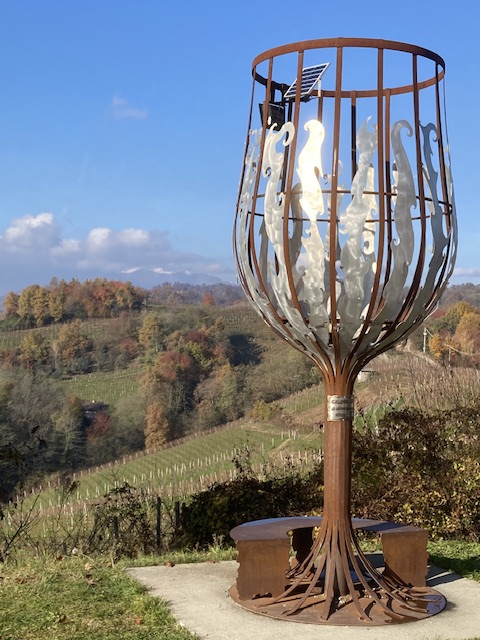
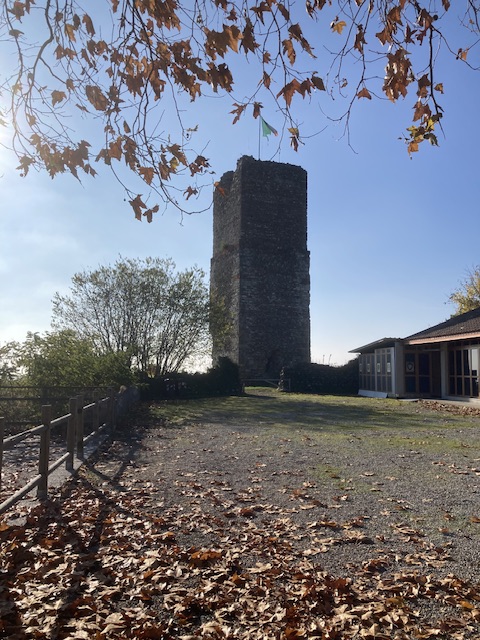
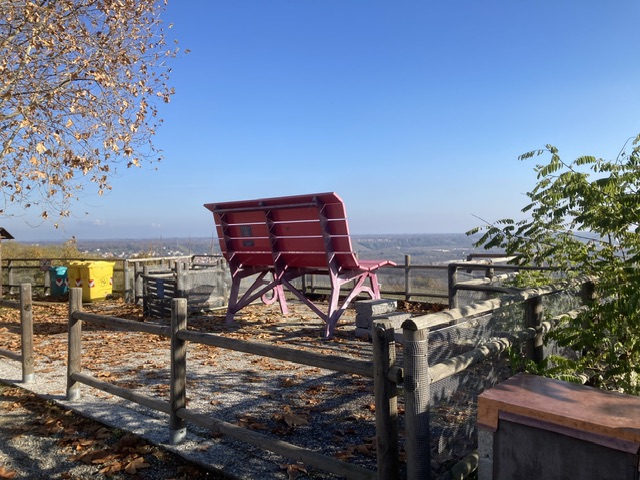
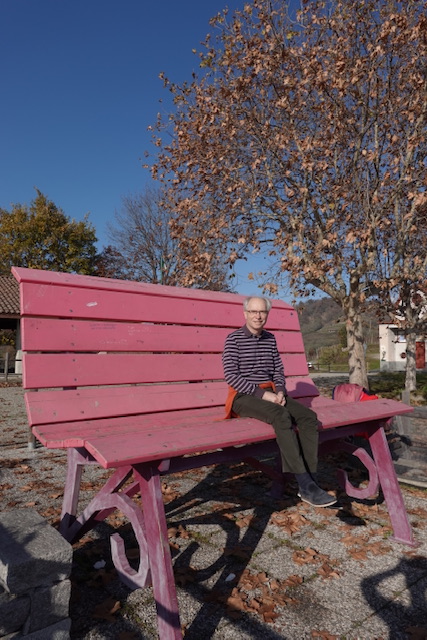

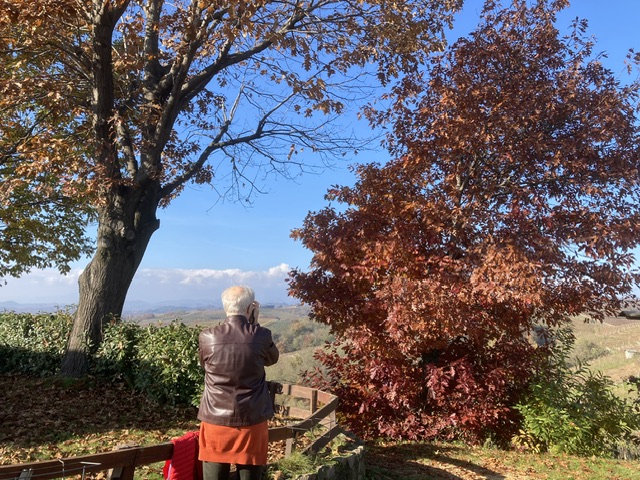
Exercise helps David; movement both distracts and relaxes. The Big Bench puts things (and people) in perspective. We even found a black Madonna gracing the frieze of the little chapel.
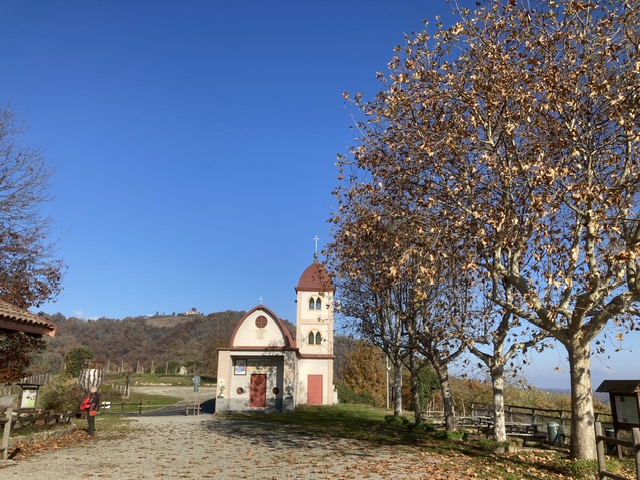
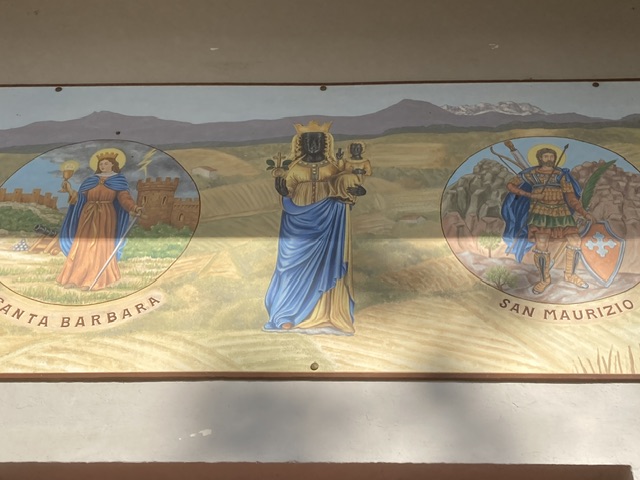
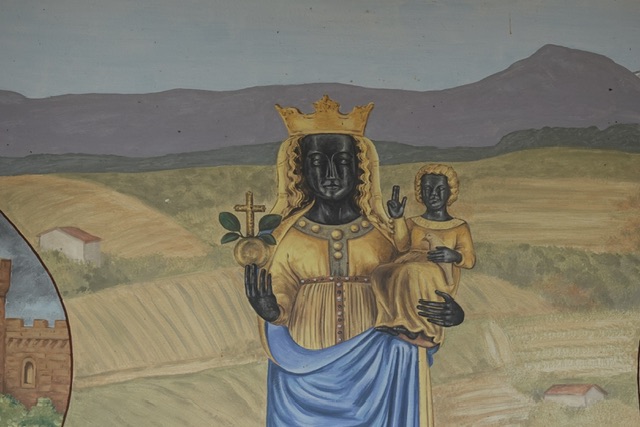
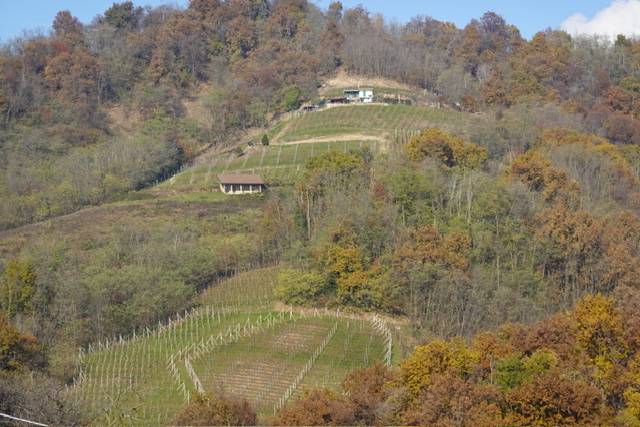
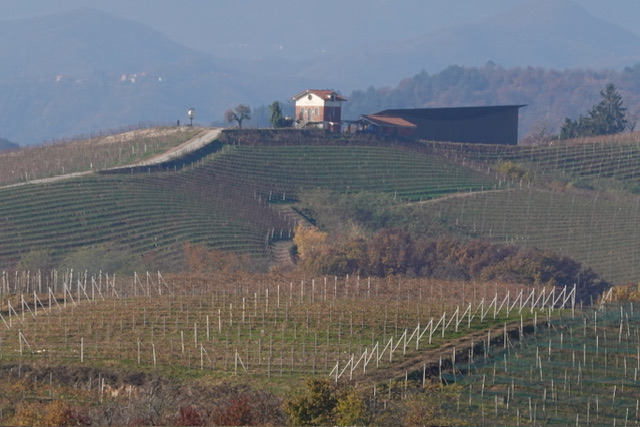
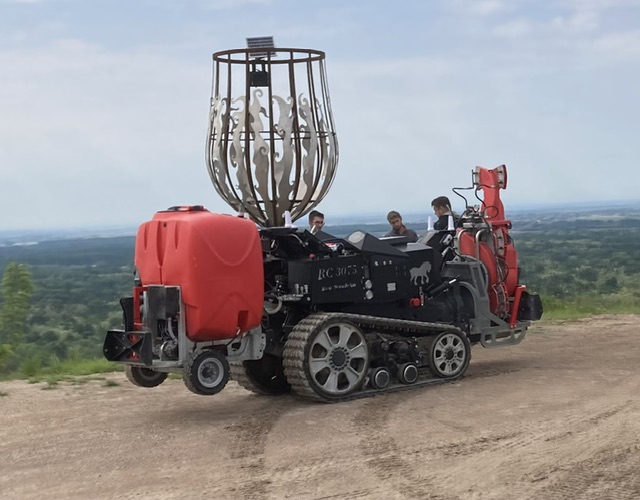
It was a beautiful day, bright, cold and sunny. The new miniature camera with a ferocious telephoto lens came in useful as we squinted it in the direction of Nervi’s vineyards now owned by Roberto Conterno, and micro-managed by him and his robots. The photos of the robotic tractor are from the summer. We weren’t entirely sure it was working…
The Nuovo Caffè Firenze alongside the hotel provided lunch: a vegan poke bowl each which was a welcome change from ristorante food. The afternoon rest (convalescent mode) preceded a civilised hour in the Salsamentis wine bar before trying the tasting menu at ristorante Villa Paolotti whose food was delicious, and the wine list outstanding.
Advent Sunday: 1 December 2024
The forecast for the week is glorious: solid sun, clear days and cold nights. Today we breakfasted late, then drove north on this western side of the Sesia towards Varallo, city of art and culture. En route we called into a sort of vast pound shop to buy a windscreen shield and ice scraper, which proved most useful on our last day’s icy and foggy drive back to Turin.
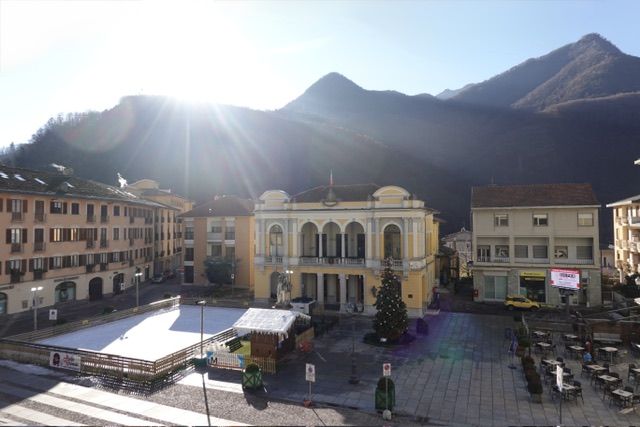
The Sesia river is huge, and it dominates all the local routes as the roads cross and re-cross its wide path. Varallo commands a turn in the river, and clusters at the foot of the enormous complex of the Sacramonte di Varallo with its own funicular cable car. We walked through the largely pedestrianised old town centre which even incorporates a fine bridge in its car-free spaces.
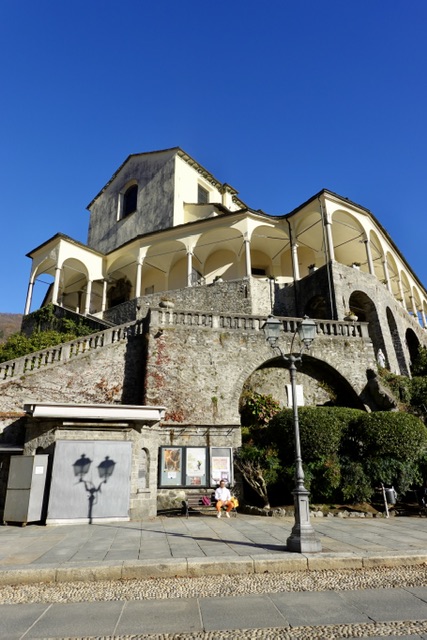
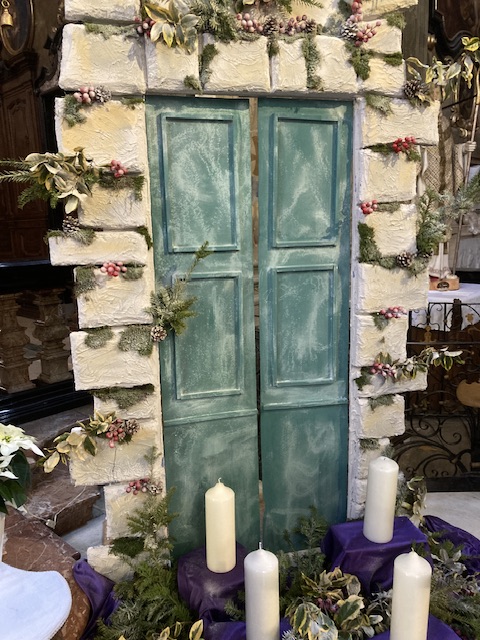
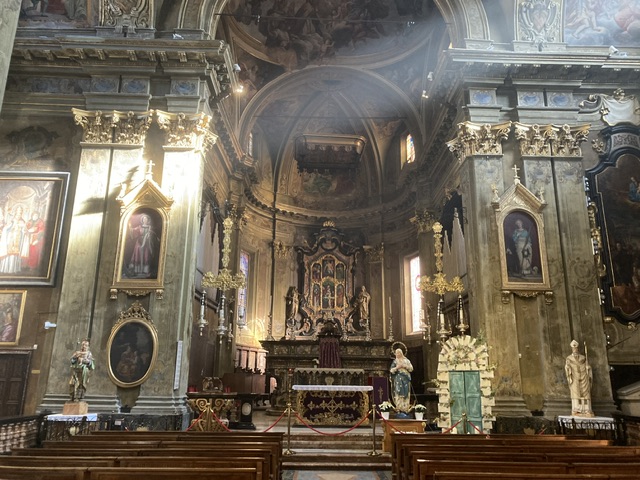

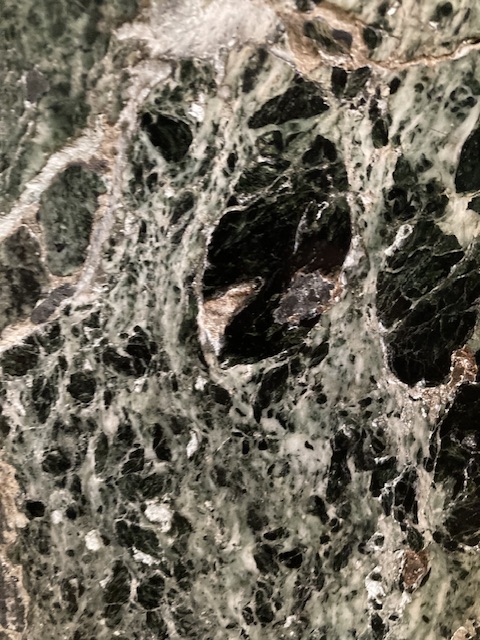
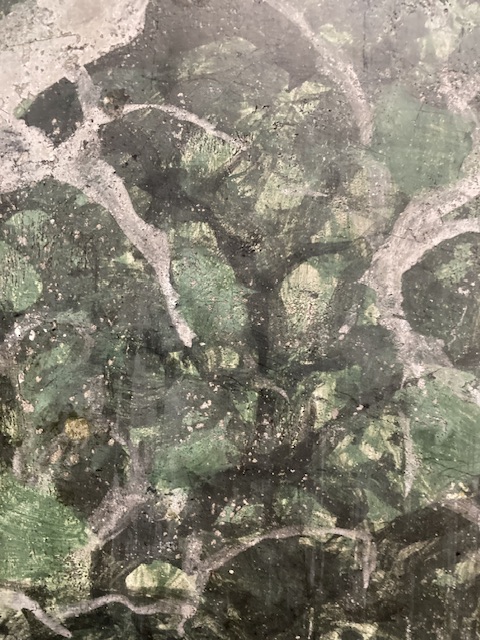
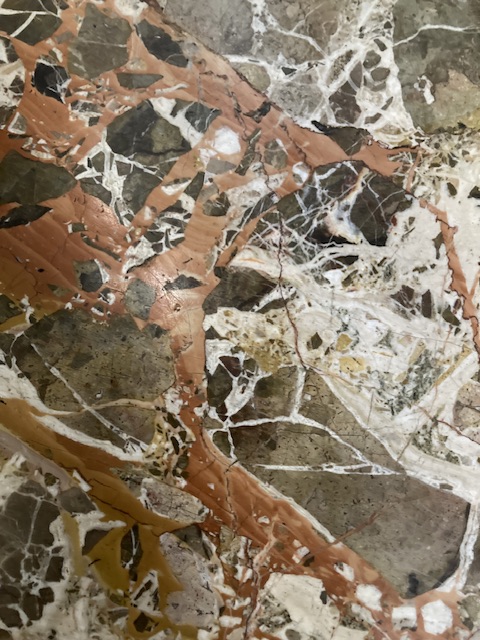
The massive church which dominates the town boasts an overwhelming baroque interior. Its interior was still bathed in Sunday incense. Even the varieties of marble were mind-blowing! The examples above were alongside each other, decorating a side chapel devoted to Mary.
We ate lunch in La Sfinge, an unpretentious family ristorante overlooking the river, accompanied by a very persistent cat keen on our fish leftovers. The drive up and then back down the valley was interesting and not demanding. Our low key weekend continued.
After a walk for David and some blogging for me we opted for a light supper in Salsamentis where one bottle of 2015 Clerico – which was oxidised – made way for another with an identical brick-brown colour but with entirely different fresh fruit flavours. I had Tjarin pasta while David tackled the polenta with cavallo. So ended the second full day of anti-viral treatment. It’s not easy to know how the condition progresses; sensitivity and pain come and go; nights vary.
Monday 2 December 2024
Some disruption this morning from a threatened electrical outage, programmed for 08.00 onwards. Needless to say it came later, half way through breakfast, and David had a mildly frustrating time trying to log on in the cafe next door; a good example of how being under the weather leaves one’s patience feeling easily stretched.
The windscreen shield purchased yesterday coped brilliantly with the sharp overnight frost as we took the 20 minute drive in bright sunshine, followed the river north until the crossing point, and then on to Boca to meet Christoph Künzl at Le Piane. He greeted us warmly, and immediately warned us that they were dealing with the great sadness of a long-time colleague’s imminent and unexpected death. Christoph had decided generously to carry on with our meeting, though he was visibly distressed. We learned later that she had had a serious cerebral haemorrhage only ten days ago.
In 1985 Christoph, a wine distributor whose young adult days were spent helping to make Chianti Classico, was introduced to Senor Cerri, who subsisted on growing fruit, grapes, cereals, and probably hens in his family’s small-holding in Boca. On receiving his state pension Cerri had devoted his energies only to the small vineyard and making his wine. Christoph immediately recognised it as exceptional; this wine ‘called him’, and in his words, it became his vocation.
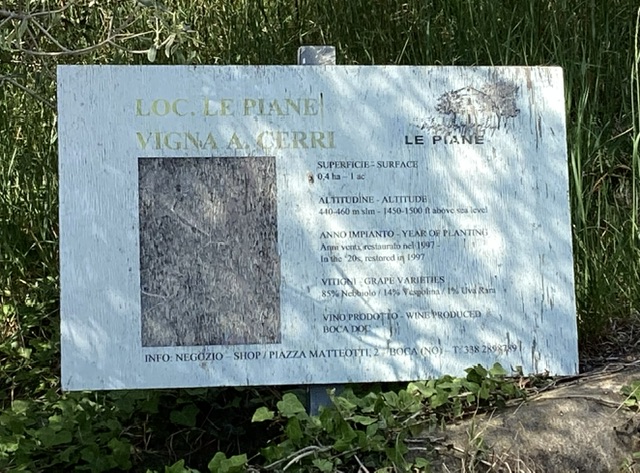

Christoph was able to rent the vineyard, and over time developed a deep admiration for Cerri. After his death, his family sold Christoph the land and he was able to develop the present business, buying other vineyards locally.
It is quite clear that Christoph’s commitment to renewing Boca’s wine tradition has led the slow recovery of a few of the vineyards which remain from the thousands which used to clothe the hills and slopes. It was Christophe who first explained and then showed us the extraordinary local training system (Maggiorina)
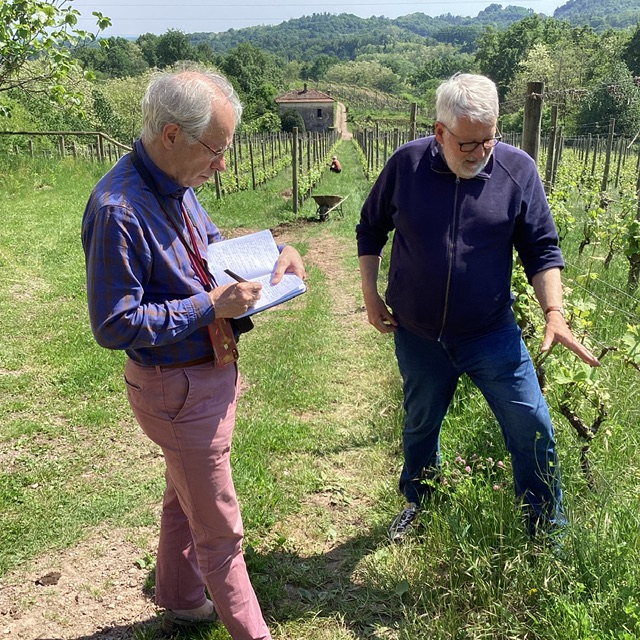
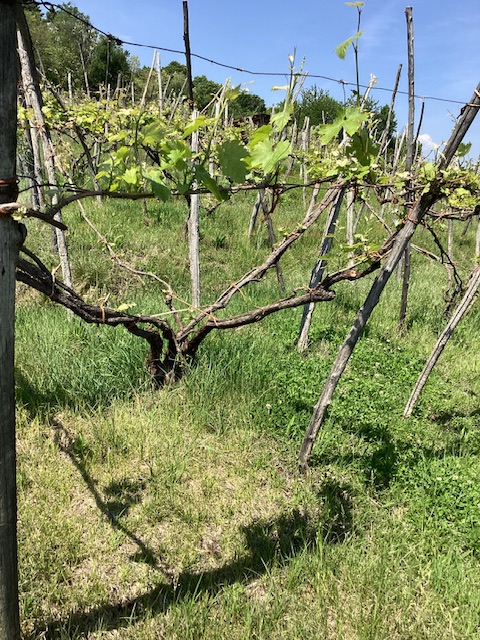

His insistence on quality, and his experience as a distributor and knowledge of markets have enabled this modest renaissance of Boca’s wine culture. He certainly leads the way.
We drove from Boca to Borgomanero in pursuit of Orcabacca, the small ristorante where we ate in the summer. Surprisingly it was open this Monday (so many eateries are closed at the start of the week, especially in winter). Unusually I found it hard to choose, and made the mistake of a too rich (if delicious) celery mousse on cheese to start, and an enormous stinco (shank) of lamb. As we drove home, I felt uncomfortable; later that night, after a light(ish) supper in the hotel’s ristorante, I suffered the unpleasant consequences of too much rich food.
Tuesday 3 December 2024
It was touch and go whether I would accompany David to Guardasole in Grignasco to meet Marco Bui for this morning’s appointment at 09.30. After a quiet start and only dry white bread for breakfast we set off, along a similar equally quick route as yesterday.
Marco met us at his very modest cantina, on the ground floor of the family home in which his retired father still lives. Marco, like Andrea of Noah, left a demanding marketing job in Milan in 2008 to return to the land of his childhood, to work with his parents in their local fruit and vegetable business. He had studied Agronomy in Novara as a teenager (thinking nothing of a two and a half hour journey by train and bus each morning and evening, rising at 05.00 to head to the station!) and followed with university in Milan in communications and business.
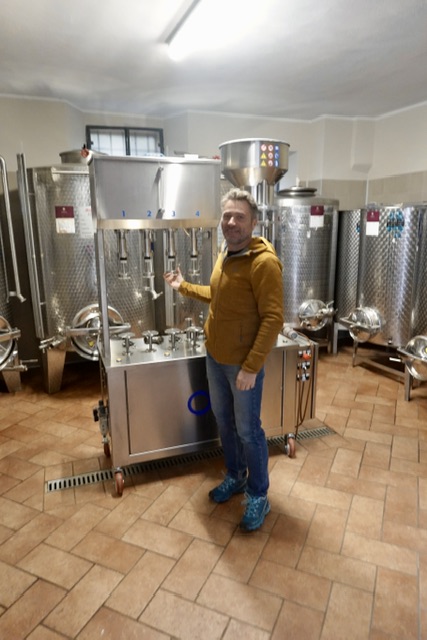
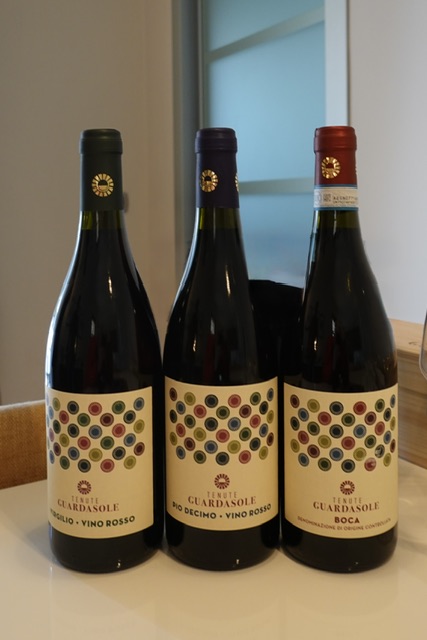
We drove to see the family’s one hectare vineyard, bought by his grandfather in 1950 from the local notary after a drunken evening together, with money his grandmother was saving to buy a house. Marco remembers both his grandfather as an old man, and the majorina-trained vines at the top of the vineyard. Marco has levelled out steeper parts and replanted, and purchased two other small parcels of vineyards, as well as a wooded area nearby with a similar aspect, which he hopes to clear and plant next year, finances permitting.
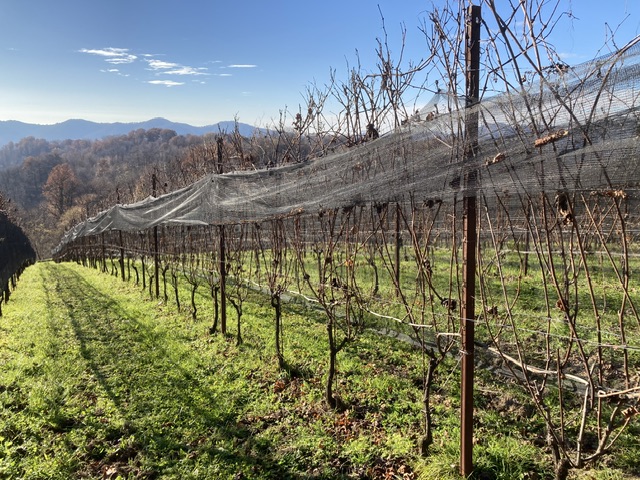
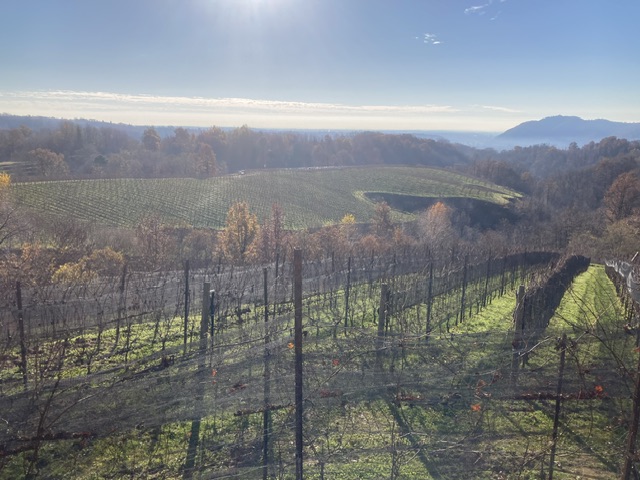
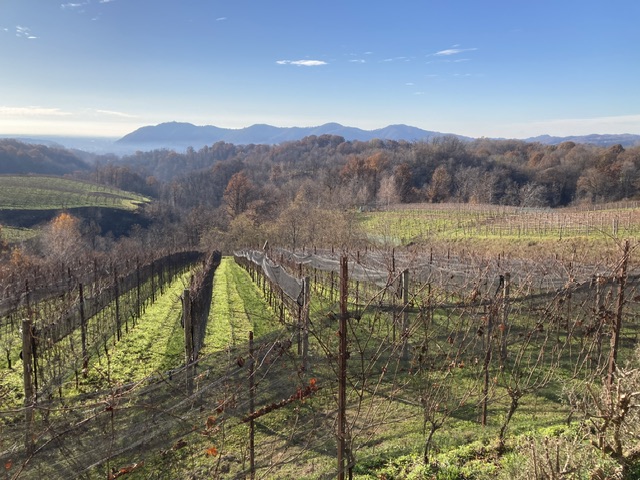
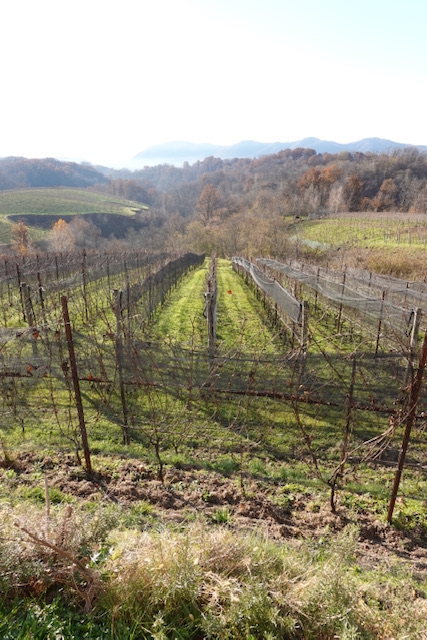

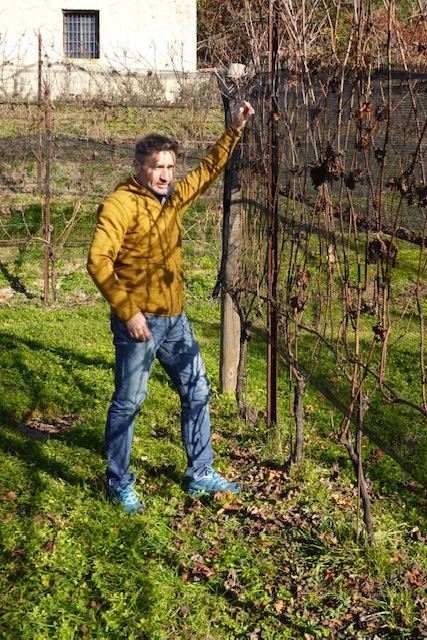
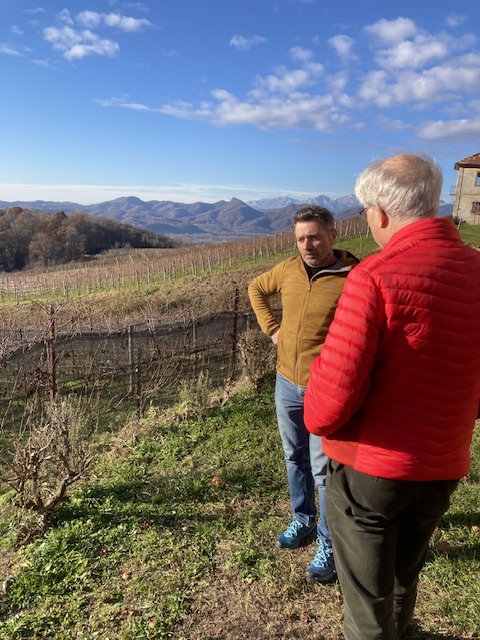
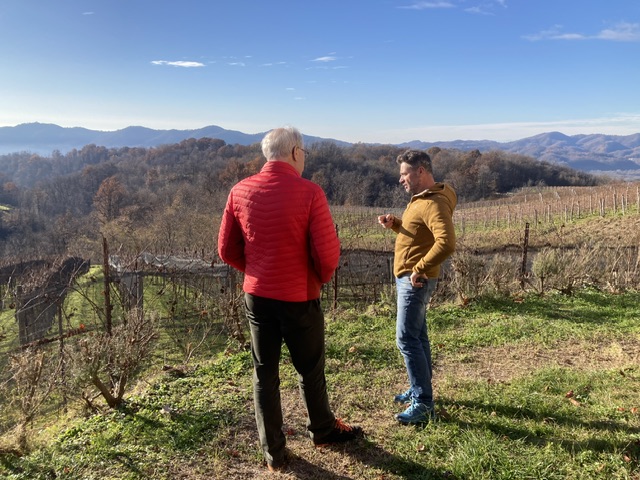
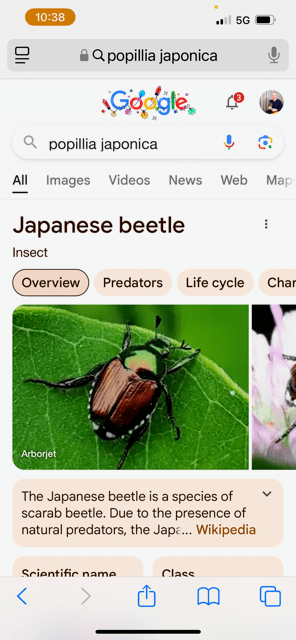
Nearly three metres of rain fell in the 2024 season, falling every day from 10 April until 3 July, and then continuing through the summer; four times the usual precipitation, and land usually fast- draining became waterlogged quickly, making the 27 courses of spraying difficult to deliver with a tractor. To make matters worse, a new pest has been identified, a Japanese beetle which can strip the leaves of the whole vine. Up to 200 insects per plant are a major threat, requiring night time manual collections each delivering up to 300 kgs’ worth for the weeks of its breeding season.
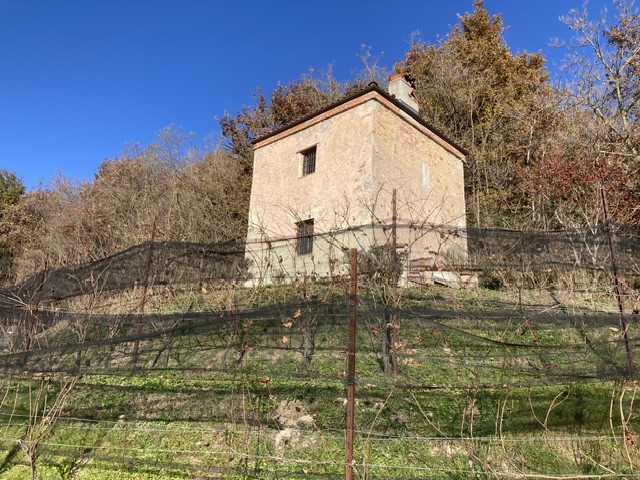
The casotto remains as it was; a single room footprint with ladder-type steps to a loft above
And finally the wild boar, which within specially designated ‘parco naturale’ areas enjoy the protection of legislation, are running riot through the vineyards, and multiplying rapidly. New electric fencing arrives tomorrow; the hail nets are also a deterrent. The combined impact of these three antagonistá has contributed to a loss of 80% of his production. It’s a very hard life!
Fortunately Marco has a sunny personality, a love of the outdoors, limited financial goals and modest business ambition. To preserve his knees – which he needs for his work – he has moved on from iron-man type 100km running to more conservative sport in the mountains – using his weekends skiing in winter and hiking in summer. Owning a small alpine refuge appeals to him more than a fast car!
We ate lunch with Marco in a local ristorante, before returning to Gattinara – in my case for a rest, and for David to research beetles – before another light supper in the hotel; finding food in Gattinara on Monday and Tuesday evenings is quite a challenge!
Wednesday 4 December 2024
Mild irritations continue to rattle us both – this morning it was my digestive system and the failure of the google maps connection between car screen and D’s mobile phone. Briefly mislaying the car key also slowed us down but we arrived at Proprietà Sperino just outside Lessona less than ten minutes late, only to have Monica tell us that Luca was in the new cantina in town.
By 10.00 we were hearing about the purchase and repurposing of the 60’s wool clothing factory by the excitable Luca, whose inspiration ideologically is an artist Michelangelo Pistoletto of Biella whose symbol of three paradises and their interconnectedness speaks to Luca of his own commitment to the industrial past of the region, the renewal of the wine-making, and their combination in his project.

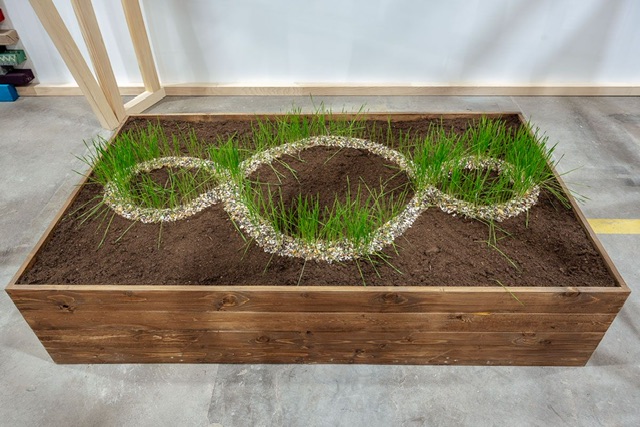
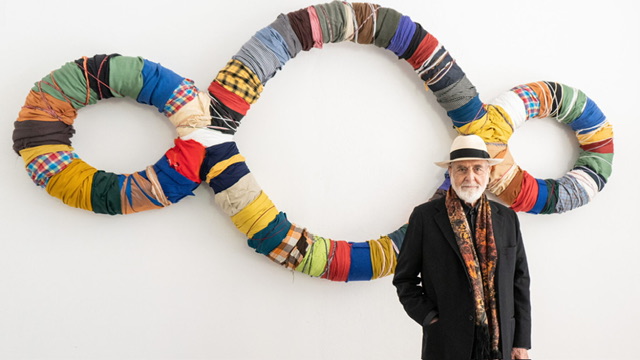
I don’t do justice to Luca’s vision, but it matters very much to him that the old ‘brutal’ concrete building is enjoying a renaissance. Although not expensive to purchase it is very costly to convert!
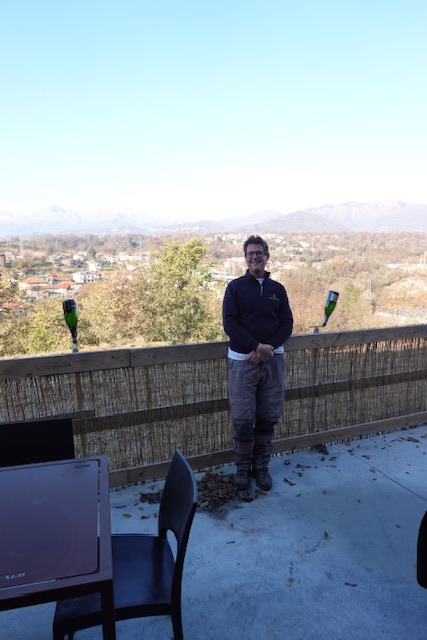
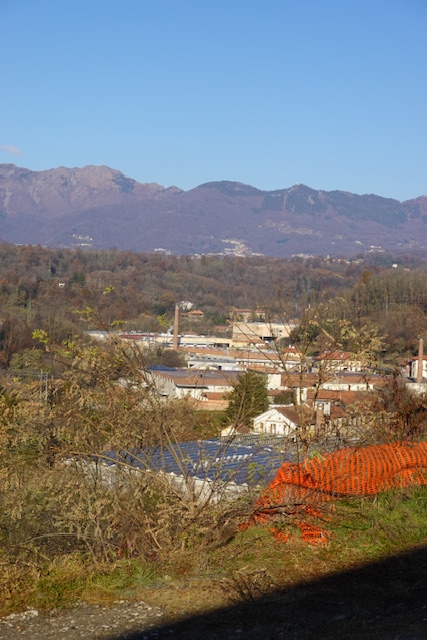
Luca’s intellectual seriousness is matched by his frenetic physical energy! He interprets his project as part of a process of blending the region’s successful past into the creation of an equally successful future. I doubt his neighbours in the comfortable, respectable Lessona see it in these terms, but they will perhaps share his pride in a new local productive phase. So he hopes!
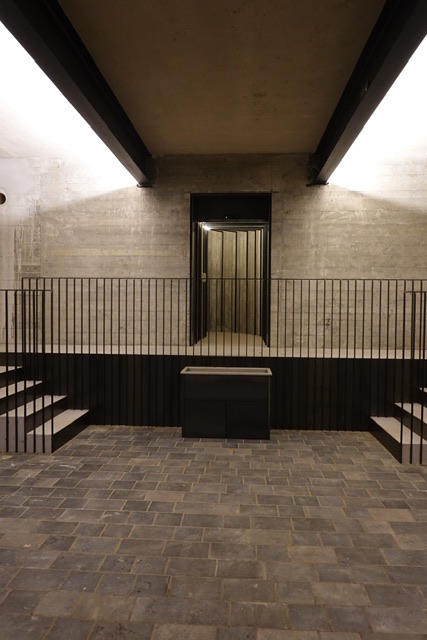
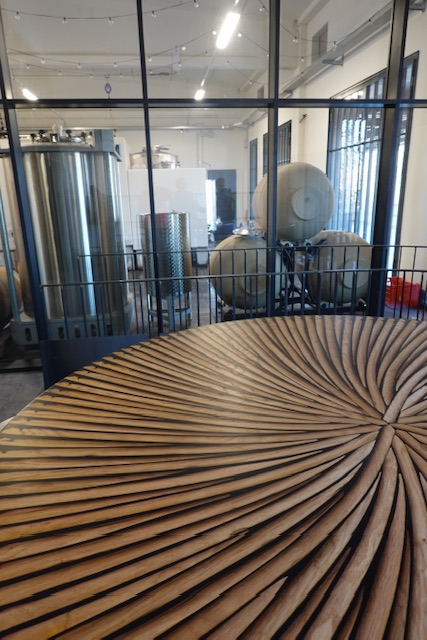
His father Paolo was visiting the winery. Having retired and sold Isole e Olena to Biondi Santi (no better credentials!) he is restoring the family dimora in Lessona, and no doubt contributing to Luca’s project. But he is not involved in Luca’s second local project: joining forces with successful restauranteur La Prevostura to make a simpler (cheaper) wine from local vineyards.
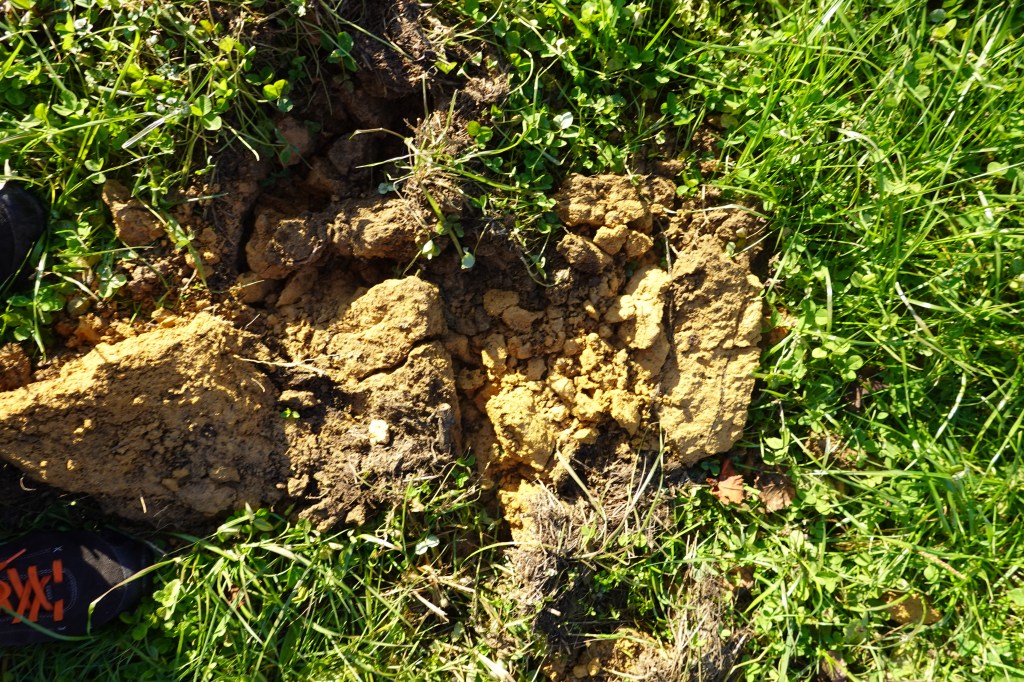
Luca took us to the vineyards to look more closely at the contrast between the marine sandy soils (yellow) and those produced by the attrition of volcanic, porphyric rock (reddish) and explained at length the reason for the very low yields of Lessona. The absence of calcium carbonate increases the accumulation of other metals and trace elements and contributes to very acidic soils.

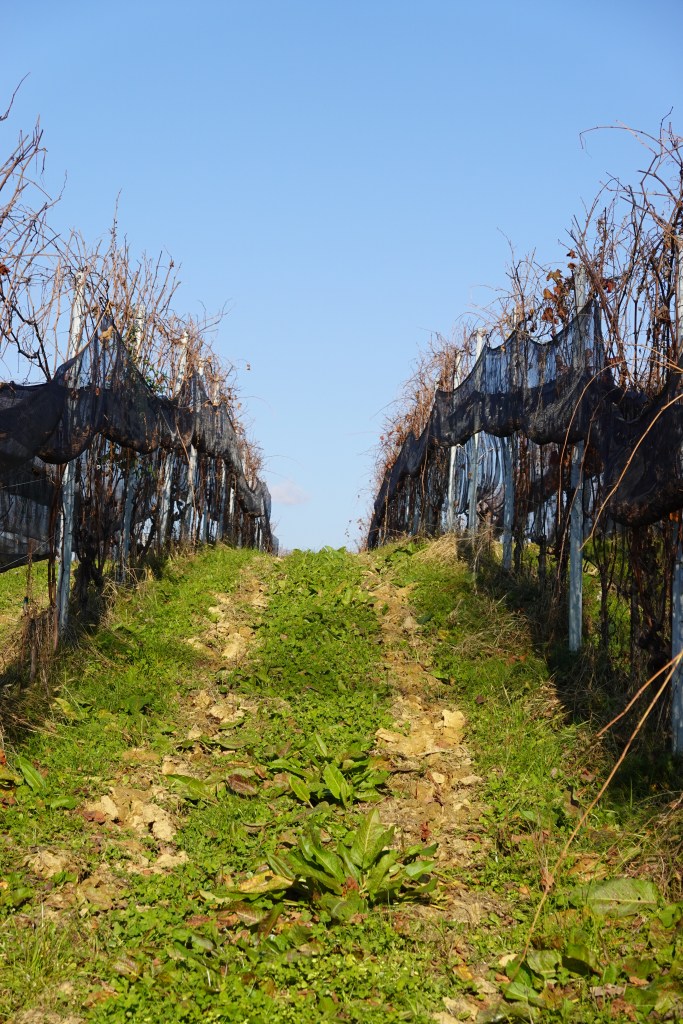
We returned to the old winery, met Luca’s wife Francesca again, and tasted his wines, before returning to Lessona to collect our car, and to follow Luca to the excellent and economical working men’s club for lunch, high up above the town.
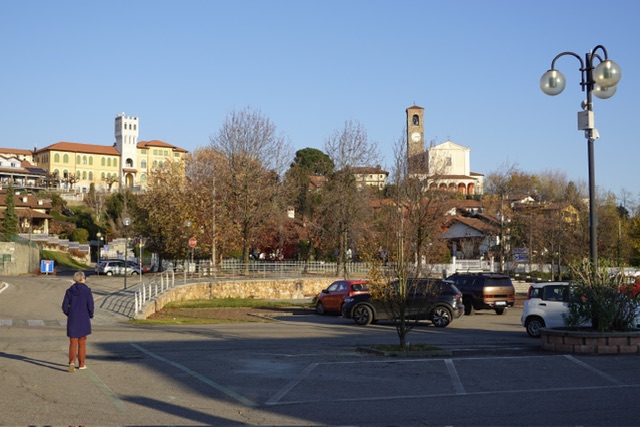
Luca’s intensity and the continuous conversation moving seamlessly between both languages had taken its toll on energy levels but we walked for half an hour in the weakening sunshine through the small town, past the row of schools to the elevated church from where we could see the eastern side of the huge Sella d’Ivrea moraine as well as Monviso.
Next we drove towards Biella to Castellengo, where Alessandro Ciccioni had invited us to stay in his B&B perched in the upper floors of a former carriage house alongside the Castello itself, in which he now makes his wines : Centovigne.
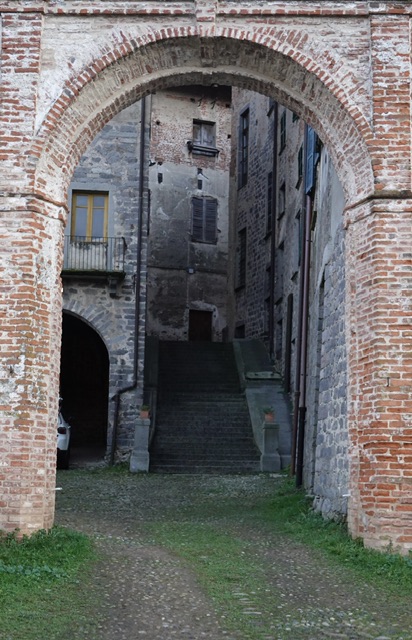
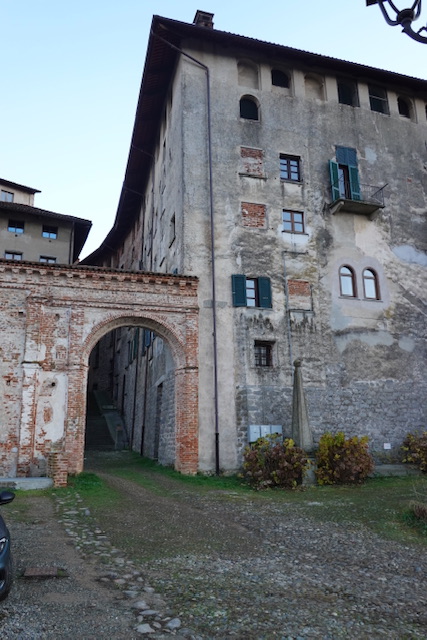
The castle, whose origins are medieval, towers above the huge plain; in winter its temperature remains around three degrees warmer than the frost pockets perhaps 100m immediately below. We drove very cautiously up the narrow hair-pin bends arriving in the castle’s dour courtyard as dusk fell. There were various bells at different doorways, none obvious; in the end David phoned Allesandro who activated Monica, who arrived minutes later to let us in the adjacent building.

When he was free, Allesandro showed us the old and very steep cobbled gateway next to the former coach house, and took us inside to see his cellar. It wasn’t hard to imagine just how difficult it must be to deliver the harvested grapes to this medieval site. But like the steep climb in and out of the property, it’s what they do.

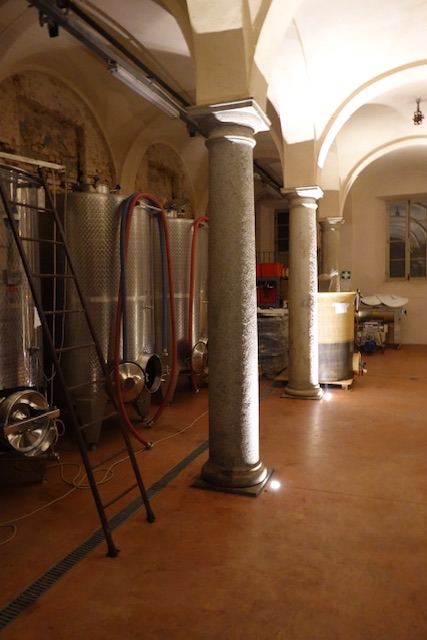
We tasted one of his wines though he was much keener to show us some of the historic documents about the region’s wines from the fascist era. Notice the date; not anno domini, but instead the number of years since Mussolini’s party came to power in 1922. It felt sinister.
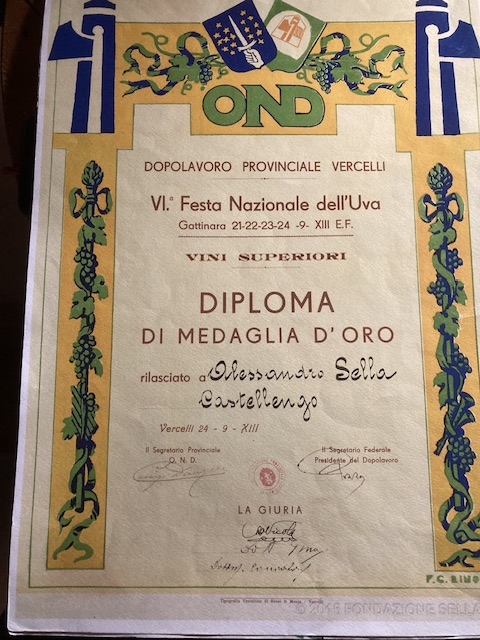
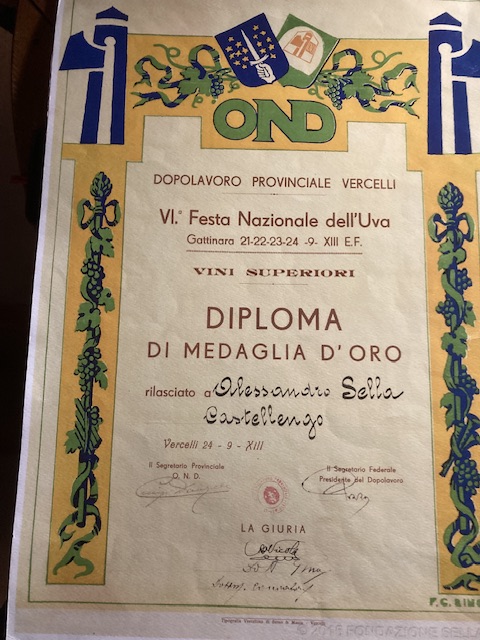
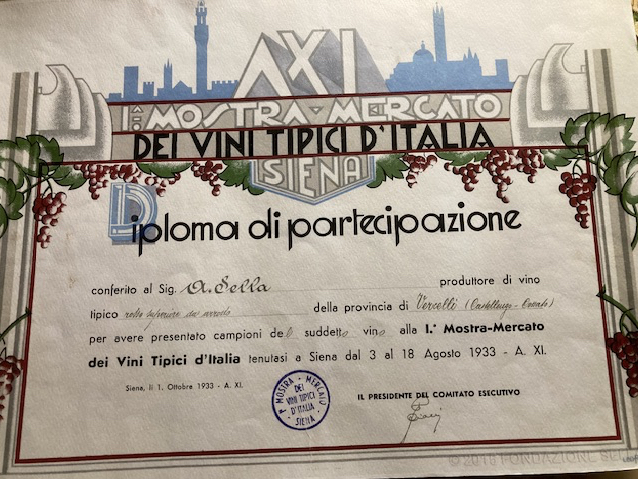
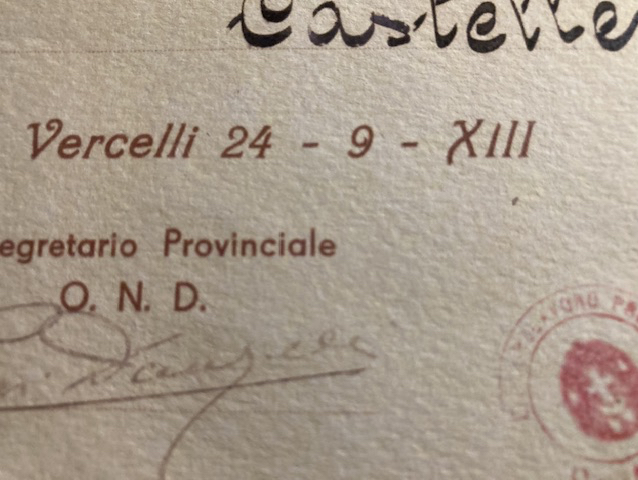
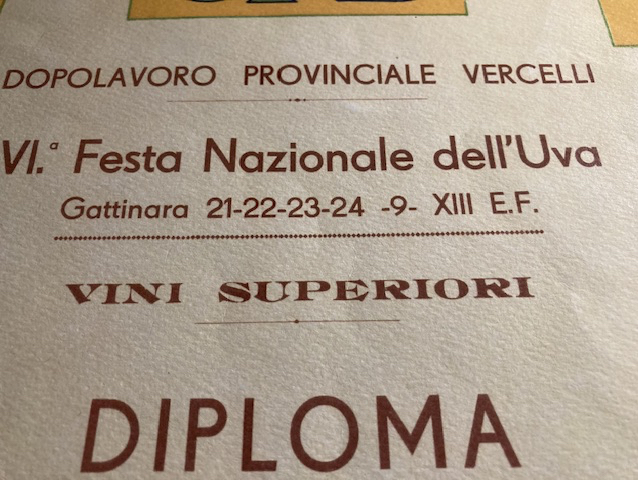
100 years on, might another quasi-fascist (Trump? or Putin?) inaugurate a rule of 1000 years?
We rested while Allesandro dealt with another brief appointment (family time perhaps?) and at 20.00 he drove us to an underwhelming trattoria where a pre Christmas party slowed the evening down. To his own surprise he opted with David for the Big Winter Salad, on the menu as a main course, and as I was still eating very cautiously, I also had a modest vegetarian main. Oddly, we didn’t drink his wine, but a bottle of another local producer that he wanted to try!
Thursday 5 December 2024
Breakfast was civilised, alongside two other guests, and we left soon after Allesandro had arrived to say goodbye. Today David had arranged to meet Cristiano Garella, a consultant for a number of Nebbiolo growers, at the winery in which he also has shares: Le Pianelle in Brusnengo.

He and his agronomist colleague, Andrea, were waiting for us as we arrived, and bundled us into their Land Rover to drive up to their vineyards with spectacular views on every side. It was yet another cold, clear day and the views stretched for miles towards the Alps. As ever, the roads up to these extraordinary vineyards are unmade, narrow, convoluted obstacle courses, which these growers simply take as given. It is such a treat to be given access to these places!
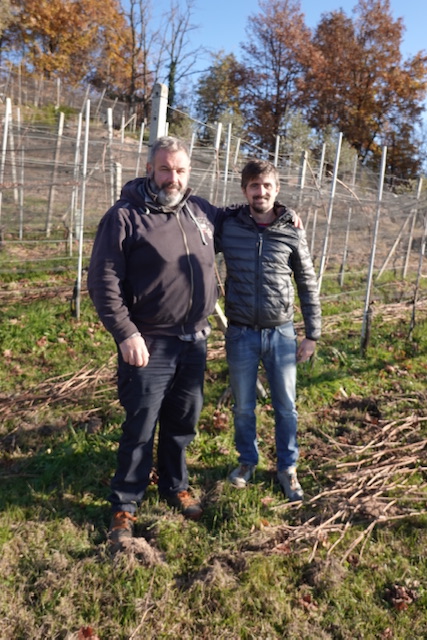
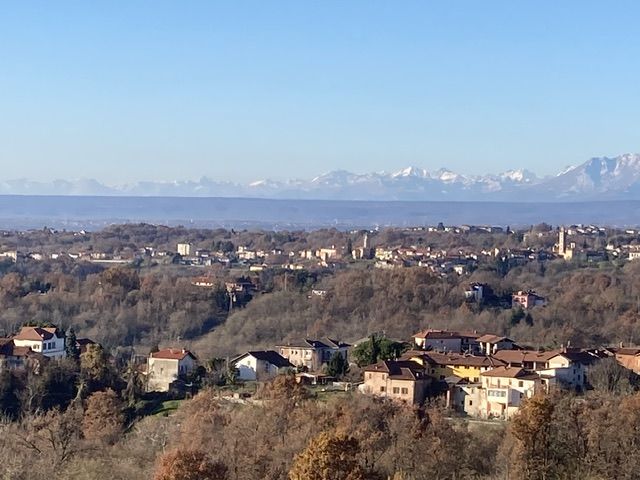

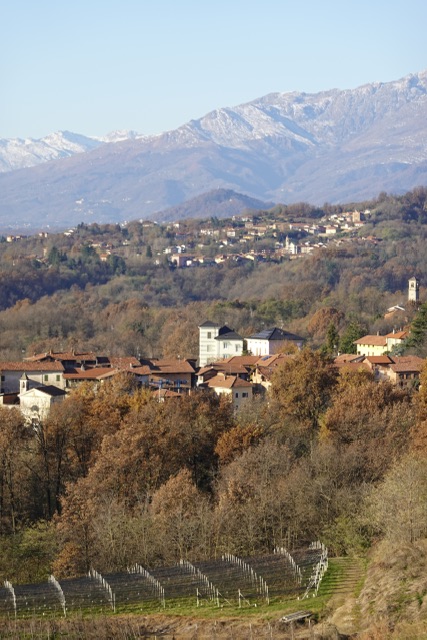
Cristiano was a shy modest man with unrivalled up to date theoretical knowledge of the area. After the vineyard we tasted with them in a small dining room with an elaborate ceiling of some age, though ‘improved’ in 1906, in the small restored house above the cantina.
We left in search of a bar. To our surprise a helpful resident confirmed that the little town has only a kind of working-men’s membership cafe whose signs at the door made it abundantly clear that non-members wouldn’t be served!
So we drove on to Gattinara, and ate lunch at La Brioska, with its long-standing reputation for traditional dishes, overseen by its elderly owner. Our inquiry about vegetables – spinach perhaps? was met with a head-shake and a deflecting reference to gnocchi (which is potato after all).
We returned to the hotel for a rest before our next visit to Azienda Agricola Cavallini Damiano in Fara Novarese, a small new winery which David had encountered at Alto Piemonte in Novara. Angelica, Damiano’s partner, had invited him to visit when next in the neighbourhood.
Theirs is an interesting story. Damiano’s grandfather had grown grapes and made wine, but died relatively young, leaving his widow to struggle on. When her own son’s first child was born, she gave up her attempts to maintain her late husband’s business, and instead, played a large part in raising her grandson, Damiano.
Damiano remembers his grandmother’s hostility to everything agricultural, and her annoyance when he as a young child played in the old cellar, filling bottles with water and corking them. She believed her husband had died of chemical poisoning, and urged Damiano not to attempt to follow his grandfather’s agricultural footsteps. She was furious when he did.
Of course, Damiano was captivated by the stories, having inherited the genes of forebears whose work had been on the land. He bought his first vineyard by auction in 2013 and has slowly up-graded the family’s farm buildings into a cantina. Angelica hopes for a small B&B in the hay lofts. His grandmother eventually relented, and helped with the harvest just two years before she died.
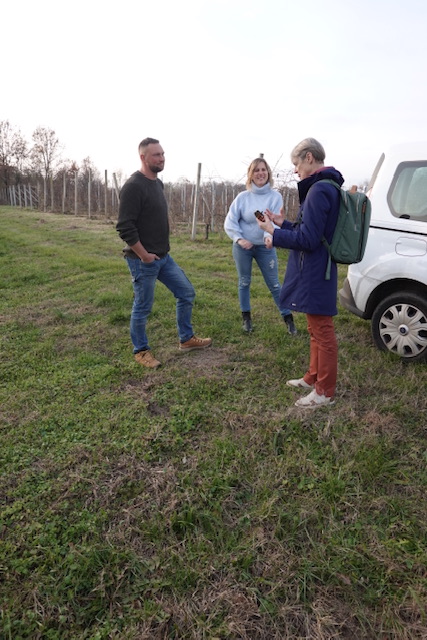
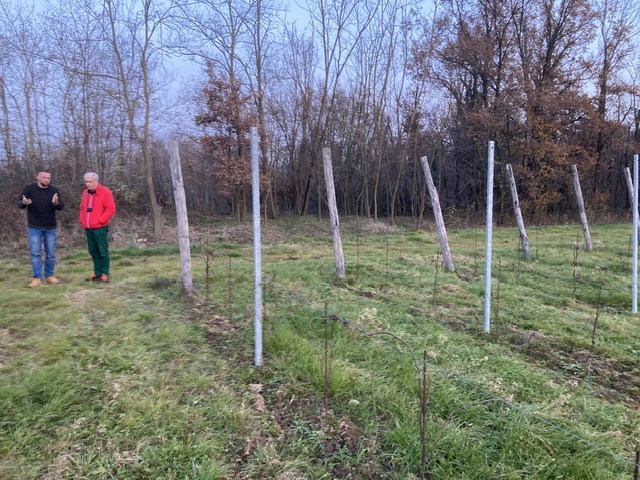
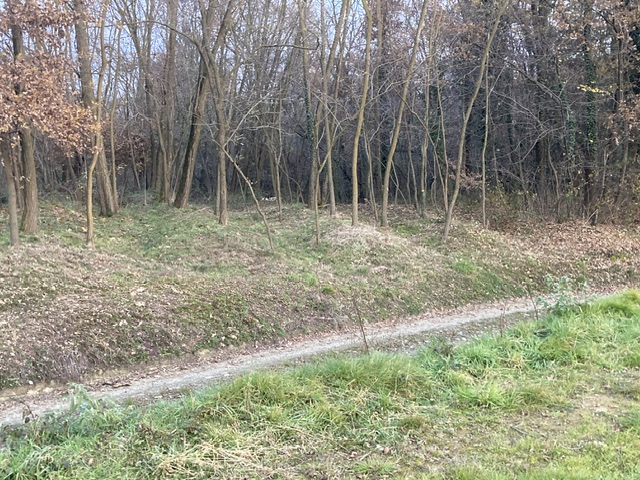
Angelica and Damiano took us to their vineyards and showed us their ‘nursery’ of very young vines, alongside the woodland and scrub which has overtaken the rows of vines of the past. The photos above show both the newly planted vines, and the third photo of the undulating ground (which lies behind David and Damiano in the second shot) shows the site of previous rows of vines, now overrun by the encroaching scrub and forest.
We tasted Damian’s range of wines in their newly finished tasting room as the sun set over the yard and former orchard in which hens – and a donkey called Spike – roam, as they had done, along with geese and the odd pig, two generations before
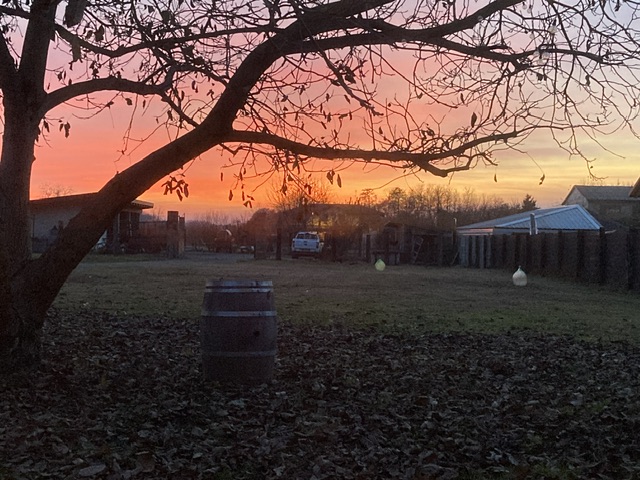
We ate again this evening in Usteria DLa PItta di Pie where alongside us, a group of five mature men entertained themselves increasingly volubly. We have them to thank for persuading their friend the chef to produce Zabaglioni in which we were invited to share by our hostess.
Friday 6 December 2024
Our final visit was to Castello I Conti in Boca, to meet Elena, the agronomist and wine maker, sister of Paola, whom we had met in the summer. (The third sister lives in Germany, but was evident, with her family, in the photos of the 60th year celebration that took place last summer)
Elena drove us past the famous motocross tracks (for which the village is apparently world famous among those enthusiasts), across a ford and on narrow tracks that wound their way up the steep wooded slopes to the one quite large vineyard, and then to two or three other small clearings in the encroaching woody wilderness, to see a tiny vineyard left to her by her elderly vine-growing neighbour.
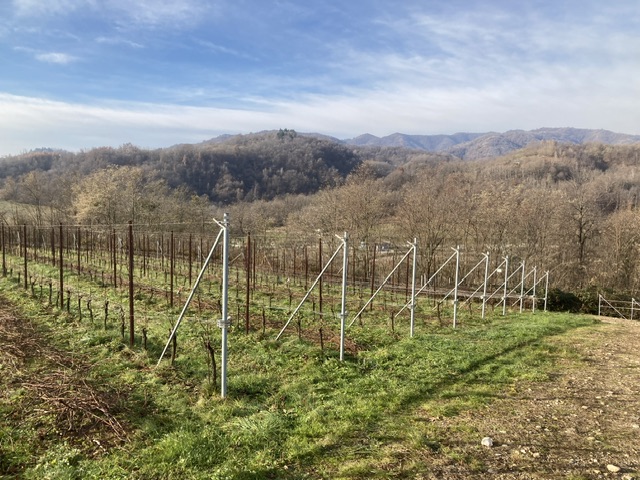

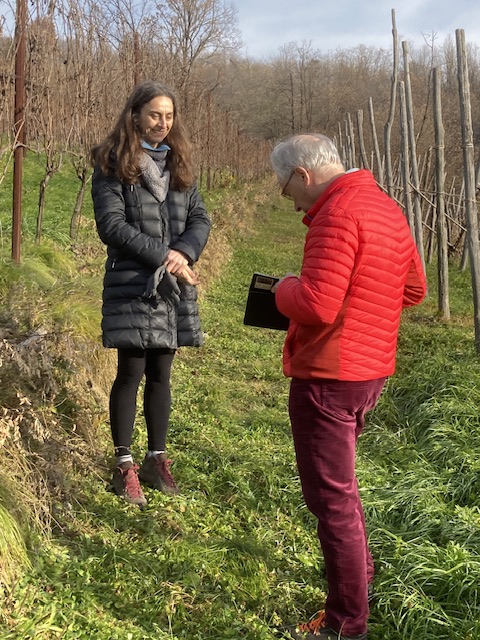
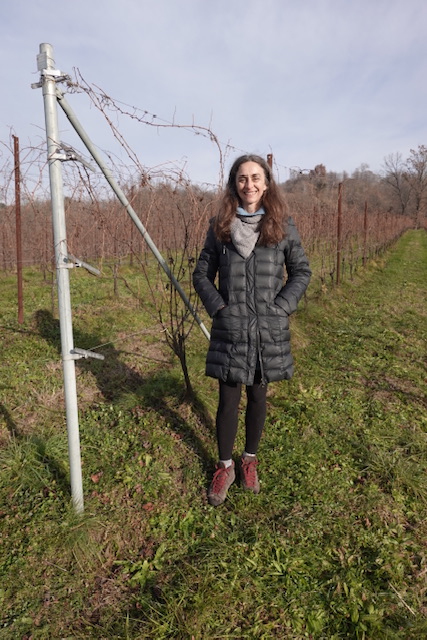
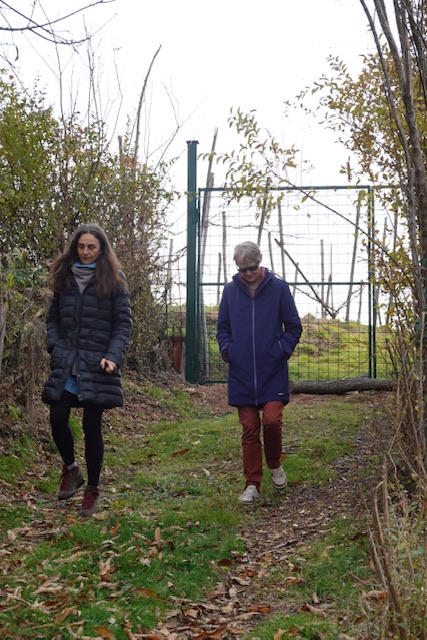
These small and ridiculously inaccessible spaces require massive commitment and attention, a personal cost far beyond the value of their very modest financial return. Hailstorms, ingress of deer or wild boar or beetle, along with repeated torrential rains have made the recent years incredibly difficult. It is hard to imagine how this can be sustained, though we heard several producers remark on the surprising increase in the number of young Italian people who now want to work on the land; a cause of real hope.
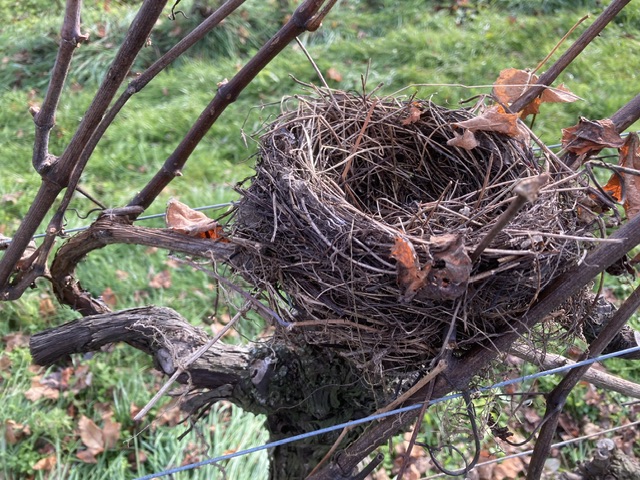
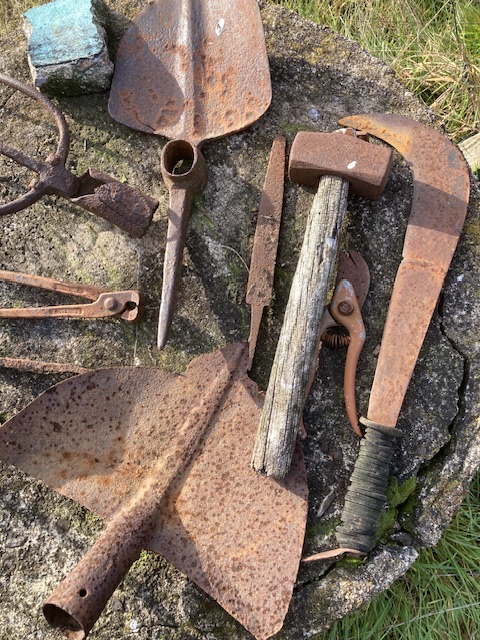
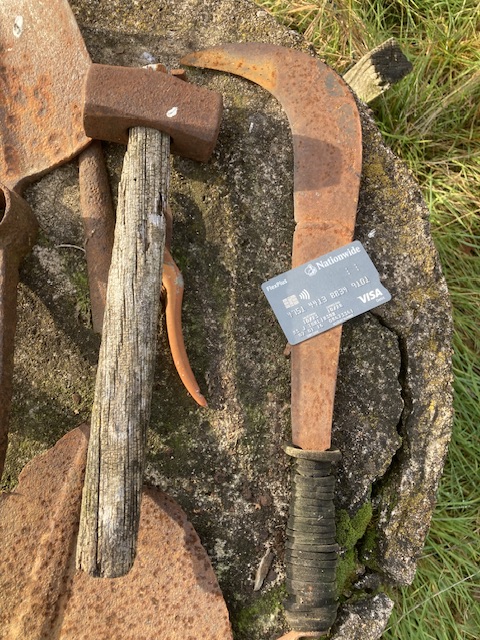
In the tiny old vineyard Elena had found all kinds of ancient vineyard equipment: old tools (the bank card serves only as a scale object!) remains of a concrete tank for mixing copper sulphate – and a nest; the bottles were part of the tasting!

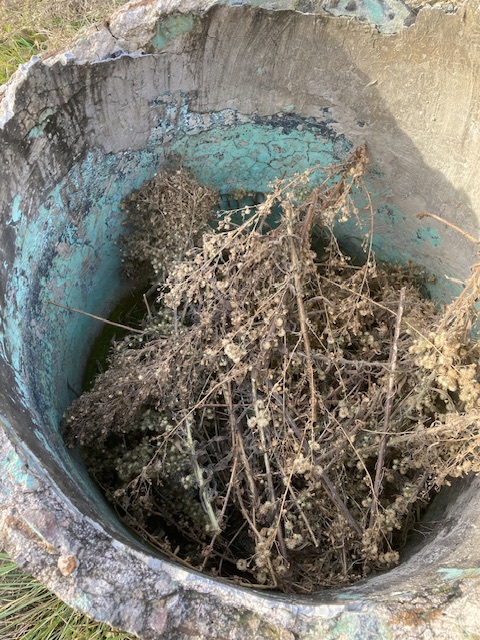
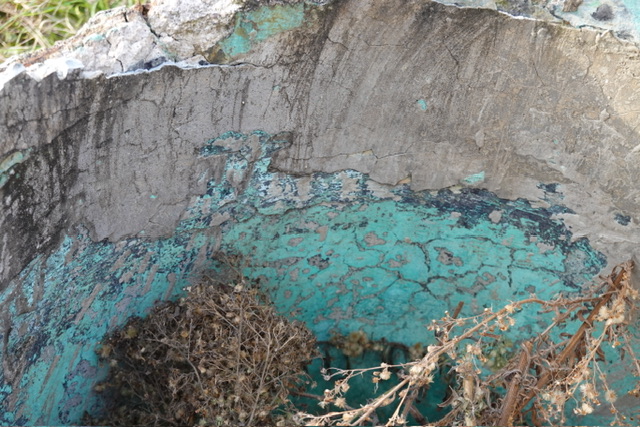
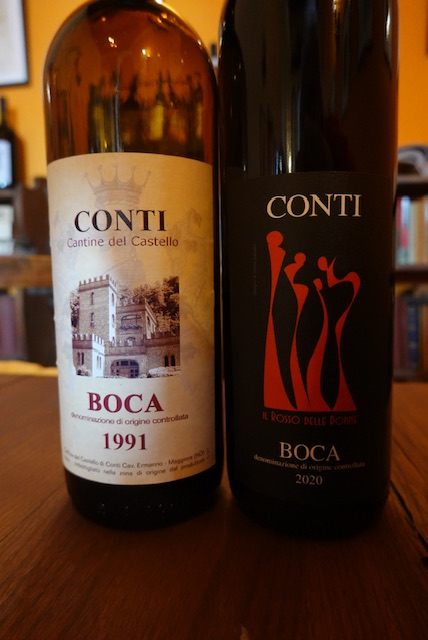
After tasting with Elena, we returned to Gattinara, to eat lunch in the NCF (Nuovo Caffe Firenze) – salmon poke bowls this time, before another short rest, and then a 20 minute walk to Travaligni to meet Cynthia (briefly) and Alessia, with whom we tasted several of their excellent wines.
Our final excellent meal in Gattinara was at Trattoria del Sorggiono, but not before we had braved the Ostinata Vineria, the very quiet enoteca on the main street past which we had walked almost every evening. We were greeted warmly by the well-informed, good-natured manager, and fortunately we were joined by three others, making the business seem more viable. Friday night?
Saturday 7 December 2024
I shall not miss the breakfast provision of Il Vigneto. With the exception of the caffe latte there was scarcely anything we wanted to eat on the buffet table. The odd orange perhaps? or a yogurt? It’s such a shame as the hotel occupies a wonderful, central position in the town alongside a free car park. Fortunately its owner has begun what promises to be a very slow refurbishment.
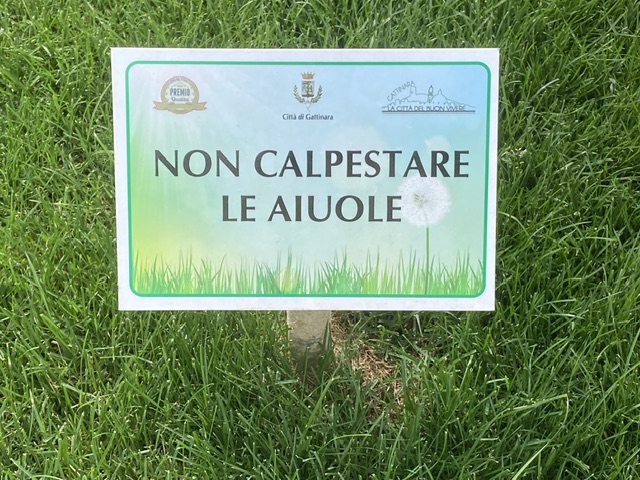
DO NOT TREAD ON THE FLOWERBEDS…(notice aiuole …. all five vowels!!)
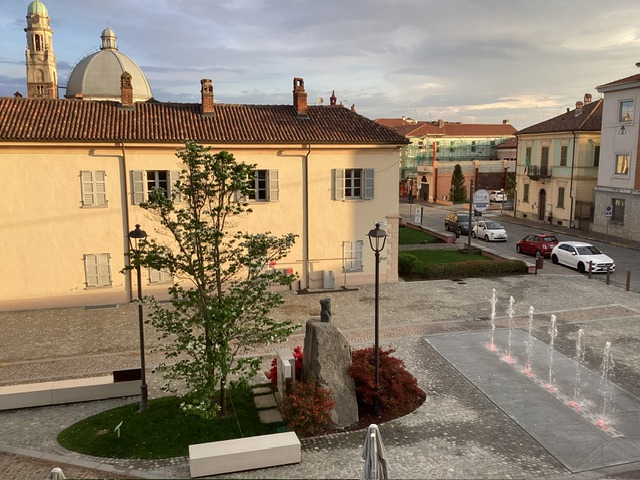

The damp icy air at 08.00 made the windscreen protector and the scraper necessary this morning, and we had only driven towards Turin for 15 minutes when thick fog descended, and remained with us until the outskirts of the airport, 70 km later. Not an easy drive.
Despite the tension that generated, we recalled the route to the petrol station (follow Departures, and then loop back) and filled up quickly. Two left turns later, (following the Arrivals signage this time) we entered the car hire carpark and were helpfully directed next door for Italy Auto Rent. Their office is now part of the airport entrance, where the key was returned.
The airport is small, and comfortable, not crowded, with fast-moving bag-drop and security. The flight phase of the journey home was delayed by de-icing, and despite the onset of Storm Darragh which was ravaging the UK, the flight was unremarkable; a small amount of buffeting but no real turbulence, and only what the pilot described as a blustery runway at Gatwick.
Our luck held in the face of the reported widespread chaos, as far as Clapham Junction, where platforms were filling up with anxious travellers though we made it to Basingstoke on a stopper by 15.30. But that was as far as anything westward was going. Alpha Cars provided a driver within 15 minutes, and we were home by 16.20 for a princely sum of £40. Worth every penny!
Next challenge: how to attract the attention of a doctor? That was a job for Monday…..
 countrymouse